Pacific Theatre
Part 11: Operation Forager
âIn which despite foraging, we find nothingâ
By Lestrade aka Unpopular Opinion
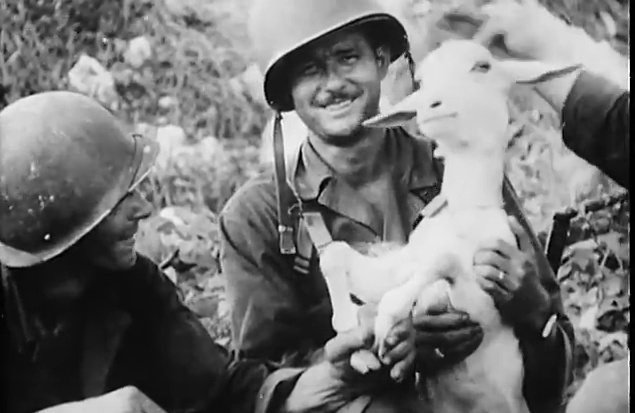
Ah, a cute goat, someone we can finally believe in!
First published October 13, 2022 Thereâs no freedom of speech in the UK but Iâll say my opinion anyway
As Wikipedia tells us,
âThe Mariana and Palau Islands campaign, also known as Operation Forager, was an offensive
launched by United States forces against Imperial Japanese forces in the Mariana Islands and
Palau in the Pacific Ocean between June and November 1944 during the Pacific War. The United
States offensive, under the overall command of Chester W. Nimitz, followed the Gilbert and
Marshall Islands campaign and was intended to neutralize Japanese bases in the central Pacific,
support the Allied drive to retake the Philippines, and provide bases for a strategic bombing
campaign against Japan.
The United States invasion force was supported by a massive combat force. The Fifth Fleet was
commanded by Admiral Raymond A. Spruance. Task Force 58, commanded by Vice Admiral Marc
Mitscher, consisted of 15 carriers, 7 battleships, 11 cruisers, 86 destroyers and over 900 planes.
The invasion force, commanded by Vice Admiral Richmond K. Turner, consisted of 56 attack
transports, 84 landing craft and over 127,000 troops.â
So a fair amount of firepower then.
âBeginning the offensive, United States Marine Corps and United States Army forces, with support
from the United States Navy, executed landings on Saipan in June 1944. In response, the Imperial 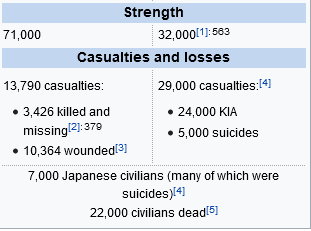
Japanese Navy's Combined Fleet sortied to attack the U.S. Navy fleet supporting the landings. In
the resulting aircraft carrier Battle of the Philippine Sea (the so-called "Great Marianas Turkey
Shoot") on 19â20 June, the Japanese naval forces were decisively defeated with heavy and
irreplaceable losses to their carrier-borne and land-based aircraft.
U.S. forces executed landings on Saipan in June 1944 and Guam and Tinian in July 1944. After
heavy fighting, Saipan was secured in July and Guam and Tinian in August 1944. The U.S. then
constructed airfields on Saipan and Tinian where B-29s were based to conduct strategic bombing
missions against the Japanese home islands until the end of World War II, including the nuclear
attacks on Hiroshima and Nagasaki.
In the meantime, in order to secure the flank for U.S. forces preparing to attack Japanese forces in
the Philippines, in September 1944, U.S. Marine and Army forces landed on the islands of Peleliu
and Angaur in Palau. After heavy and intense combat on Peleliu and Angaur, both islands were
finally secured by U.S. forces in November 1944, while the main Japanese garrison in the Palaus
on Koror was passed by altogether, only to surrender in August 1945 with the Empireâs
capitulation.â
Deep breath: Saipan, the Battle of the Philippine Sea, Guam, Tinian, Peleliu, Angaur. Buckle up
cupcake, Iâm doing the lot!
The Battle of Saipan, as per Wikipedia:
âThe Battle of Saipan was a battle of the Pacific campaign of World War II, fought on the island
of Saipan in the Mariana Islands from 15 June to 9 July 1944 as part of Operation Forager. It has
been referred to as the "Pacific D-Day" with the invasion fleet departing Pearl Harbor on 5
June 1944, the day before Operation Overlord in Europe was launched, and launching nine days
after.â
24 days to clear an island just under 46 square miles (119km2) in size. What are the numbers? Are
we talking small numbers of troops hiding from each other, guerilla warfare style?
Nope â weâve got over 100,000 troops battling it out on this small tropical island leading to 42,790
dead. Plus another 20,000-30,000 civilians dead on top!? What a massacre!
Or is it just more nonsense? Well, letâs talk about the civilian deaths to start with. 29,000 civilians
dead or killing themselves (due to those crazy Japanese being insane fanatics who would rather die
than be captured blah blah blah) on one small island seems a bit much. According to the CIA the
Northern Marianas only had 51,475 people living across the entire island chain by 2020, so
presumably this would have been an absolute decimation of the population back in 1944.
If we check the Worldometers site it gives us population over time (again for the entire Northern
Mariana chain, not just Saipan island itself) and if we go back to 1955 we have a population of less
than 8,000 people. If we check this site it claims the population of the Northern Marianas was only
around 2,500 people back in 1900. So in terms of natives on the island it seems to track that you
have less than 3,000 people in 1900 and less than 8,000 people about 50 years later, i.e. a gradual
upward curve of human population. So again, as with the Corpse Math for Japan that I did at the
end of the last chapter, the Marianas population was somehow not negatively impacted by World
War 2. Despite losing ten times as many people as actually lived there. How does that work?
The proper historians then chuckle smugly and say âOh no Lestrade, it wasnât the NATIVE
population that died, it was the JAPANESE SETTLERS that diedâ. The idea here is that the
Japanese brought a bunch of settlers across in the 1930s. These were employees of the South Seas
Development Company, aka Nan'yÅ KÅhatsu. This dude founded it, after inventing the sugar
cube(!). The idea was heâd get a bunch of Japanese shipped over to the Marianas and use them for
farming sugar to export back to the homeland. Fair enough, so these are corporate workers bulking
out the numbers. However, if we read his article page:
âBy 1925 Matsue had built an alcohol factory and ice plant on Saipan, planted over 3000 hectares
of sugar, and extended his operations to Saipan's neighbouring islands. By the end of the decade,
he had brought more than 5,000 workers to the Marianas. The company quickly grew to become
the largest private company in the Japanese Mandate, and at its height employed over 40,000
people. Matsue also built numerous recreational facilities for his workers on Saipan and other
islands.â
Whoops! So he had a company spanning various sites across the Pacific (not just the Marianas)
employing over 40,000 people in total... but in the Marianas specifically it was around 5,000.
Again, where are we getting the 29,000 from? Youâre looking at a rough estimate of, say, only
around 10 or 11,000 people across the Marianas in 1944. Saipan may have had the bulk of that but
thatâs still going to be way less than 10,000 people. Are we telling pork pies again, ONI? Surely
not.
Which brings me to The Saipan Suicides. The pitch is: as the Americans took Saipan, the Japanese
(being crazy) decided to jump to their deaths from two locations â a mountaintop called Laderan
Banadero and a sea cliff known as Marpi Point, both in the north of Saipan.
We have limited footage of the mass suicides: one clip with a guy and one with a woman. Theyâre
very short and designed for maximum shock value (at the time). In each clip the individual runs and
jumps off a cliff out of sight. This is what you see in the news reels from the time. If there are mass
suicides, why do we only see these two people? If the cameraman is on the clifftop, this means there
is an American presence on the north coast clifftops, which means this is after the civvies have all
rushed up there to jump to their deaths. Also, why is there no evidence of any of the jumps other
than these short clips? Why do we not have any footage of the Americans sailing around the
northern point and yelling at them to stop from loudspeakers?
If the Japanese are leaping off these cliffs, youâd have a large bone pile at the foot of the mountain
or corpses being washed up against the cliffs and so on. Also bodies floating in the surf. Any
images of this? Nope.
This blog page has some photos / footage of the âmass suicideâ:
One guy runs at the cliffâ¦
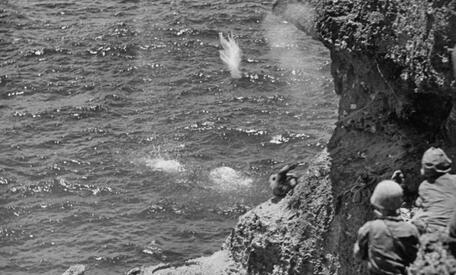
He jumps (Iâm saying âheâ based on the short hair), falling in the vertical, arms tucked in,
controlled manner like when people go cliff jumping into the sea aka Tombstoning as itâs known in
the UK.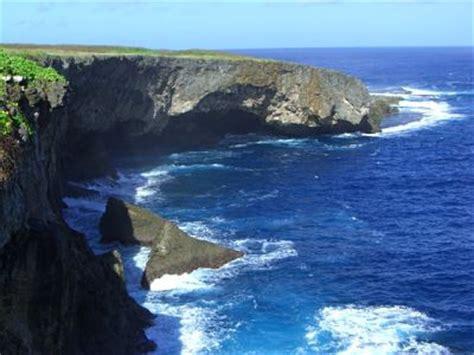
The angle of the shot means they go out of sight (the white froth in the foreground here is
foliage/grass on the cliff edge where the cameraman is standing). We never see an actual death.
There is no follow-up shot to see a body or bodies dashed on the rocks below â nor any floating
corpses from having drowned.
This is a photograph of the modern day âSuicide Cliffâ tourist attraction:
Unless you land on that pointy rock or can't swim, you can't commit suicide that way. The fall is
too short. 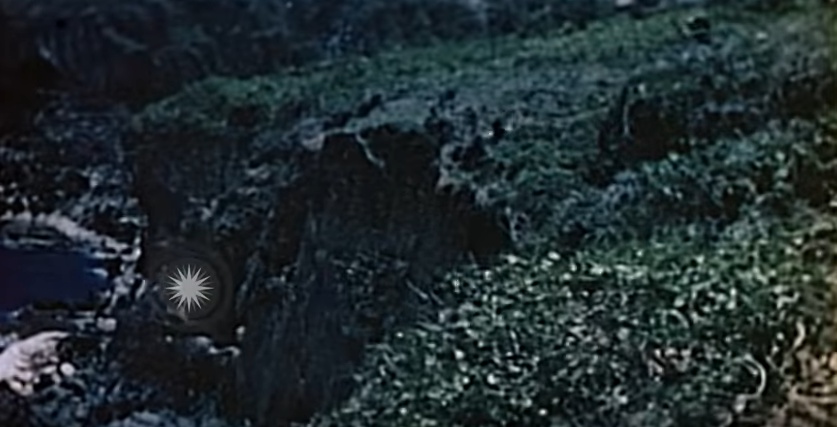
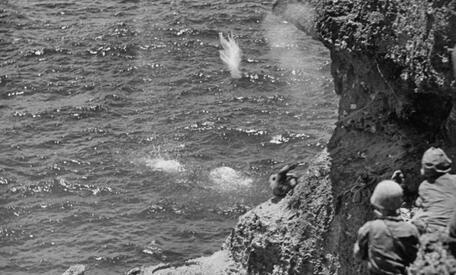
Please bear that shot in mind when you see any footage of the suicide cliff stuff from the war. It
looks quite different to where people are jumping in the water. For example this:
âPeople jumped to their deaths on Marpi Point renamed "Suicide Cliff" (Time & Life Getty
Images)â â original here. Play spot the bunny.
We also have the âJapanese woman jumps to her deathâ footage, link here (skip to 0:41):
Excuse the watermark of the star the YouTuber left. This cliff is obviously not as high up as Marpi
Point so I assume itâs another coastal cliff⦠it canât be Suicide Cliff either as thatâs a much higher
clifftop overlooking the airfield inland.
Itâs very quick (only 1 or 2 frames) but if you watch the YouTube clip 0:41-0:43 youâll see
someone run and dive off the clifftop, arms spread rather like when people skydive. They drop
away out of sight so we have no idea if they a) land in a net, b) land in deep water in a swan dive or
c) are dashed to pieces on rocks. Odds are very high they just land feet first and swim to shore.
Jumps like this are now very common and you can watch them on youtube.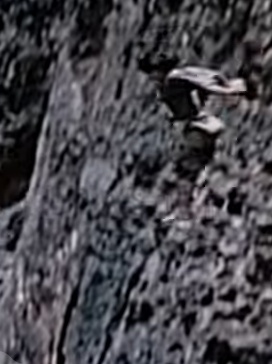
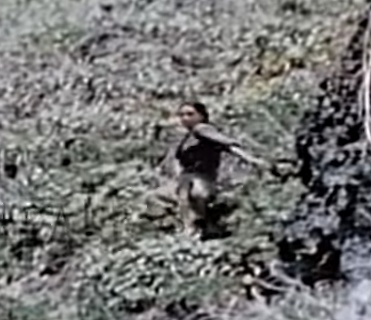
At 0:43 we now see this lady. Please note: 1. She is limbering up to jump, swinging her arms and
getting her muscles warmed up like actors/athletes do before a stunt. You do not limber up before
committing suicide. 2. She is looking straight at the camera, as the camera crew are giving her a
signal to begin the stunt. This is not a random civilian fleeing in terror, she is waiting for the
director to yell action.
Again you should just watch the clip a couple of times (itâs literally 5 seconds of actual footage but
rewatching it lets you start to see what it is properly). Weâre looking at what are essentially
stuntmen (and stuntwoman) from the 1940s doing a cliff jump into either deep water (tombstoning).
What we are not seeing:
â Large numbers of people, dressed in civilian clothing, grouped up running like lemmings off
a cliff.
â Anyone in a state of emotional distress (both jumpers weâve seen look perfectly composed).
â No indication of any battle/war going on in the background/distance despite the whole point
being the island was being invaded and people were supposedly running for their lives.
â We never see any actual dead bodies from the mass suicides, let alone âhundredsâ or
âthousandsâ of corpses.
â There is no footage of the mass drownings that would have occurred off of Marpi Point (aka
Banzai Cliff), with bodies bobbing around in the waves.
â We donât really see any evidence of âBanzai Cliffâ (i.e. the inland clifftop known as
Laderan Banadero) being used at all by suicidal civilians. We literally only have a few
seconds of footage of one or two people jumping off a coastal cliff, which doesnât even
resemble Marpi Point in present day photographs.
â Nor do we see any footage from the ships that the Americans allegedly had sailing off from
Marpi Point, shouting via loudspeaker system to not jump as per American testimony.
Itâs also pretty stupid that (as per Wikipedia) we have no idea how many people killed themselves
at either location - âOne eyewitness said he saw âhundreds of bodiesâ below the cliff, while
elsewhere, numbers in the thousands have been citedâ.
This testimony was quite interesting as the chap speaking about the suicides describes it being
difficult to âdrive aroundâ the bodies (which would make us think initially heâs talking about the
Suicide Cliff, inland, that you could perhaps drive past). He then essentially flips to say heâs talking
about the Banzai Cliff (Marpi Point coastal clifftop) and says how the sea was so thick with corpses
that âgunners matesâ had to shoot at the corpses to âmake them sinkâ so the ships could sail around
the point safely. Later on he describes how he was on a battleship that used its sixteen inch guns to
blast away at the cliff-face, thus⦠- checks notes - ...thus destroying the cliff so people couldnât
jump off of the cliff. How does shooting corpses make them sink? Your physics problem for the
day.
This veteranâs testimony is him talking about shooting a cliff face with battleship guns until it
crumbles into the sea so then you canât jump off the cliff any more. Because the original cliff is
gone.
(Lestrade takes a deep breath and walks away from the computer)
(He goes outside to pet his cat sat on the garden wall)
(He returns, more Zen)
Yeah.
OK so weâve established this is another load of gibberish. What does that leave us with? Well, you
can watch an entire 50 minutes of footage of Saipan here on Youtube. This is the âproperâ war
footage of Marines battling those pesky Japanese soldiers. Iâll save you some time: itâs exactly what
youâve seen already, where we have a camera crew filming Marines in a way that is completely
indistinguishable from a training exercise. Youâll see them shoot into the bush, or throw a grenade
and run away, or investigate a dugout, but at no time do we see any actual warfare.
For example at 12:10 where we see someone practising firing a heavy machine gun. There are no
Japanese being shot at here, nor is anyone in any danger (as the other people are standing around
casually in full view with their hands on their hips).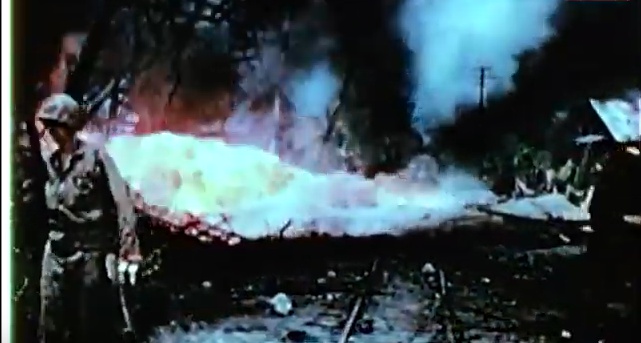
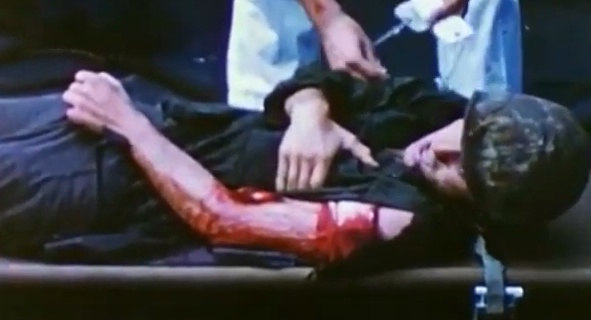
We do see a corpse next to a dead pig at 14:41, but I will allow the Hollywood production crew the
wit to bring the odd mannequin or possibly a body from cold storage to pop down on the ground as
a practical effect.
At 14:48 we see Marines standing around holding babies with some locals. These ones arenât afraid
of the Americans then? No running to jump off cliffs in this case.
Nice bit of moulage at 17:37:
You then get twenty minutes of general shots of the Marines walking around, shooting at trees, the
odd bush set on fire and so on. A grenade is thrown into a cave. Tanks fire into smoke. Somebody
uses a flamethrower on a hedge at 36:56. Two Marines walk away slowly, guns lowered.
A bomb is dropped on some forest at 43:35.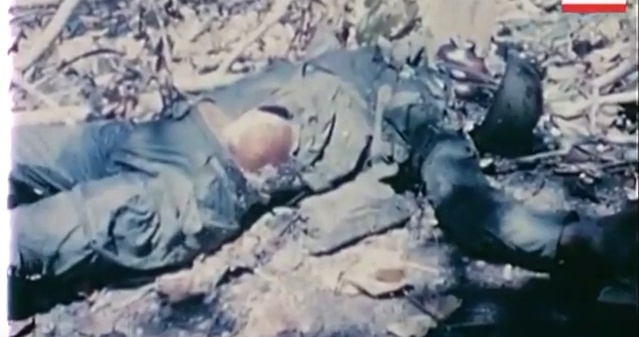
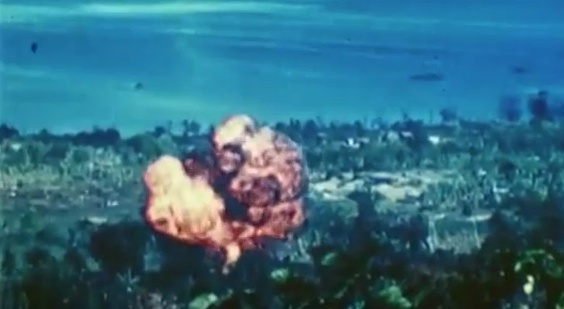
We see our second corpse at 43:38, this one sufficiently gruesome what with decomposition of the
body having started and the corpse being bloated:
Again as weâve found before, we get one corpse for the gore hounds in the theatre and/or to scare
grandma (despite the supposedly apocalyptic battle conditions with over 24,000 casualties), no
blood on the ground no blood gore or dismemberment (despite everyone loving to use explosives),
no dropped rifle, no insignia to indicate this is either a Japanese or Marine infantryman. From the
helmet and olive boiler suit I assume Marine but then why have they left the chap out to rot?
The face/head is photoshop or paint. That whole area is unnatural and plastic-looking. Nothing
there looks gory or scary to me, just fake. 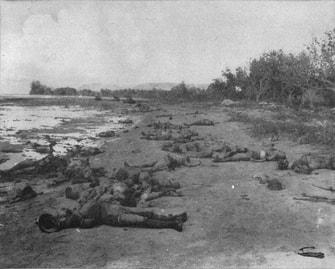
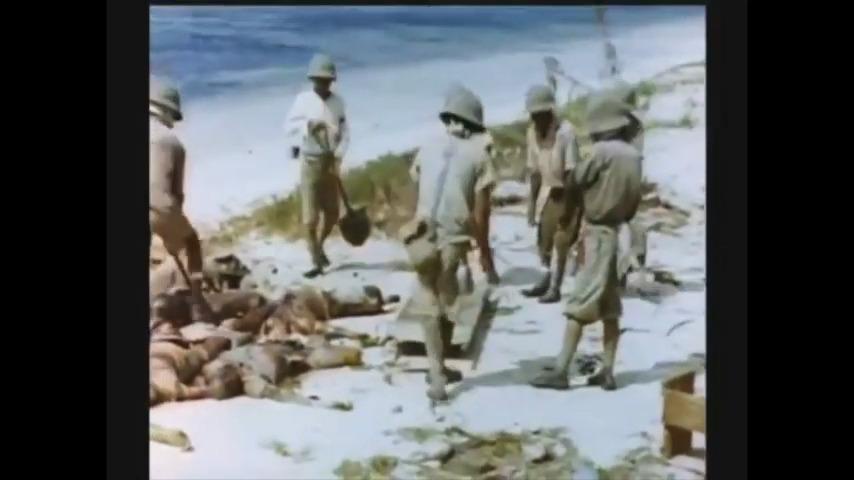
Thereâs an interesting shot at 48:58 when we see Marines on the beach flipping corpses with
shovels:
So this would be how the bodies get on the beach, right?
The Marines dump them straight off the LVTs so we can have photographs like this:
âDead Japanese soldiers litter Tanapag Plain (credit: Dept. of Defense USMC photo)â â original
here. Fake.
Why are the corpses on the beach? They fought exclusively inland. The Japanese always attack
AFTER the Marines disembark and walk up the beach. The only time weâve supposedly had
anything like beach combat is at Alligator Creek in Guadalcanal (which Iâve shown was fake).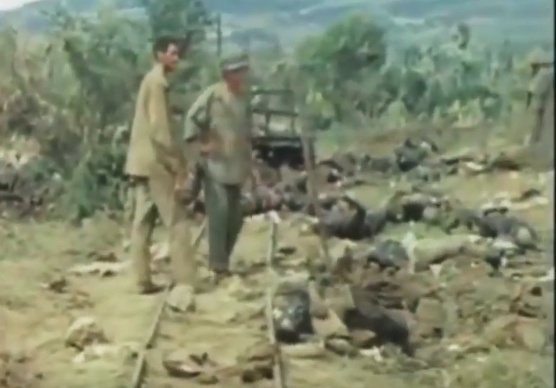
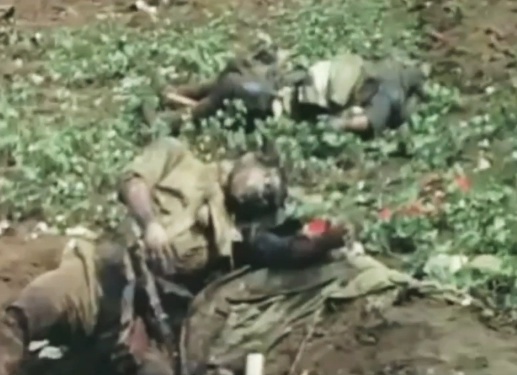
More spooky corpses at 49:15. Iâm unclear if these are actual corpses (the head especially looks
more like a model than a real body). The one draped over the train tracks(?) is partially melted.
Again, perhaps these are real. Perhaps these are corpses dumped on site. Perhaps this is why thereâs
a set of train tracks in the middle with the bodies sprawled out on the side â because they chucked
them off the side of the cart to set the scene.
This whole âfield of corpsesâ section in the video shows a few dozen bodies scattered over the
small area, some heavily decomposed and others looking like theyâre asleep: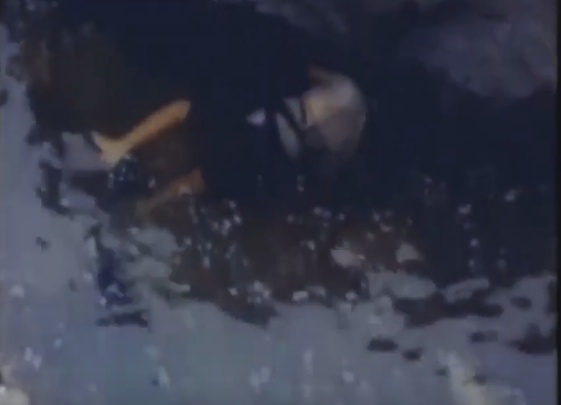
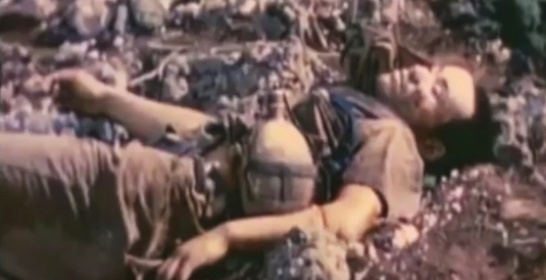
50:04 â I like how this is supposed to be one of the suicide victims who leapt into the sea:
Thatâs not the ocean at Marpi Point. Thatâs a shallow river or inland lake.
The 50 minute mash-up of Saipan footage ends there. As weâve seen several times now, their own
videos are great at exposing the fraud of it all.
We can also read this article â âBattle Relics of Saipanâ. Mr. Pike the author is obviously going
with the normal narrative here so we get photographs of what is an obvious war memorabilia
display area presented as some sort of ancient battleground. We have seen many Pikes involved in
these shenanigans over the years, think Albert Pike, Robert Pike (Salem), John Pike, Christa Pike,
etc. Also see Sir Thomas Pike, RAF Senior Art Staff and OBE in 1944, later Chief of the Air Staff. 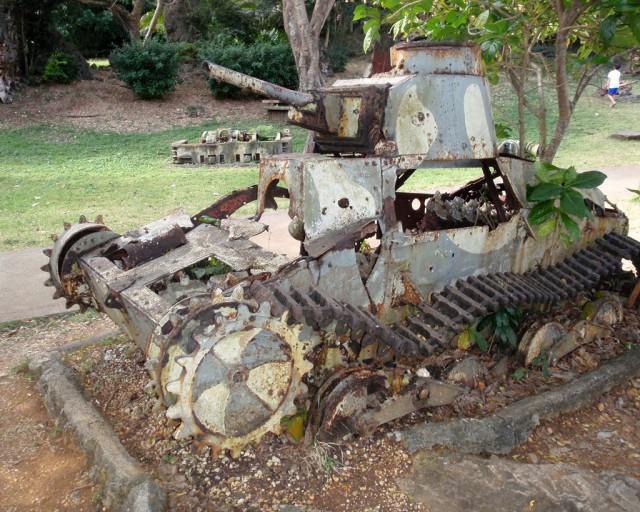
The Pikes in the peerage link us to the Dundases, Marquesses of Zetland, who link us to the
Lumleys, Manners, Drummonds, Murrays, and Stanleys.
What starts out as a slight embellishment quickly transitions into something more risible:
âWhile tromping through the jungle, we came across one of the many nearly-untouched coral
bunkers that Japanese defenders took shelter in. Inside were numerous fired .30 cal and .30-06
bullets as well as unfired Japanese Arisaka rifle cartridges, and piles of empty shell casings. We
found sake and beer bottles, Japanese âjika tabiâ (the shoe with the distinct toe) along with canned
food and broken dinner wear. Also quite unexpected and chilling â we found spent high explosive
fuses, US type grenade fragments, and human remains (not shown). We left the bones we found
in a pile (as we were instructed to do) for the next visit by Japanese officials so the soldiers may
eventually be repatriated.â
So weâre supposed to understand that over 75 years after the war there are still piles of skeletons
sitting in old bunker systems which you can freely walk into â that nobody bothered to clean up?
I like the idea these Japanese soldiers were just sat around drinking beer and doing sake shots, then
leave their special ninja shoes on the floor before their immediate death. What happened, the
Marines snuck in and murdered them during a drinking session? Theyâre supposed to have
bulldozed the bunker entrances shut. Pillboxes in the field were destroyed by a combination of
flamethrowers and satchel charges planted by demo teams. Youâre not going to have a lot of stuff
left standing is my point. Itâs crazy that the skeletons just left lying around â why on earth wouldnât
the Japanese or the Americans or the local authorities have repatriated the bodies by now?
We get a couple photos of inside the âcoral bunkersâ, which appears to be a cave with some bottles.
Have a look for yourself, see what I mean. He then shows us more photographs of bunkers - 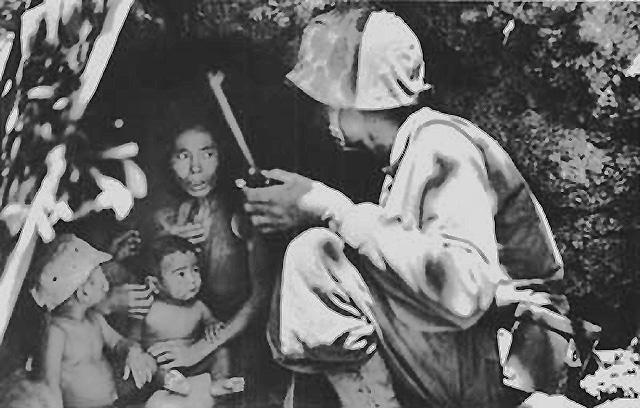
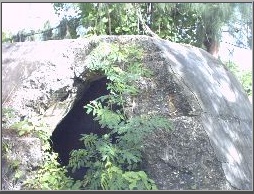
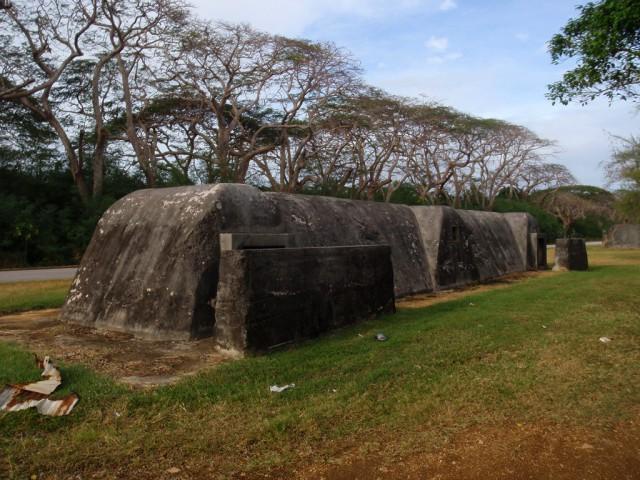
These are at the old airport on Saipan. These âbunkersâ (storage buildings) can also be seen on this
website which talks about how these bunkers at the old airstrip can be visited today, all emptied out:
This is supposed to be from a tank blast. Question: why are these ones sitting around intact, when
the Americans had been bombing the island so heavily? How in fact could anything be left
standing? Why do we never get footage or photos of people next to the vast interlocking networks
of concrete-reinforced pillboxes the Americans had to (allegedly) laboriously destroy one at a time
with explosives and flamethrowers?
This is a classic WW2 photo from Saipan:
âA Marine talks a Chamorro woman and her children into abandoning their refuge.â - original
here.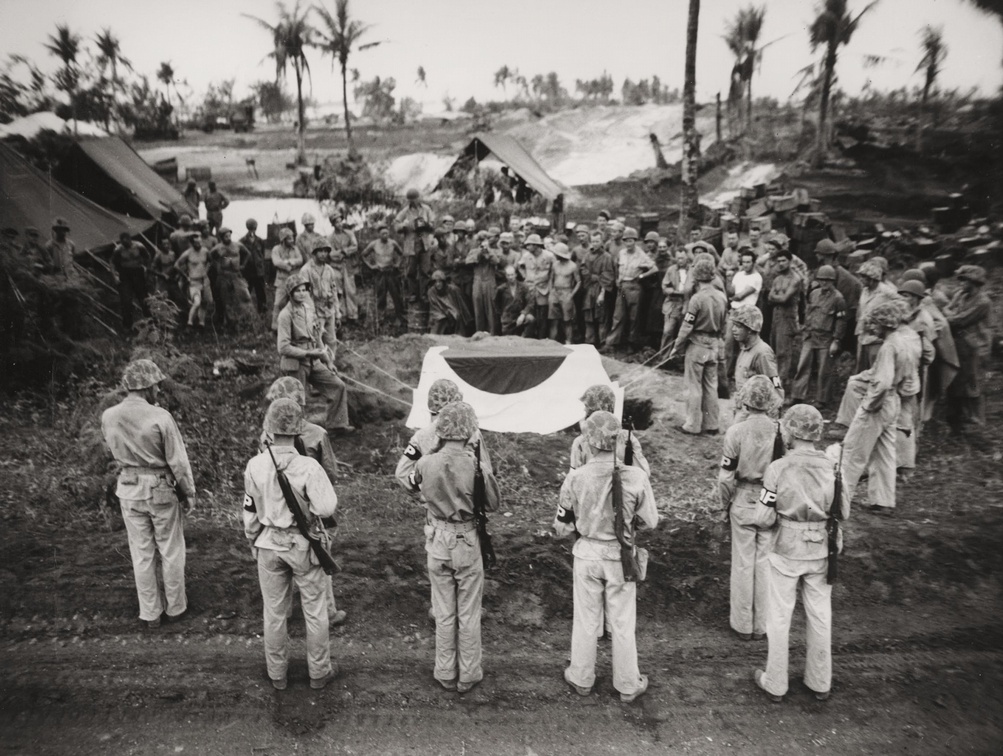
You can see the problem, right? The natives are cropped in. The Marine appears to be largely
painted/drawn in â look at his shoulder, his leg and his left arm, thatâs a sketch not a photo. Look at
the way his face is turning to mist, or the weird flat nature of the helmet. You can see the sharp line
with the âblack glowâ down his back where the layer of soldier has been added to the background
image. The whole thing is a collage.
Who were the Japanese commanders on Saipan?
Yoshitsugu Saito - âSaitÅ, wounded by shrapnel, committed ritual suicide in a cave at dawn on 10
July, with his adjutant shooting him in the head after he had disembowelled himself. SaitÅ was
given a funeral with military honours by his American counterpart Holland Smithâ
Kills himself in a cave, then the Marines give him a nice burial ceremony:
âFuneral of Yoshitsugu SaitÅ by American military personnel, Saipan, 1944â â original here.
Awfully decent of them given youâd think heâd be a hated war criminal for encouraging needless
loss of life (e.g. banzai charges, not surrendering despite being completely outnumbered,
encouraging the civilian suicides etc.).
Also very kind of them to excavate his remains as - if you read various anecdotes / descriptions of
the battle of Saipan â the Americans developed a tactic upon reaching the more mountainous
sections of the island where the Japanese were holed up in their -checks notes- âcoralâ bunkers that
they would seal the entrances with bulldozers rather than go into the tunnels/bunker systems 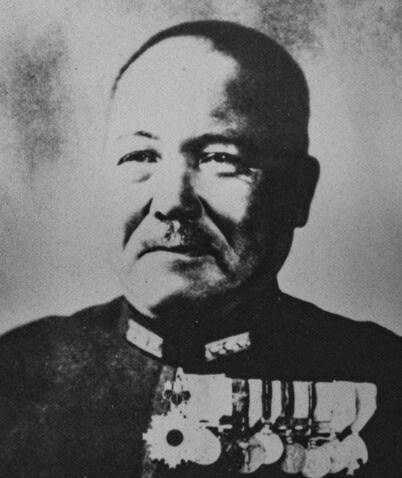
directly. Which would include sealing up the Japanese HQ, with everyone inside. So they would
never find Saito, would they? You have to pick one narrative, ONI â and stick to it.
We also have our old buddy ChÅ«ichi Nagumo who weâve seen in previous chapters. Involved in
previous (fake) events like Pearl Harbour, the Battle of Midway and the Bombing of Darwin â so in
other words, heâs not done very much at all.
âOn 6 July, Nagumo killed himself with a pistol to the temple rather than the traditional
seppuku. His remains were recovered by U.S. Marines in the cave where he spent his last days as
the Japanese commander of Saipan. He was posthumously promoted to admiral and awarded the
Grand Cordon of the Order of the Golden Kite.â
Interesting that he kills himself four days before Saito, also that he chooses not to commit seppuku
and just blows his brains out instead. Does he lose points with that? Is that some kind of mark of
cowardice? If seppuku is too much why not get his adjutant to shoot him like with Saito? Just
wondering.
Takeo Takagi:
This guy, among other things, was involved in both the Battle of the Coral Sea and Midway, so
again fake events. Wonderfully, he vanishes and everyone assumed he was dead. No, really:
âTakagi was killed in action during the Battle of Saipan in 1944. Missing after the battle, it is not
clear whether he committed suicide or died trying to escape in a submarine. He was posthumously
promoted to full admiral.â
We donât actually know what happened to this Japanese Admiral but what the heck, heâs gone, no
point kicking up dust thinking about the past. Move along people nothing to see here.
Finally, we have Baron Matsuji Ijuin. 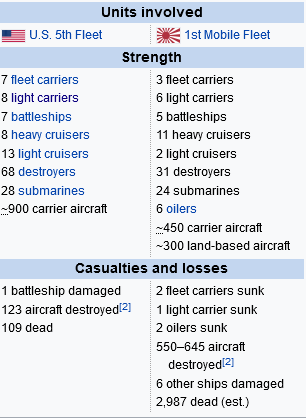
âIjiun served as captain of several destroyers in the early 1930s, and was also appointed as an
aide-de-camp to Fleet Admiral Prince Fushimi Hiroyasu in 1932. Promoted to full commander on
15 November 1934, Ijuin was subsequently executive officer on the Abukuma in 1935. He made full
captain on 15 November 1938 and was given command of the Nachi in 1939, followed by the Atago
in 1941, and commanded her during the Battle of Midway in June 1942. At the end of December
1942, he was given command of the KongÅ.
Ijuin saw no direct combat during the early months of World War II. However, on his promotion
to rear admiral on 1 November 1943, he commanded DESRON-3, based at Rabaul, New Britain
during the Solomon Islands campaign.â
So he doesnât get involved in much (again, Midway was fake and weâve seen there was nothing
happening at Rabaul).
âIjuin was killed when his flagship, the patrol boat Iki, was torpedoed and sunk on 24 May 1944
north of Saipan. He was posthumously promoted to vice admiral.â
Fair enough that the Naval guy goes down with the ship, this is certainly plausible. However, as
weâre finding that every single battle of the Pacific campaign is in fact US Naval Intelligence fan-
fiction, it is also possible this guy is either a) fictional himself or b) given an âoutâ by a fake ship
sinking. No way to prove heâs not dead, right?
Anyway. Enough about Saipan.
The Battle of the Philippine Sea, aka the âGreat Marianaâs Turkey Shootâ was touched on back in
chapter 6 of this series but here Iâll hit some other interesting things:
âThis was the largest carrier-to-carrier battle in history, involving 24 aircraft carriers, deploying
roughly 1,350 carrier-based aircraft.â
As youâd have guessed from the âturkey shootâ nickname, the Americans absolutely wipe the floor
with the Japanese in this battle: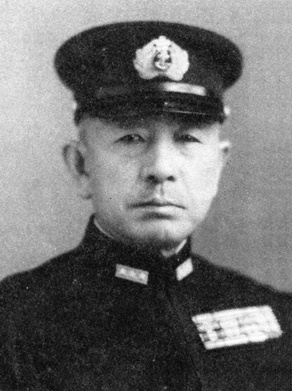
They only lose 123 aircraft and less than that in pilots! The Japanese lose at a rate of 6 to 1 in planes
and nearly 3,000 of their Navy personnel are wiped out. Thereâs some blustering about why this is
involving proximity fuzes (i.e. shells/missiles that blow up when they get near the enemy plane so
you donât need a perfect shot to score a hit) but then they admit they had a full intel breach of the
Japanese defensive plans:
âThe aerial part of the battle was nicknamed the Great Marianas Turkey Shoot by American
aviators for the severely disproportional loss ratio inflicted upon Japanese aircraft by American
pilots and anti-aircraft gunners. During a debriefing after the first two air battles, a pilot from USS
Lexington remarked "Why, hell, it was just like an old-time turkey shoot down home!â The
outcome is generally attributed to Japanese shortages of trained naval pilots, spare parts and fuel
and American improvements in training, tactics, technology (including the top-secret anti-
aircraft proximity fuze), and ship and aircraft design. Also, the Japanese defensive plans were
directly obtained by the Allies from the plane wreckage of the commander-in-chief of the
Imperial Japanese Navy's Combined Fleet, Admiral Mineichi Koga, in March 1944.â
Yeah the latter is probably quite useful, right? Might have given you the edge there.
Japanese Marshal Admiral and commander-in-chief of the Imperial Japanese Navy's Combined
Fleet Mineichi Koga:
He was involved in the Battle of Hong Kong (but weâll get to that). As per Wikipedia:
âFollowing the death of Admiral Isoroku Yamamoto on April 18, 1943, Koga succeeded
Yamamoto as Commander in Chief of the Combined Fleet. His flagship was the battleship
Musashi. Koga attempted to revitalize Japanese naval operations by reorganization of the
Combined Fleet into task forces built around aircraft carriers in imitation of the United States
Navy, and organized a land-based naval air fleet to work in coordination with the carriers.
Operationally, he intended to mount an aggressive counteroffensive, first in the Aleutians to dilute
American forces and eventually to lure the American fleet into a major naval engagement in late
1943. However, the losses of Japan's land and carrier based aircraft in the Southwest Pacific
eventually forced a Japanese withdrawal from the Solomons to the aero-naval base complex at
Rabaul in the Bismarcks by the end of the year, and the simultaneous defeat in the Gilbert Islands
of the Central Pacific that same fall. Koga gradually adopted a more conservative stance,
attempting to conserve his remaining forces for a decisive battle to inflict maximum damage on the
Americans when they closed toward the 'Inner Defence Lines' of the Marianas and Philippines
(code named "Z plan").â
I appreciate we havenât looked at the Philippines yet, but: the Aleutians, the Solomons, Rabaul, the
Gilbert Islands and now the Marianas. All locations which I have picked over autistically, for
months, with not a shred of evidence that the Japanese were involved there. The death of
Yamamoto was staged and ridiculous as Iâve covered previously, so Iâm deeply suspicious about his
successor.
What happened to him?
âKoga was killed when his plane, a Kawanishi H8K ("Emily") flying boat, crashed during a
typhoon between Palau and Davao while overseeing the withdrawal of the Combined Fleet from
its Palau headquarters on March 31, 1944. His Chief of staff, Vice Admiral Shigeru Fukudome
survived ditching in a second airplane off Cebu and was held captive by Filipino guerrillas,
during which time Koga's battle plans found their way into Allied hands. His death was not
announced until May 1944 when he was formally replaced by Admiral Soemu Toyoda. Koga was
promoted to Marshal Admiral posthumously and he was accorded a state funeral. His grave is at
the Tama Cemetery, outside of Tokyo.â
Amazing, so another plane crash (like with Yamamoto) and his Chief of Staff lives only to be
captured by guerrillas and then he hands over absolutely vital war plans, these âZ Planâ documents
to the Allies.
Get ready for the bullshit to go into overdrive. From Wikipedia:
âThroughout the spring of 1944, the aircraft losses for the Japanese continued to mount which was
severely endangering the success of the operation; however the death knell occurred on March 31,
1944, when Mineichi Koga and some of his staff were killed in two separate plane crashes, while
the remainder were captured. Among those captured was Shigeru Fukudome, who was in the
second plane (not Koga's). After extricating himself from the wreckage, he was able to locate land
and began to swim ashore. After spending hours in the ocean, all the while approaching the
coastline, he was spotted by some Filipino fishermen and taken prisoner.â
No mention of the typhoon. You might be wondering about the Z Plan documents. Absolutely top
secret, obviously. Presumably encoded. On a microfilm or something? Carried in a secret
compartment in your belt buckle? Or written on an ornate scroll bound in ribbon sat in a special
airtight jade box that explodes if you donât ring some tiny golden bells in the right order before you
open it? Something on a spectrum between the two examples. You'd want to destroy the war plans
immediately if you thought youâd be captured of course, thousands of your countrymenâs lives
would be at stake if it was found. Read on:
âThe (Z Plan) documents floated in the water just offshore and were picked up by a shopkeeper
with the help of his neighbour. They were turned over to a guerilla and sent to the American
forces for analysis. A clandestine high-priority submarine pickup was arranged, with a cover
story of evacuating American refugees. The USS Crevalle picked up the documents, along with 40
American men, women and children. Travelling mostly on the surface for speed, and diving only
when needed, the submarine survived depth charging twice, arriving near the American naval
base in Darwin, Australia on May 19. From there, the documents were flown to Brisbaneâ
I love it. Floating in the ocean, post-typhoon, post-plane crash, bobbing along only to be spotted by
a fisherman and a shopkeeper. The documents (itâs never specified in what form they are in, I can
only assume a literal A4 sheet of paper with âToppe Sekrat Plannâ written on it in crayon and a
photo of Hirohito glued into the corner with some little hearts) arenât even encoded. No, really:
âThe Z Plan documents were in plain text, rather than code, and were translated on an urgent
basis by the top five translators at the Military Intelligence Service attached to the Allied
Translator and Interpreter Section, it was first translated by Yoshikazu Yamada and George
"Sankey" Yamashiro, two nisei translators. Copies of the translation were rushed to General
Douglas MacArthur, who quickly forwarded them to Admiral Chester Nimitz, commander-in-
chief of the Pacific Fleet (and Admiral Koga's counterpart). Among other things, planned
Japanese diversionary tactics were now anticipated by the Americans, leading to the lopsided
American victory in the Battle of the Philippine Sea, the largest aircraft carrier battle in history,
and one of the decisive battles of the Pacific war. After the loss of the plans, Admiral Soemu
Toyoda, Koga's successor, rewrote the plans in a more aggressive manner and named it Operation
A-Go.â
To make this even more ridiculous, this Fukudome guy was then SENT BACK TO JAPAN
UNHARMED AND WAS PROMOTED! No really, if you look at his Wiki page:
âOn March 31, 1944, while travelling by air from Palau to deliver plans for the Japanese
counterattack in defence of the Marianas Islands (code named "Z plan") to Japanese
headquarters at Davao near British North Borneo, Fukudome became the first flag officer in
Japanese history to be captured by the enemy (Filipino guerrillas commanded by Lieutenant
Colonel James M. Cushing) after his plane crash landed in a typhoon near Cebu. (Admiral
Mineichi Koga, who had been travelling in a separate plane, was killed the same night). He was
released by the Americans to prevent retaliation on civilians by Japanese forces, but the battle
plans fell into American hands.
After Koga's death in March 1944, Fukudome became commander-in-chief of the 6th Air Base
and 2nd Air Fleet, based in the Kyūshū-Okinawa-Formosa district. He later noted that this
appointment was out of convenience, arguing that since he had no experience with naval aviation,
his assignment to a newly formed air unit must be because of the immediate need for an officer of
flag rank.â
Incredible. So we never find Koga, heâs just gone into the ocean, we learn that Fukudome was
apprehended by guerrillas being run by British special forces â a Cushing no less, so think Peter
Cushing from the old 60âs Hammer Horror films â then the Americans release him âto prevent
retaliationâ and then he gets to go home and becomes CIC of an Air Fleet!
Meanwhile if you look at the photos of the battle itself you get stuff like this: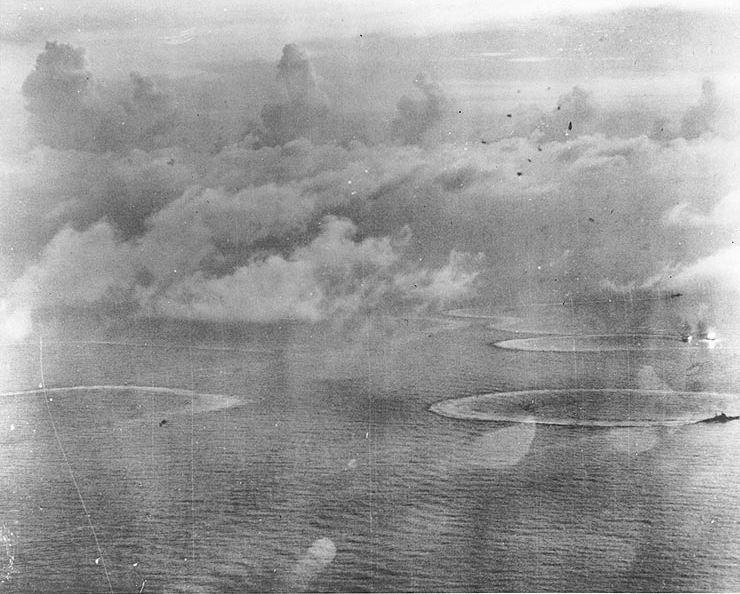
âJapanese Carrier Division Three under attack by United States Navy aircraft from Task Force 58,
late afternoon, June 20, 1944. The heavy cruiser circling at right, nearest to the camera, is either
Maya or ChÅkai. Beyond that is the small aircraft carrier Chiyoda.â - original here.
Four ships sail in tight circles while up above in the clouds we have a dozen black blobs signifying
planes dogfighting. Or something.
Have a look at the galleries of photos from the battle online, for example from this site. You will
see:
â Americans firing flak and shells at the sea and sky.
â Tiny black blobs (maybe less than a dozen each time) up in the clouds
â Americans standing around on deck, drinking beer or looking at âhow many did we shoot
downâ flag score charts on the wall.
What you wonât see:
â An actual giant naval battle involving dozens of ships and 1,600-odd aircraft.
Or you can watch this video clip about the battle which for some reason presents a small training
exercise where about five planes take off, shoot a target hulk on the surface and one target plane in
the sky before landing as a giant naval battle. I think Iâm supposed to get confused because they cut
between the very small scale training exercise shooting at a single target and panning shots of a
giant fleet sailing around with stirring music. Iâm supposed to think a giant battle is occurring
because I donât understand basic editing techniques.
Whether itâs the background plot-lines about the Z Plan recovery or the actual photo/video
evidence, this naval battle seems pretty fake to be honest. On to T
he Battle of Guam...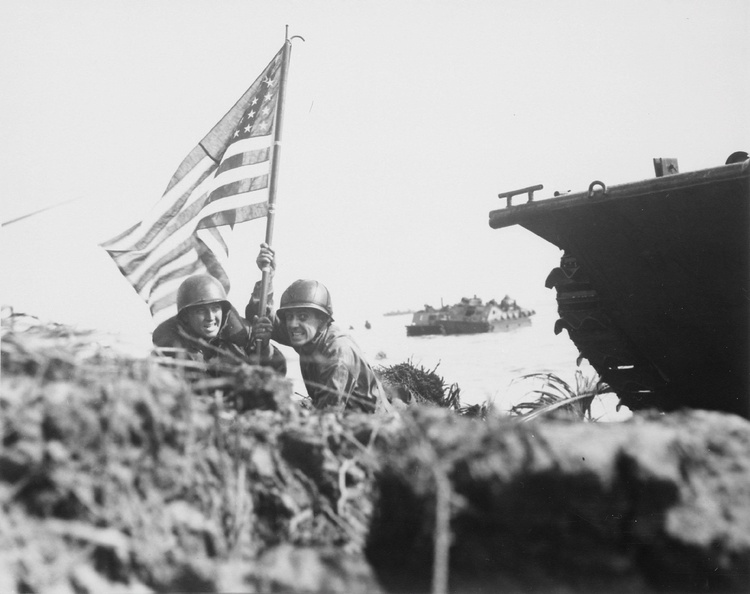
âMarines planting the US flagâ - original here.
Zoom in on that guyâs face. The one on the right. Tell me this isnât a ridiculous photo, staged, with
the men supposedly in a war zone goofing around for the camera. They might as well have had the
Marx brothers holding up the flag on a tropical beach while pulling silly faces.
Iâm tempted to leave it there but the Muses demand this web of lies gets an absolute shoeing so I
shall press on. The Second Battle of Guam is not to be confused with the First Battle of Guam â that
was back on 8th December, 1941. At this time, Guam was regarded as unimportant â a minor coal-
refuelling station for ships. The Americans:
â...captured Guam from the Kingdom of Spain on 21 June 1898 during the SpanishâAmerican
War. The next year Spain sold the other islands in the Marianas chain to Germany. The United
States Navy established a facility near the village of Piti on Guam in 1899, and the United States
Marine Corps (USMC) opened a barracks at Sumay in 1901. A naval coaling station was
established on the island in 1905, and a battery of six 6-inch (15 cm) guns was emplaced to
strengthen Guam's defences in 1909. A U.S. Navy captain served as both the Governor and
commander of the naval base from 1899 onwards, though there were some elements of a civilian
government on the island.â
You know I never knew how about the Americans stealing Pacific islands and converting them into
these weird martial law / naval dictatorships until I started this series. They stole an island via
conquest from the Spanish⦠then ruled over the natives exactly like in the old Imperial colonial
days. Bizarre. How is this in keeping with the idea of the Republic/Constitution? Surely it would be
released from Spanish rule, go back to being an independent island and youâd then trade with them?
Or youâd offer to incorporate them as a new State? Nah, you can have a Navy Captain run the place.
âThe United States government did not believe that it would be possible or practical to defend
Guam if it was attacked. The island was not seen as being useful in efforts to reinforce the
Philippines, though it served as a refuelling point for Pan Am flying boats and was one of the 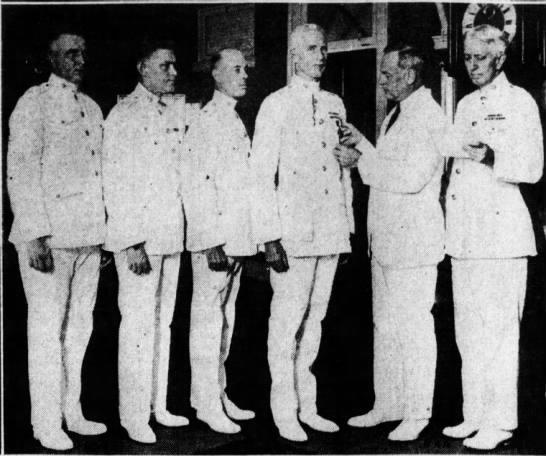
relay points for the Pacific Cable Company's telegraph cable which linked the Philippines to the
US west coast. In 1941, the island was given a "Category F" defence rating; this ruled out the
construction of new defences and meant that, when war broke out, Guam's defenders were to
destroy all facilities of military value and withdraw. Despite this and with only small arms
available to them for their defence, the U.S. Marines stationed on the island under the command
of Lt. Col., later, U.S. Marine Corps Brigadier General William K. MacNulty, fortified their
positions and put up a defence against the subsequent Japanese aerial assault of the island,
while suffering losses and other casualties of nearly one-third of their complement.â
Make sense of that if you will. The island is irrelevant, one of several relay points for telegraph
cables going to California. They strip out all the coastal artillery batteries by 1930 and tell the
Marines based on Guam to retreat if anyone attacks. Not worth it lads, just get out of there. Instead
you have the Marines dig in and get a bunch of guys killed as a predictable, pointless, result. Isnât
that literally disobeying orders? Iâm not military, but Iâm pretty sure youâre meant to follow the
procedure set. If the Pentagon tells you to run away, you run away. You know youâre not going to
get rescued, you know you canât possibly win. Why fight? Wouldnât MacNulty get chewed out for
risking his menâs lives? They only held out for about two hours anyway, it wasnât worth it.
This is the only photo we have of MacNulty by the way:
âIn 1930, Capt. William K. MacNulty (second from far left) and three other U.S. Marine Corps
officers are awarded the Navy Cross for their service in the Banana Wars by Ass. Secretary of
Navy Ernest Lee Jahncke (second from far right). At far right is Maj. Gen. Ben H. Fuller,
Commandant of the Marine Corps.â - original here.
How many died in the defence of Guam you ask?
âU.S. Marines' losses were five killed and 13 wounded (including the prior Japanese air assault of
the island, the marines' losses were 13 dead and 37 wounded). The U.S. Navy lost eight killed while
four of the Guam Insular Force Guards were killed and 22 others wounded. One Japanese naval
soldier was killed and six wounded. PFC Kauffman was killed by the Japanese after the
surrender.â
Double 13 and an 8? That's a Bingo!
Regarding PFC Kauffman, please refer to this site which shows in multiple source comparison that
nobody can give a consistent answer as to how he died or why. So thatâs more fiction. I like the one
where the Japanese build a large bonfire and cook him to death, thatâs suitably grim. Thereâs
another plot line on Guam involving Naval radioman George Ray Tweed who hides out on Guam
for over two and a half years despite being constantly hunted by Japanese. He befriends natives,
runs an underground newspaper and ends up signalling American ships to give them vital intel prior
to the invasion:
âBased on the radio broadcasts, Tweed published an underground newspaper, the Guam Eagle,
for four months using a typewriter and carbon paper⦠Tweed managed to hide in the middle
portion of the island, aided by many locals in 11 different locations, until October 1942.â Then,
Tweed was sheltered on Antonio Artero's ranch on the north-west portion of the island. In total,
Tweed managed to elude the Japanese for two years and seven months, until just before the start
of the Second Battle of Guam in 1944. During that time, he studied algebra and made shoes for
the family watching over him. On July 10, 1944, he was able to signal two destroyers, involved in
preparations for the impending US invasion, with a mirror and semaphore. Tweed conveyed
information about Japanese defences that he had gathered from his vantage point overlooking the
west coast of the island.â He was rescued by a whaleboat from the USS McCall.â
Truly a heroic underground newspaper vendor, shoemaker, algebra student and radio operator. An
inspiration to all men. If you believe that paragraph was truthful, please contact me at your earliest
convenience as I have an exciting investment opportunity for you: itâs called LestradeCoinâ¢. Itâs a
bit like Bitcoin, but it wonât ever drop in value, guaranteed, so better that you buy into it now while
itâs cheap. As a bonus offer I will also securely hold onto any of your gold coins/bars for free, just
post it over to me and Iâll keep it safe for you, long term.
Anyway, Iâm getting distracted by earlier sedimentary layers of fiction. Iâm meant to be looking at
the Second Battle of Guam (21st July â 10th August 1944), which is surely legit and sensible.
The 22,554(?) - some sites say 22,000, others say 18,000 or 18,500 or other figures â Japanese
troops on Guam were commanded by Takeshi Takashina, who was âkilled in actionâ on the 28th of
July. The internet fails to educate me on a) how he died, b) how his death was confirmed and c)
where his body is. We just get multiple websites telling me the same blurb that he was KIA and
then Hideyoshi Obata took over command. I assume hit by American shelling? Normally the
Japanese commanders are in some luxury underground bunker away from the frontline so I doubt
he got a rifle bullet to the gut. Ah wait, according to this website, he was mown down by machine
gun fire mounted on an American tank. Hell of a way to go out. 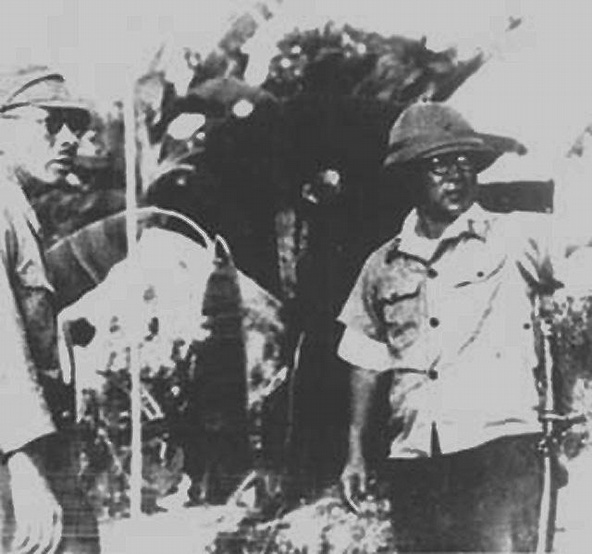
âPrior to the anticipated American landing on 21 July 1944, LtGen Takeshi Takashina, right,
commanding general of the 29th Infantry Division, inspects defenses on Agat Beach, with Col
Tsunetaro Suenaga, who commanded the 38th Infantry.â - original here.
âThe loss of Takashina's infantry officers, including General Shigematsu, who had commanded the
48th Independent Mixed Brigade, was held to be as high as 96 percent. Takashina himself fell to
the fire from a machine gun on an American tank as he was urging survivors out of the Fonte
position and on to the north to fight again. With Takashina's death, tactical command of all
Japanese forces remaining on Guam was assumed by General Obata.â
- from this site, transcribing a historical pamphlet from the Marine Corp., History and Museums
Division, from the Department of Defence.
Where is his body? Did they cremate it? Is he in an unmarked grave on Guam? No idea. Nobody
cares. Presumably left to rot where he fell. More like gone in a puff of smoke.
For Obata, the replacement, we see on his Wikipedia page:
âFrom April 1923, Obata was assigned as a military attaché to the United Kingdom and from
November 1927 to August 1934 as military attaché to British India. In August 1934, he was
promoted to colonel in the cavalry and recalled to Japan for staff postings within the Imperial
Japanese Army General Staff.â
Of course he was.
âObata committed seppuku on 11 August 1944 in Yigo, Guam, ending Japanese attempts to hold
the island. Obata was promoted posthumously to the rank of general.â
Dies of shame according to rigid honour system, but gets promoted. And:
âHis wife was a daughter of Field Marshal Kawamura Kageaki.â
This jumped out at me because Kawamura Kageaki was a Satsuma Clan samurai. He fought in the
Boshin War, which as per part 2 of this series is (in my theory) a major point in Japanese history
because it marked where the Western Elites, (or more accurately the Phoenician Empire), took over
Japan using the Satsuma/Choshu/Tosa clans as proxies. This is why Miles has observed Imperial
Japanese medals looking like Phoenician military symbols, itâs because they got flipped in the 19th
century and are now part of the club.
Obataâs⦠well, not grave... but a plaque in his honour can be found at Findagrave, where we read:
â...after giving the order that his forces should fight to the death, he committed suicide and his
body was never recovered. He was promoted posthumously to the rank of general.â
So thatâs 2 for 2 on Guam where both Japanese commanders are never recovered. We know they
committed suicide, honest, scoutâs honour, but we just never found the body and thereâs no grave.
Not a great start for Guam, eh? It already stinks. Letâs look at the Order of Battle. I predict: massive
overkill from the Americans where they bomb the hell out of the place and some Magic Numbers.
âBefore landing, US forces sought to ensure both air and naval superiority. A total of 274 ships,
which fired 44,978 shots from 2-inch and 5-inch guns supported the landing. In addition, a total of
13 aircraft carriers participated in the air raid and a total of 4,283 bombs (weighing a total of
1,310 tons) were dropped from 18 to 20 July, the day before disembarkation. The heavy
bombardment burned all the palm trees on the beach and destroyed every building that could be
seen. Experience gained by the Japanese from the invasion of Saipan was used to try to mitigate the
effects of the bombardment. Despite this, the bombardment far exceeded the expectations of the
defending forces which were dug in along the coast as they were on Saipan. Many of the bases and
guard towers were also destroyed.â
You donât say. Yes Iâd imagine that thousands of tons of high explosive might dent the defences
somewhat. Incredible coincidence as always that itâs the magic numbers coming up again.
âHowever, artillery pieces entrenched in dense forests, caves, trenches and locations four
kilometres or more from the coast were able to escape destruction and became a source of heavy
Japanese resistance. Guam, ringed by reefs, cliffs, and heavy surf, presents a formidable challenge
for any attacker.â
This is a rather Eeyore-ish way of explaining that the Americans incinerated everything inland for
four kilometres. Thatâs prior to sending in -checks notes- 59,000 Marines to fight 22,000 Japanese.
Or taking a minute to reload and drop another 1,300 tons of explosive further inland. They had
these things called planes you see, which meant that if the Japanese start causing trouble
somewhere, they can just⦠bomb them there as well. But no, do go on how the Japanese were able
to keep fighting by using magic caves.
(This is leaving aside the point that if you have an artillery cannon, you need to obviously be able to
fire it at your enemy. This means it needs to be at least partially exposed to the sky so you can fire a
shell. Therefore someone else can spot you and bomb you.)
We then have the usual back and forth âMarines advance slowly, Japanese resist fiercelyâ stuff Iâve
read again and again until the eventual (mathematically inevitable) US victory. We have an
interesting beat about Death Camps:
âGuam's native Chamorro population had suffered considerably during Japanese occupation,
and the Japanese soldiers began to commit atrocities during the preparation for the invasion. In
what became known as the Manenggon March, the Japanese soldiers forced most of the island's
population to march into six concentration camps in southern Guam. The sick and starving were
left for dead along the way, and Japanese troops massacred about 600 civilians out of Guam's
population of roughly 20,000. As many as 2,000 may have been killed during the occupation.
Liberation Day continues to be celebrated on Guam every 21 July.â
So⦠they killed 600 people out of 20,000 at six separate concentration camps. Why so many
camps? Itâs not that big an island/population. What did they do, shoot 100 guys at each site? If the
Japanese wanted to massacre the natives why did they only kill 600? The word âmayâ is pretty
crucial in that penultimate sentence. Whatâs the proof of this happening?
I will make a suggestion that will get me stink-eye from American vets: given the Americanâs track
record in the Pacific of using overwhelming force â as in for an example with Saipan where
(allegedly) 20-30,000 civilians are killed as collateral damage â is it not possible that the Japanese
were simply funnelling all the civilians on Guam into containment centres for their safety? I mean,
if you were defending an island and the US Marines were about to arrive you would know that any
villages or towns visible from the air would get firebombed. You would also know there would be
massive loss of life to anyone caught in the path of the invasion. Would it not be prudent to simply
relocate everyone (perhaps even if this meant using force) to keep them safe and away from the
front lines? If time was limited and you had the very sick and elderly falling dead on the journey to
the camps would it again not be brutal but practical to keep moving and get as many people to
safety as possible? Just something to consider.
From this site about the march:
âManenggon is a valley area located between the villages of Yona and Taloâfoâfo. On 10 July,
General Takashina, the Japanese commander, ordered all Chamorus throughout the island to be
evacuated from their villages and marched to campsites in the southern interior of the island.
Thousands of people, from infants to the elderly, were forced to march to the Manenggon camp,
with very little possessions, from as far north as Yigo and as far west as HÃ¥gat. Southern villagers
were collected mostly at inland campsites near Malojloj and Malessoâ. People from the central part
of the island stayed at a camp along the Pago River called Asinan, though many of them were later
marched to Manenggon.â
A few things. Firstly: based on where Manenggon is located, if you were a native anywhere in
southern or central Guam youâd need to walk less than 10 miles (16km) to get to the camp. If you
were up by Yigo in the north-east thatâs more like 16 miles (26km). So, firstly, this isnât a
horrendous excursion. Youâre walking for a couple of hours. The march starts on July 10th and the
Americans donât arrive for another 11 days so itâs not like they had to walk the whole route in one
go. Again, the context is youâre trying to avoid being killed by the Americans. People died during
this? OK. How many?
Secondly, the Guamanians talk about Manenggon and have their little statue memorial for it: 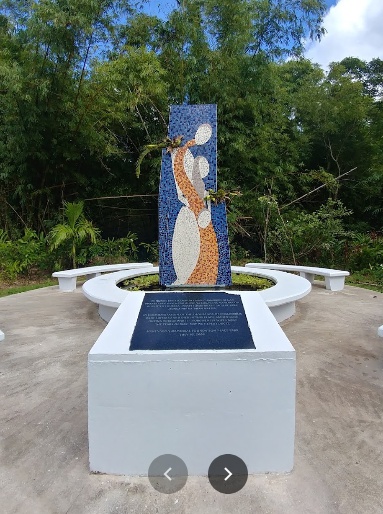
(Courtesy of a Google Maps photo upload by Ms. Gina Byars, July 2019) Sorry, but that is really a
shit memorial. What did it cost? $50?
So why is Wikipedia talking about six concentration camps? Where are the other five? Where are
the shrines/memorials for those sites?
Third: where are the photographs of these camps? The US would have liked some âevil Jap camp
liberationâ photos for the audiences back home, surely? Can you find anything online?
We read on:
âOnce the CHamorus arrived at Manenggon, there were about 18,000 or so of them camped out in
different spots along the Manenggon river. They built temporary huts using tangantångan sticks
and coconut leaves. No buildings, latrines, food, or medicine were provided at the campsites. The
CHamorus used water from the river and foraged for anything edible in the area.â
And:
âNo records exist of how many people died at or en route to Manenggon or the other camps in the
south.â
So⦠there wasnât a camp? They just stopped by a random river and built temporary huts. OK. So
why that location then? Why not send them to an actual camp? How did 18,000 people get shelter
and water and food, surely they would have quickly overpopulated that area and starved/become
sick? Thereâs no way that river valley would have enough forage-able food for 18,000 humans. Is
this âtemporary shelters we built ourselvesâ narrative why there arenât any photographs of any kind 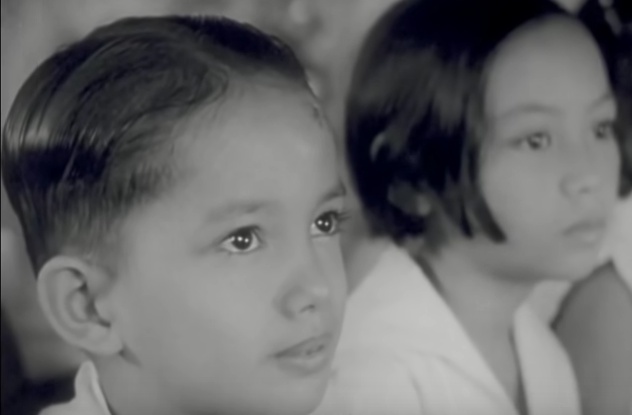
of actual camp? Or any other camps on Guam at the time? We also have no records of the number
of deaths. So the whole âmay have killedâ is complete speculation. This whole thing doesnât make
any sense! So letâs recap: thereâs a lot of atrocity propaganda rumours about death marches and
concentration camps on Guam but itâs literal hot air from the ONI, yet again, with no evidence.
For video footage of the second Battle of Guam you could load up this. Itâs only a short clip but we
see the usual training exercise footage of Marines running around the fields of Guam. No Japanese
or signs of actual battle, just troops test-firing flamethrowers on bushes and throwing grenades over
hills and so on.
Or you could take 20 minutes to watch the hilarious US Navy film âReturn to Guamâ which
features:
â The dramatisation-presented-as-real-time-documentary recovery of radioman George
Tweed. For Godâs sake, donât look at the camera Steve! Weâre rolling!
â Ethnic Chamorro US Navy crewmen unironically reminiscing about how much they longed
for a return to the good old days under US military occupation instead of that awful
Japanese military occupation.
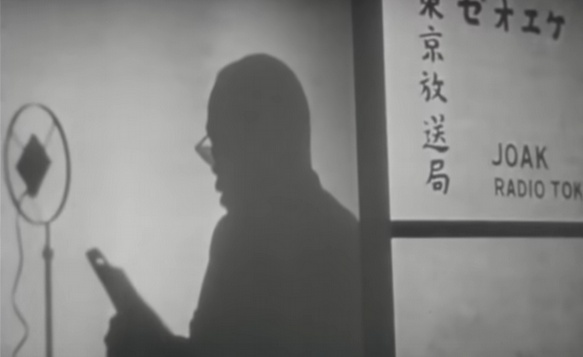
â An American doing an impression of a Japanese radio operator, sounding like a Saturday
morning cartoon villain.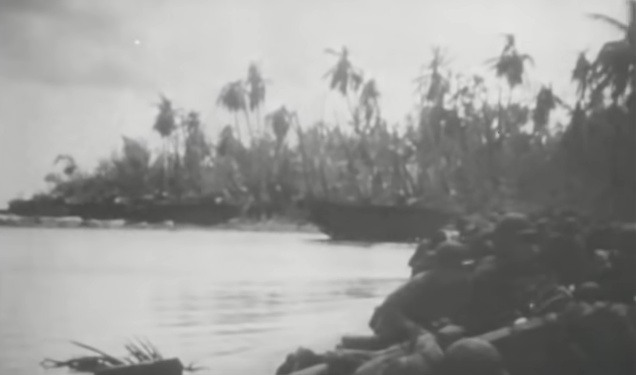
From the 8 minute mark you get the usual footage of Americans shooting at cliff faces, farmerâs
fields and stationary aircraft parked on otherwise empty runways.
Around the 9 minute mark you get some footage of the Americans landing on Guam with a badly
dubbed audio track of voice actors shouting to each other in the recording studio. Youâll note from
the visuals of the landing there are no LVTâs being sunk (the historical canon is that the Japanese
blew up dozens of LVTâs from clifftop artillery positions). Instead we just get shots like this,
showing everyone landing peacefully on a beach front that rather conspicuously has not been hit by
1,300 tons of explosive:
Sturdy palm trees on Guam.
Or this: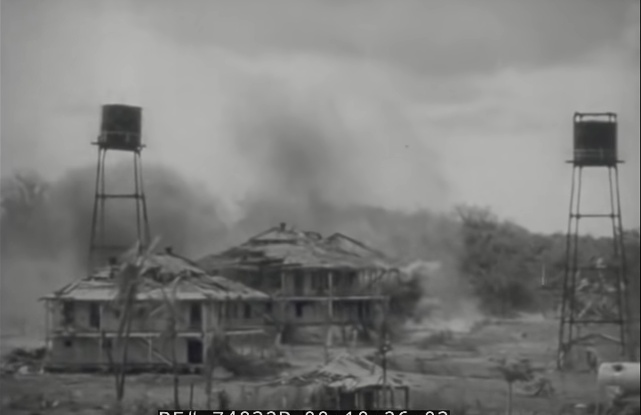
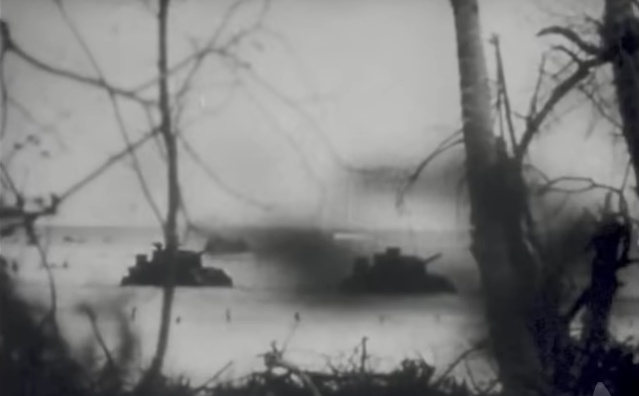
We get a couple minutes of more bad dubbing with footage of training exercises where Marines fire
mortars/field artillery at empty moorland. At 10:26 we get a reveal shot that theyâre attacking a prop
settlement like something out of the intro of Thunderbirds.
Then more of the usual âfire machine gun off screenâ and âshoot flamethrower into small caveâ: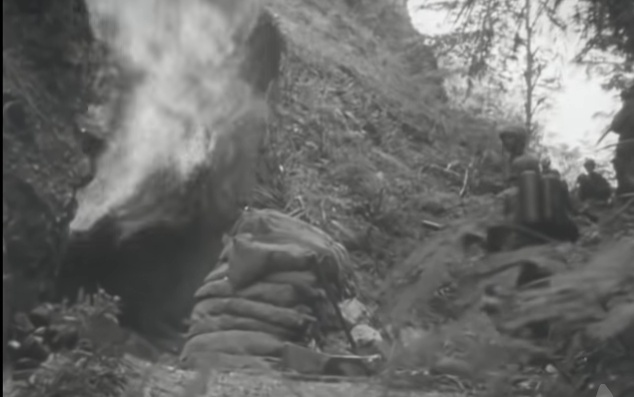
The narrator mentions the cost of retaking Guam was high. Given the Americans had just shy of
60,000 men attack Guam, they only lost 1,783 troops according to Wikipedia. Must be that Iron
Man armour again. The Japanese meanwhile lose 18,337 troops. Of course it would be those
numbers. For injuries on the American side 6,010 are listed. Wikipedia normally combines combat
injury stats with general sickness/injury (so for example malaria, dysentery or general accidents) to
bulk up the numbers. I reckon a couple weeks romping around Pacific islands doing field training
could easily lead to that... if the numbers are even accurate to begin with. Amusingly, Wikipedia
states that only 600 civilians are killed in the entire conflict so that would have to be the 600
Chamorroâs killed at those six notorious spectral concentration camps. This means the Americans
captured Guam without killing a single native â an incredible feat for them! Well done lads.
At 11:50 the narrator tells us 1,226 Americans died, which is a bit different to the modern tally.
Strange.
Shots of the island at 12:47 (for example) show Guam has not been affected by the alleged
firebombing/bombardment that would have burned the foliage and left barren earth: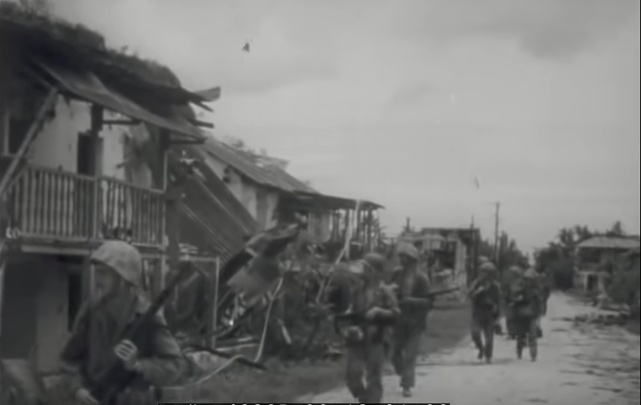
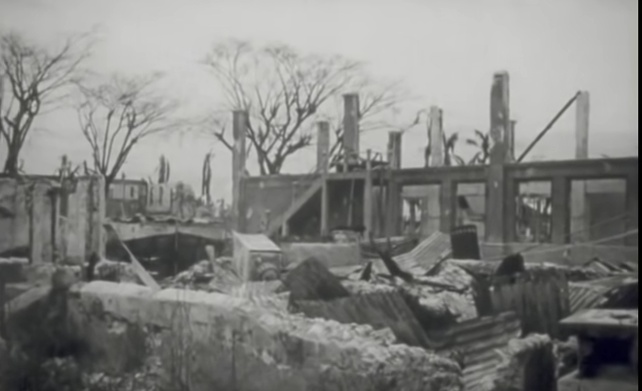
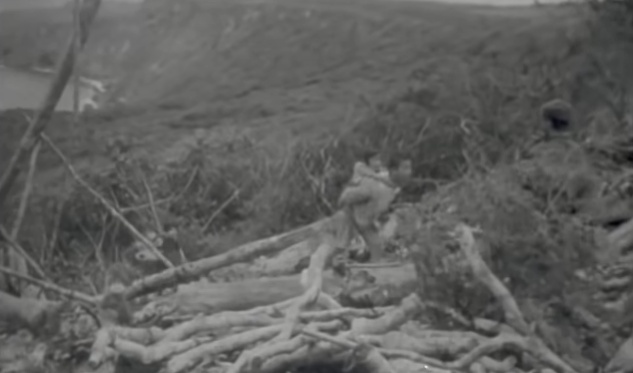
Most of the damage appears to have been contained to civilian habitation, as per the rapid cuts after
the 13 minute mark: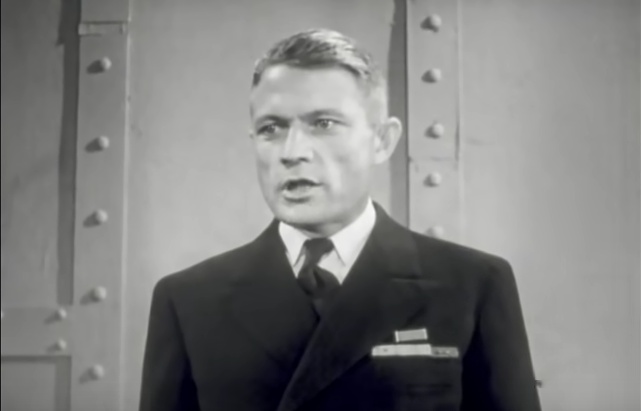
The film wraps up with radioman/semi-pro shoemaker George Tweed himself(?) addressing Naval
brass. Itâs cute how at roughly the 14:38 mark you can literally see him reading left-to-right with his
eye movements:
Honestly, imagine being a US Navy spook in the 1940s. You get paid well, you get to go home to
your hot Stepford wife and five cabana boys and white picket fence. Mortgage is paid off. Job
security, decent pension, dental. No crisis acting needed, no 10 month fake court trials livestreamed.
Just make a laughably badly acted student film with your Hollywood buddies and call it a day.
Good times.
You could also watch this 1944 War Dept film about the Liberation of Guam which is pretty similar
in terms of footage of training exercises. I like how it specifically mentions at the 3 minute mark
that during the landing the Japanese use mortars to attack, they damage some amphibian tanks but
not a single troop carrier. This directly contradicts the later canon history of Guam (i.e. 30+ LVTs
and infantry getting messed up as a result). The footage shows a fairly peaceful landing with the
incoming LVTâs bobbing along and the coastline being untouched from any obvious bombardment
(again contradicting the whole âwe bombed them for weeks, tons of explosiveâ narrative). Except
now its â10,000 tons of bombsâ not 1,300 as the narrator explains at 3:37. Why can they not keep
the story straight? Later on (around 8:50) the narrator explains how in the north of Guam the
Americans found corpses of natives who had been decapitated by hysterical Japanese for the crime
of âlooking to the sky for American planesâ. That would be problematic given all the Chamorroâs
had already been marched to the south to those invisible death camps.
I could go on but you get the point â the visual evidence doesnât reflect the plot, the Americans
keep contradicting themselves and the whole thing is ridiculous as usual. Youâll forgive me if I
move on to Tinian.
The Battle of Tinian â 24th July to 1st August of 1944.
The opening image from Wikipediaâs article is blatantly doctored: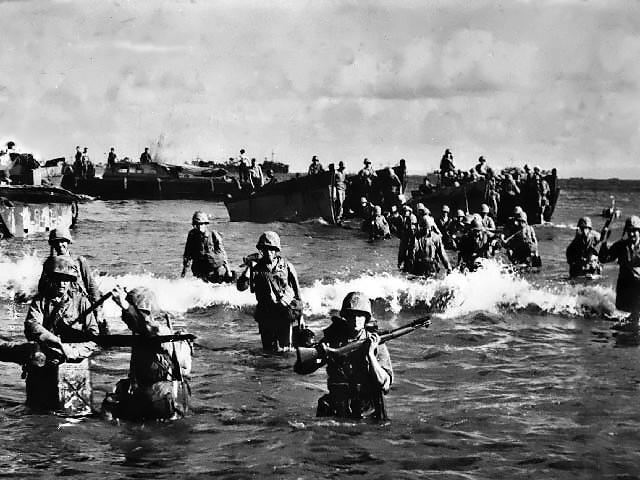
âU.S. Marines wading ashore on Tinianâ â original here. We have seen that one before, I
recognize the pasted guy front and center.
That is so laughably bad I canât believe nobody has spotted this before. Seriously, whatâs going on
here? They gave the job to the intern and went home early that day.
Tinian was occupied by the Americans and eventually turned into a giant 40,000 man airbase:
âTinian is located approximately 1,500 miles (2,400 kilometres) from mainland Japan, and was
suitable as a staging base for continuous heavy bomber attacks on the Japanese Islands.
Immediately after the island's seizure by the US, construction began on the largest airbase of
WWII, which covered the entire island (except its three highland areas). The Tinian Naval Base
was a 40,000-personnel installation, and the Navy Seabees (110th NCB) laid out the base in a
pattern of city streets resembling New York City's Manhattan Island, and named the streets
accordingly.â
Not only was it a giant military facility, it was then used for the WW2 propaganda concept of the
âatomic bombâ:
âNorth Field was the departure point of the 509th Composite Group specialized Silverplate
nuclear weapons delivery B-29 bombers Enola Gay and Bockscar, which respectively carried the
two atomic bombs named Little Boy and Fat Man, that were dropped on Hiroshima and
Nagasaki.â
The reality being that nuclear weapons are a psychological weapon, so nothing actually needed to
be dropped on those two cities.
Funny numbers, as always: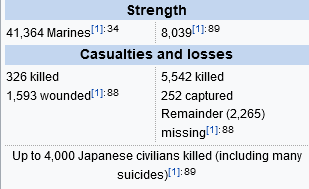
Over 41,000 Marines to fight just over 8,000 Japanese! They lose 326 men (incredibly low numbers
as always), meanwhile the Japanese lose over 5 and a half thousand men with 252 captured. More
extraordinary is the pitch that over 2,000 Japanese troops simply vanish into mist.
We also learn that over 4,000 Japanese civilians are killed:
âBy 10 August 1944, 13,000 Japanese civilians were interned, but up to 4,000 were dead through
suicide, murdered by Japanese troops, or killed in combat.â The garrison on Aguiguan Island off
the south-west cape of Tinian, commanded by Lieutenant Kinichi Yamada, held out until the end of
the war, surrendering on 4 September 1945. The last holdout on Tinian, Murata Susumu, was
captured in 1953â
They invaded on July 24th 1944 â but a garrison on Aguiguan remained operational until September
1945! What about this Murata guy, hiding on Tinian until 1953? The latter is referencing this page,
which tells us:
âHoldout Murata Susumu was captured in 1953. He was living in a small shack near a swamp
since the war. For more information on his capture, read the account of Cristino S. Dela Cruz, who
captured him in the book Saipan Oral Histories of the Pacific War by Bruce Petty, page 40.â
So this is a story told by a Mr. C S Dela Cruz, to the author of this book. Iâm not paying $14 for the
epub copy so youâll forgive my scepticism, but I suggest this is all simply hearsay like every other
Japanese holdout story Iâve looked at.
Of the Japanese commanders running things on Tinian we have Kiyochi Ogata, Goichi Oie and
Kakuji Kakuta.
Kiyochi Ogata: he gets a stub article with no photo, we basically get told âwas a bad guy on Tinian
and committed seppukuâ. No idea if his body was recovered, no grave.
Goichi Oie gets a (terrible) photo at least:
No photo in history ever looked like that, since old photos are analog, with high resolution. They
are never pixellated like that. To get that you have to hit it with a program on purpose.
We learn:
â...the US troops that landed broke through to Mt. Lasso, which endangered Japanese control of
the island. Kakuta, Ogata, and Oie committed suicide in the traditional fashion of seppuku,
where they stabbed themselves with swords and disembowelled themselves.â
OK, so all the commanders kill themselves. And:
âThe knife that Goichi Oie used to commit seppuku was retrieved by a US Marine named Fred
Osgood and sent home to the US in 1944.â
What, so he robs the corpse? Really? No rules in war I guess. OK, so then what about the bodies?
Are they burned? Buried in an unmarked grave? Returned to Japan?
Turning to look at Kakuta, note we have already met this guy as he was involved in the (fake) Battle
of Midway and the (fake) Raid on Dutch Harbour, Alaska. We learn:
âKakuta was the senior military officer on the island during the Battle of Tinian although he was
not directly responsible for the defences. As the Americans closed in on Tinian, Kakuta and his
staff made repeated efforts to escape in rubber boats at prearranged rendezvous with a Japanese
submarine. After several failed attempts, Kakuta and his staff withdrew to a cave on the east coast
of Tinian and were never seen again. It is presumed that Kakuta committed suicide soon after the
Americans landed and that his body was buried in a secret location by members of his staff.â
So hang on⦠the page on Oie talks about the 3 commanders getting together and killing themselves
in a cave. Later on a Marine (Osgood) finds the bodies and steals Oieâs knife as a trophy, implying
his corpse is literally sprawled on a cave floor ready to be searched like a Skyrim loot drop. But the
page on Kakuta talks about the command staff retreating to east Tinian and vanishing without a
trace. The seppuku beat is speculation, as no body is found and no grave is ever uncovered. Once
again these Japanese commanders vanish in a puff of smoke and are never seen again â just
presumed dead.
For footage of the Battle of Tinian we could view this US Marine Corp video âThe Marianas
Operation Phase 3: Tinianâ.
I like how the Marine Corps symbol is the Phoenix cheerfully sat on the world.
The narrator informs us at 2:54 that 90% of Tinian is sugar cane plantation (i.e. it was cultivated
farmland, not rugged inhospitable tropics like in Guadalcanal).
From the 18 minute mark the lengthy briefing about the invasion cuts to some actual footage of the
landing operation. We see the Marine craft bobbing around unharmed, while the larger craft blast
the hell out of the beaches with rockets/shells. As far as Iâm aware the Japanese have no pillboxes
or coastal defence emplacements at White Beach 1 + 2 so theyâre just shooting sand. There is
allegedly enemy return fire (according to the narrator) but we need to take his word for it.
At 20:50 the troops wade to shore and weâre told they have to âclear the beach of minesâ. Itâs
unclear how they are expected to do this and thereâs no footage of mine removal. Weâre given a
shot of a flipped LVT at 21:00 and told 2 vehicles were destroyed by Japanese mines. Thereâs some
talk about a feint off the coast of Tinian town (where some ships sail around in plain view of the
Japanese, apparently theyâre shot at and damaged, but we have no sign of this). You would think the
Japanese would be aware of the massive landing operation in the north west point of the island but
the Marines are able to continuously offload troops and vehicles until 4pm that day (bearing in mind
they first arrive at around 7:30am). This would seem extremely convenient for the Americans and a
massive error on the part of the Japanese defenders.
At the 23 minute mark the Marines have now had the entire day (a nice sunny day with calm seas)
to land, set up shop and have a quiet smoke. Thereâs no sign of combat, no sign of the Japanese.
The narrator then informs us that that very night not just one but multiple Japanese machine gun
teams manage to (checks notes) sneak into the middle of the Marine encampments and start
shooting at their artillery and rear units. What!? How? How do you walk right past all the sentries
and defensive systems the Marines would have set up? No idea. The Japanese then throw âmany
tanksâ at the Marines but these are defeated immediately. No footage or photos of any of this.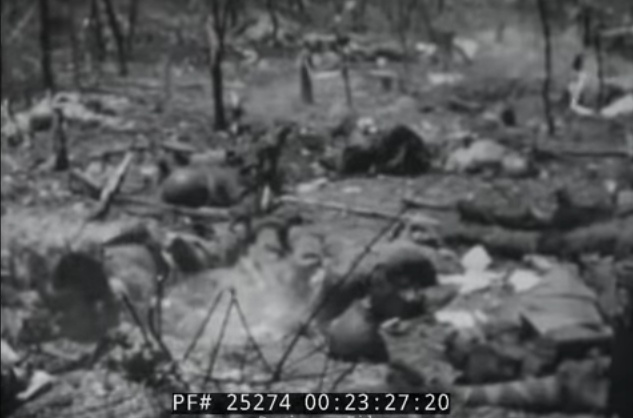
By the following day the sugar cane fields have now been burned and hundreds of Japanese are
killed. We get the obligatory shot of âa couple guys lying down on the groundâ:
What do we think â mannequins? Actors lying down on the ground for a minute? We canât see
anything to confirm these are Japanese. Usual âno blood, no gore, no dismemberment, no insigniaâ
rule applies as always.
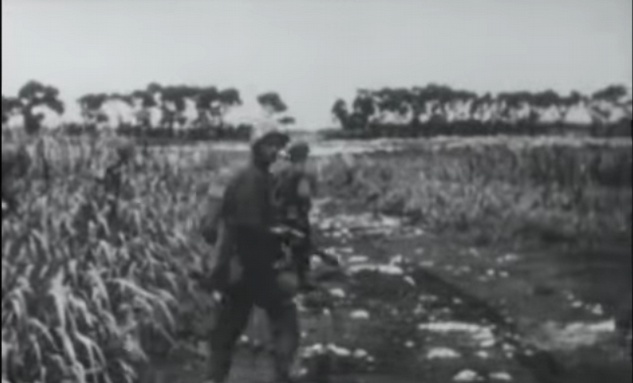
We then have some more footage of ships shooting at nothing, planes flying over empty fields and
so on. We have the Marines walking around the central Tinian sugar cane fields in broad daylight,
meeting no enemy fire whatsoever:
No wonder they later made so many movies about WWII and Vietnam. They needed to replace all
this fake footage with more convincing Hollywood footage. They then did the same thing with the
Apollo missions. Now, when you think of historical proof, you think of Hollywood images.
Saving Private Ryan. Apocalypse Now. Tora! Tora! Tora! Apollo 13.
At 24:00 weâre told that the Japanese are now hiding in caves (of course) on the southern slopes of
Mt. Lasso. Man, these islands are just riddled with huge caves. That's convenient. I wonder: have 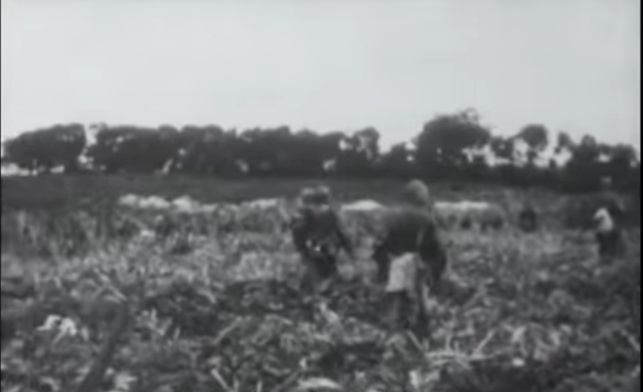
we ever gotten confirmation that these huge caves exist on these little Pacific islands? My guess is
they don't. The few caves that you would expect to be there would only fit a few small animals.
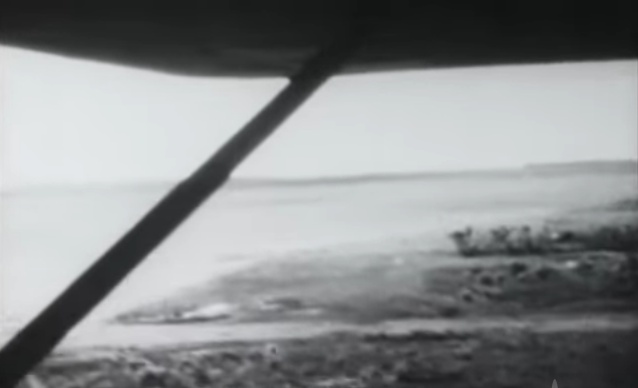
At 24:15 we have a lovely panning shot from a plane that shows absolutely no Japanese or
defensive structures whatsoever. Bear in mind this is meant to be at the main airfield in the north of
Tinian:
We then have some waffle about the Marines enduring Japanese artillery fire (where is this
artillery? Why are bombers not dispatched to destroy them? Why is there no evidence of any of
this? Etc.)
The Marines continue to offload even more men and supplies â this is now 2 days worth of
offloading troops, for such a small location. Even more marching across sugar cane fields occurs:
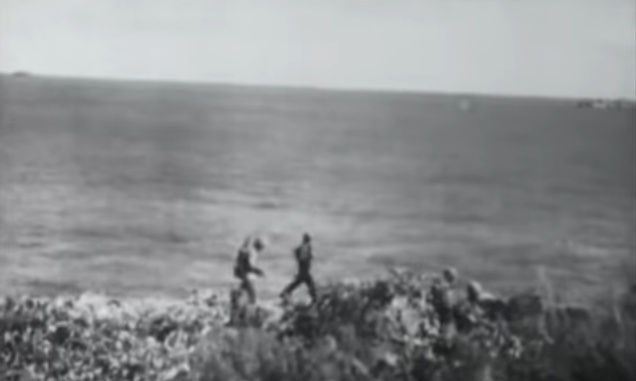
Exciting stuff. Some Marines get to have a lovely coastal walk in the sunshine, which must have
been enjoyable: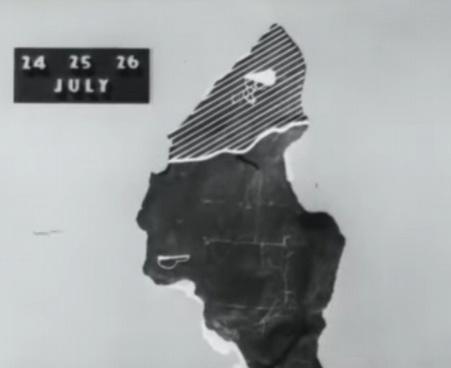
After three days of this the Americans were very proud to announce they controlled a quarter of
Tinian:
The master plan was now to head south and enjoy more of the Tinian countryside. This meant a
road trip using some tanks: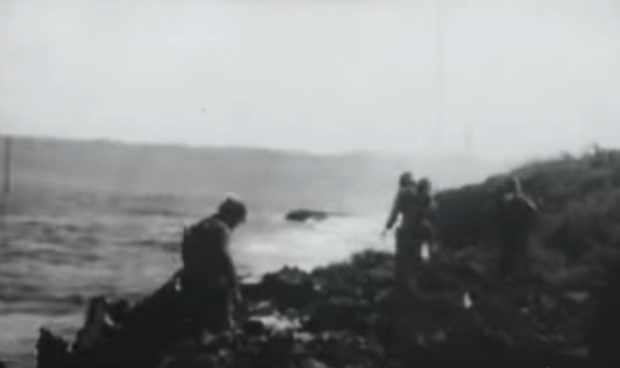
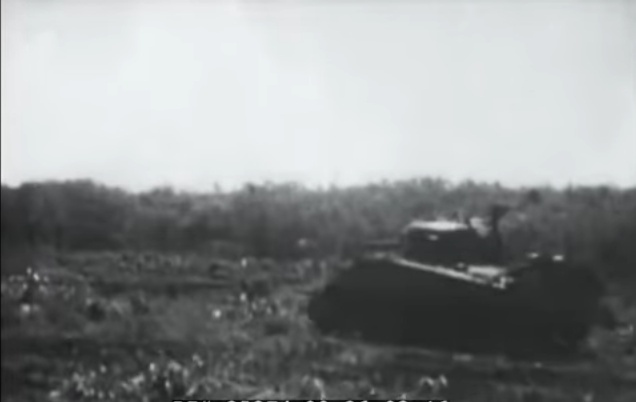
I imagine they stopped off for a picnic or two along the way. Nice time of year for it. I bet you
thought the Pacific campaign was all blood and grit and napalm, right? I had no idea being in the
Marines was so relaxing. Donât worry reader, Iâll let you know when we get to some action.
By 26:17 we learn that the Marines, heading south, met âlittle oppositionâ (you donât say) and made
it to the beach.
Meanwhile back up in the north of the island the airfield that had supposedly been viciously
contested is completely calm and operational with planes taking off and landing. Thereâs no sign of
any artillery / aerial bombardment damaging the runway either.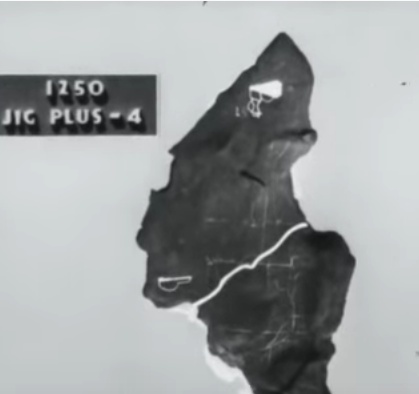
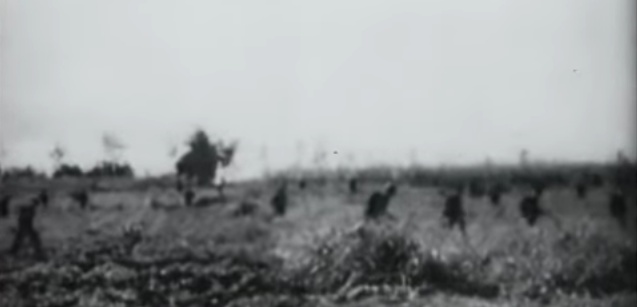
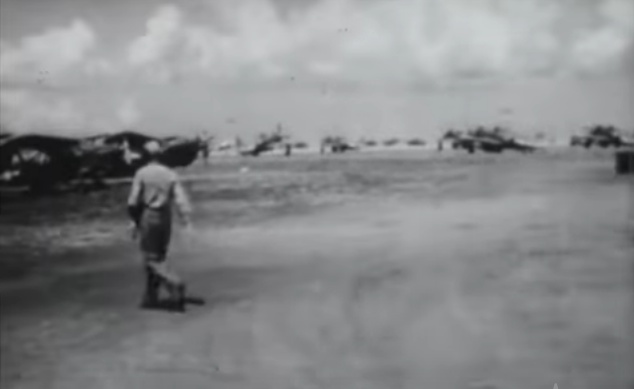
26:35 â more walking around in broad daylight without any opposition:
By the end of the 4th day on Tinian the Marines now controlled the entire northern half of the island: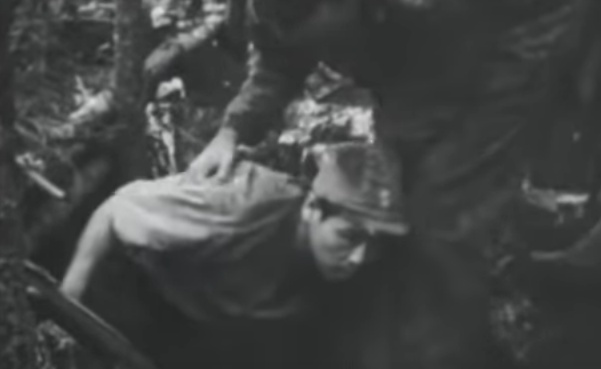
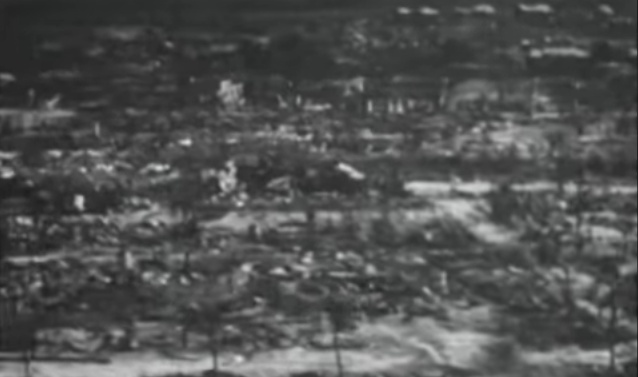
I assume theyâve managed to get the Japanese out of all those pesky caves. Presumably around this
time you had the Japanese commanders do their vanishing trick on the eastern shoreline given that
the island is now almost entirely lost to them.
Thereâs a bit more walking around, some action when a tank drives over a small tree to the
amusement of a native and eventually a shot from a plane when the Americans fly over Tinian
town.
Interestingly, the town has been obliterated:
I mean, I guess they didnât want any stinking locals messing up their future air base, right? Every
structure in the town is clearly flattened in what I presume is a mix of aerial and artillery
bombardment. The Japanese didnât do this and weâve had no combat other than that weird beat on
the first night involving machine gun ninjas.
The Marines now start to face âheavy resistanceâ so we get some shots of artillery cannon firing
into distant fields and a Japanese man looking awkward being hauled out of a burrow like a mole:
The narrator explains that some bombers dropped a bunch of 1,000 pound bombs on Tinian town
and this helped clear out the enemy forces. Iâll bet. The climax of the film involves the Marines 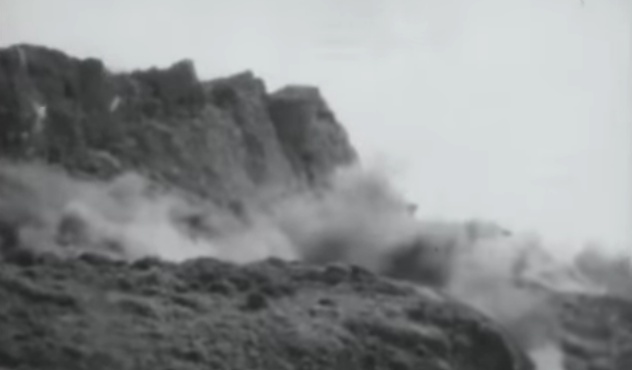
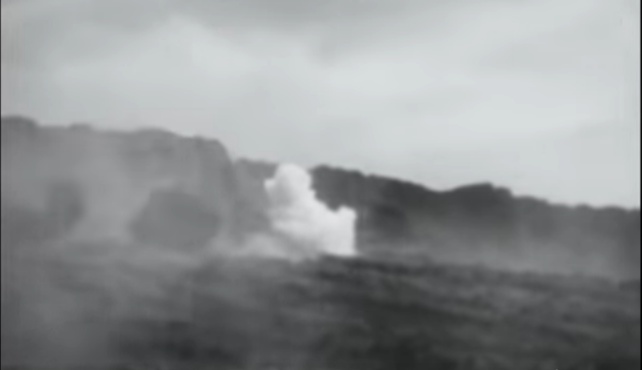
allegedly corralling the Japanese on the southern tip of the island, then sending in dozens of
bombers to drop explosives on them. Tanks are then sent in to shoot at empty hillsides:
We are advised the Japanese respond by hiding in cliff face caves and continue their evil reign there
instead. This is why the Americans complete their conquest of Tinian by firing their remaining
artillery shells at a large cliff. This was convenient for the Americans as the cliff did not move or
protest while being targeted:
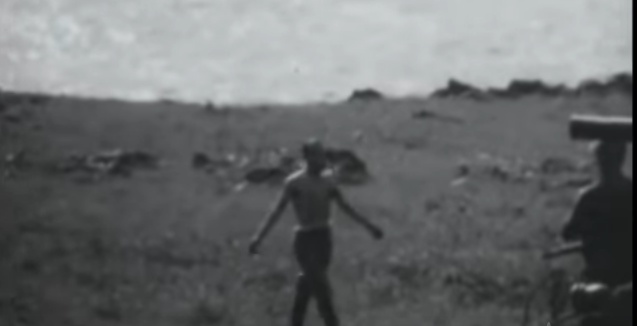
At 30:32 we have one of the last remaining Japanese soldiers surrender, for some reason with a
sassy catwalk strut and no shirt: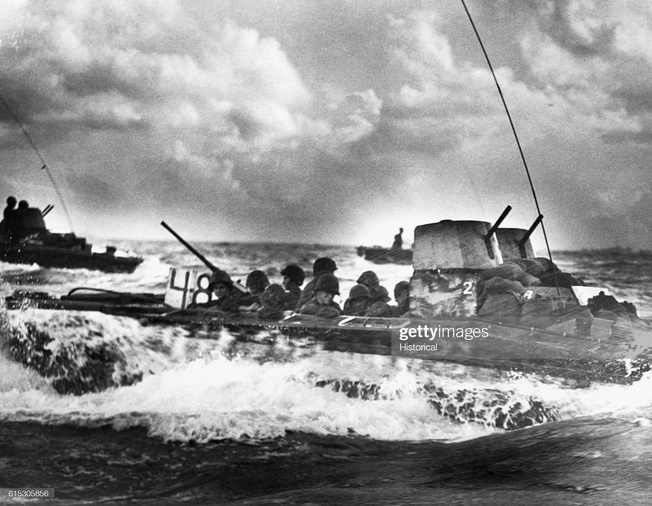
All in all, pretty impressive stuff. Truly, Tinian was the most devastating of battles.
What else is there to say?
âA Water Buffalo vessel loaded with Marines and bound for Tinian Island makes its way through a
churning sea in July 1944.â - original here.
You can see this one has been doctored easily enough â the white glow, the weird silhouettes, the
flat 2D troops on the landing craft by the 48 marker, etc.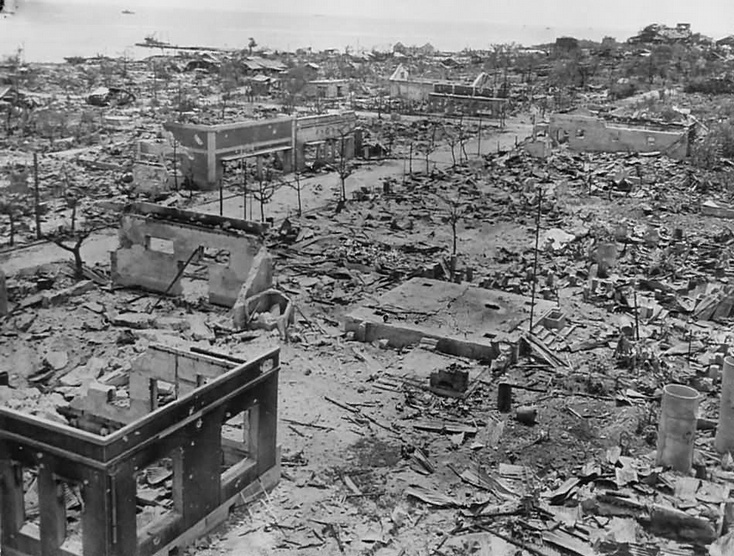
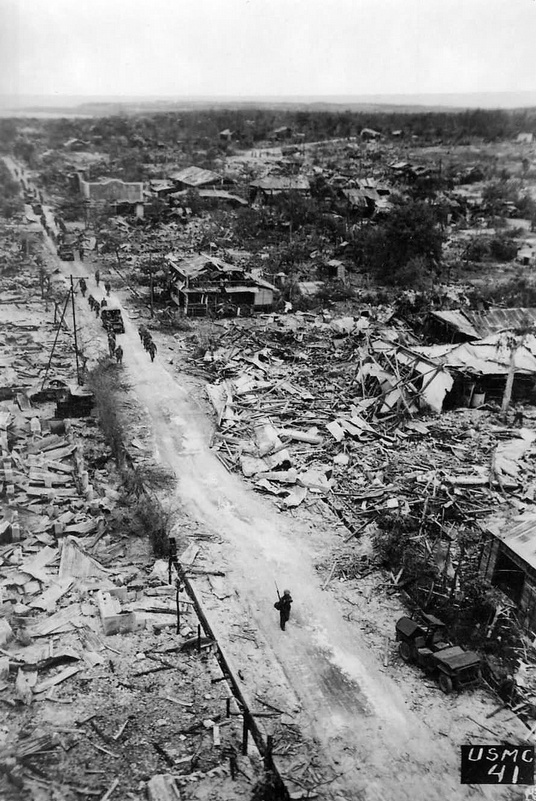
âMarines in bombed ruins of Town on Tinian 1944â â original here.
You can see what I mean about how bad the town got it, compared to the rest of the island. 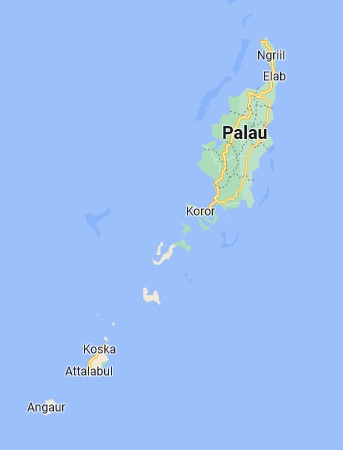
âBombed shelled ruins of town on Tinian Invasion 1944â â original here. Looks real for a change,
but what are we looking at? How do we know it isn't hurricane damage? Typhoons roll through
pretty regularly: there was a Cat. 5 storm that famously hit the Northern Marianas in 2018, being
the worst storm since 1935. More to the point, there was a huge and famous typhoon moving
through that area in December 1944: Typhoon Cobra, which sank three of our destroyers. To me,
that damage looks like typhoon damage rather than shelling.
I just wanted to show two examples of Tinian Town being pulped. Unpopular opinion: the objective
here was actually to flatten Tinian Town, thus driving out all the locals and turned over the entire
island to the American military so they could build their base. Were any Japanese even there? One
does wonder.
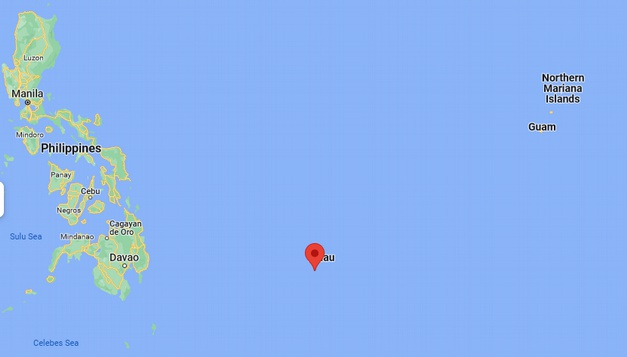
The Battle of Peleliu ran from September 15 to November 27, 1944. A bit of geographical context
is needed here, first of all. This is a map of the Pacific, with the Philippines on the left. You can see
the The Republic of Palau where the red marker is (Peleliu is one island out of Palauâs 340). In the
upper right you can see tiny Guam and the Northern Marianaâs.
If we zoom in on Palau we can see the island chain properly: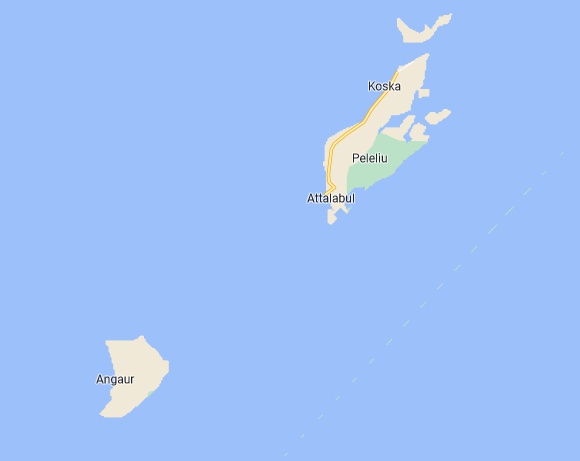
Now if I hadnât said anything, you would assume the Japanese would be on that main island in the
top right, right? Thatâs the biggest island on the chain. Logically, it would be where their main base
would be constructed. Youâve got the most space to build on and the most available natural
resources and so on.
But youâd be wrong. That, dear reader, is Babeldaob and the Americans couldnât give a hoot about
it. Because it was unoccupied? No. According to Wikipedia:
âDuring World War II a Japanese garrison on Babeldaob was composed of 21,449 Imperial
Japanese Army men under the command of Lieutenant-General Sadae Inoue and 8,286 Imperial
Japanese Navy men under the command of Vice-Admiral Kenmi Itoh. Babeldaob was bypassed by
the Allied forces during the war.â
They had a garrison of about 30,000 Japanese. Thatâs not insignificant. Bearing in mind that
Babeldaob being the largest island in the chain is still only 128 square miles in size (331km2). It
makes up over 70% of the land mass of Palau. What do the Marines do? They ignore it. Instead, the
focus of the fighting is on Peleliu and Angaur in the bottom left corner:
That is a story killer, by itself. You should really pause on that for a while and let it sink in. Try to
explain it as a part of the overall story you have been told. Do not move on until you do.
OK, so how many Japanese were based on Peleliu?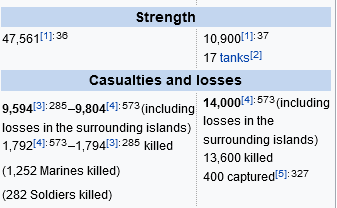
Just shy of 11,000. So thereâs triple the forces on Babeldaob but we can ignore them and sail around
them with no issue, but Peleliu absolutely needs to be captured because⦠because we say so. To do
this, the Marines send in 5 times the number of men as the Japanese had stationed there and they
duke it out on an island that is only 5 square miles (13km2) in size.
We can also see the numbers being shifty because theyâre not listing âhow many Americans fought
how many Japaneseâ properly, theyâre incorporating âlosses in the surrounding islandsâ. Hmm.
From Wikipedia:
âThere was disagreement among the U.S. Joint Chiefs over two proposed strategies to defeat the
Japanese Empire. The strategy proposed by General Douglas MacArthur called for the recapture
of the Philippines, followed by the capture of Okinawa, then an attack on the Japanese home
islands. Admiral Chester W. Nimitz favoured a more direct strategy of bypassing the Philippines,
but seizing Okinawa and Taiwan as staging areas to an attack on the Japanese mainland,
followed by the future invasion of Japan's southernmost islands. Both strategies included the
invasion of Peleliu, but for different reasons.â
I like how weâre not even considering the strategy of simply sailing into Tokyo Bay and capturing
the Emperor in the Imperial Palace. Itâs not like youâre trying to get to Xiâan in central China.
Youâve got a fleet, youâve got amphibious landing craft, you can literally sail right to their capital
and attack. Nah, better go the long way round and fight all over the map. We saw the same thing in
the War in Europe. Don't try to liberate Paris, no, go fight fake battles in the middle of the desert in
North Africa, where only the camels can see you.
Bear in mind this is in September of â44. They beat the Japanese in the Battle of the Philippine Sea
back in June that year. The enemy fleet is smashed. The Americans have the upper hand. Weâre
now in this strange position of the Japanese stacking thousands and thousands of infantry on various
tiny islands with (seemingly) no anti-air ability, no air power and no naval power. This makes them
a) sitting ducks to aerial bombardment and b) completely useless because unless they can go out
onto the ocean to engage the Americans and physically push them back out of the Pacific waters,
which they canât, then they are not a threat. Ironically, the only way you can make them a threat at
this point is to physically sail up to their island and march inland so they can shoot at you, which is
exactly what the Marines do.
On the one hand we have Babeldaob with 30,000 Japanese soldiers sitting around doing sake shots
and reading manga comics who can be completely ignored with no consequences to the Americans;
on the other hand we have these tiny islands like Peleliu which suddenly become vital staging
grounds for⦠what? A runway to attack the Philippines? What about the aircraft carriers? This tiny
island justifies roughly 25,000 men's lives being lost? I really donât want to be armchair general on
this, Iâm just trying to point out the basic illogic of the plot. The war scholars, like the art critics,
must be blind.
âBy 1944, Peleliu Island was occupied by about 11,000 Japanese of the 14th Infantry Division with
Korean and Okinawan labourers. Colonel Kunio Nakagawa, commander of the division's 2nd
Regiment, led the preparations for the island's defence.â
This is Kunio Nakagawa, who of course commits seppuku in a secret bunker. Or was speculated to
have done, for about 50 years. After all, his body wasnât âfoundâ until 1993 as per this article:
âAt battle's end, the Japanese senior officersâColonel Nakagawa and Major General K. Murai
(who was serving as an adviser to Nakagawa) - committed seppuku, ceremonial suicide, in their
last command post, a large, well-shaped vertical cavity positioned naturally in the China Wall, a
limestone-serrated ridge among the Umurbrogol Mountains. Japanese resistance officially ended
there on 25 November 1944 with the code message, "Sakura, Sakura" - "Cherry, Cherry" -
meaning, "it has ended here," sent through the underwater telephone cable to military
headquarters at Koror.â
This is interesting because it clarifies that the Japanese forces occupying Palau were stationed atâ¦
Koror city. To the north-east of Peleliu. If we look at the Wiki page on Koror City we learn:
âKoror was the administrative centre of the Japanese South Sea Mandate, and thousands of
Japanese lived in the city. Parts of the city were destroyed by American aerial bombardment
during World War II, and after the United States occupied the city they burnt or tore down the
remainder of the city, leaving only a few buildings for the occupation forces.â
As with Tinian, you donât want to be living in one of these small Pacific towns when the Americans
come along. Youâre getting bombed flat. Anyway, back to the article from USNI â the writer â
along with a Colonel and a Major from the Vietnam war who specialised in âpsychological
operationsâ (nudge nudge wink wink) come along for the ride and what do you know, for the first
time in decades the magic bunker is discovered with skeletons ready to be examined. The article
doesnât actually confirm the corpses were IDâd as Nakagawa, itâs just given a âyeah itâs probably
himâ conclusion and left at that. How fortunate for everyone that these men can find a bunker 50
years later but no native islander, war historian or tourist did before that, nor did anyone bother to
simply ask the Japanese military where they constructed their headquarters (obviously they would
know and have maps of their own facilities). Also how strange that the Americans who found the
secret bunker didnât care to take any photographs of it. You would think that would be the obvious
move, right? You find a lost bunker and some special corpses, youâd take a snapshot of the bunker,
some boomer in khakiâs and sunglasses giving a sweaty thumbs up by the entrance. Nah, no photos,
just take their word for it. Cameras were too good by then, they couldn't try to pass by you these
grainy black and white pixellated frauds.
Back to the main Wikipedia page on Peleliu:
âAfter their losses in the Solomons, Gilberts, Marshalls, and Marianas, the Imperial Army
assembled a research team to develop new island-defence tactics. They chose to abandon the old
strategy of trying to stop the enemy on the beaches, where they would be exposed to naval
gunfire. The new tactics would only disrupt the landings at the water's edge and depend on an in-
depth defence further inland. Colonel Nakagawa used the rough terrain to his advantage, by
constructing a system of heavily fortified bunkers, caves, and underground positions, all
interlocked in a "honeycomb" system. The traditional "banzai charge" attack was also
discontinued as being both wasteful of men and ineffective. These changes would force the
Americans into a war of attrition, requiring more resources.â
OK so let me stop you there. Number 1: the Japanese are always letting the Americans land and set
up shop. They only attack once youâre walking inland, this is their standard procedure in basically
every battle weâve seen (other than, what, some mines supposedly buried on the north west beach at
Tinian). Number 2: it is also not new or innovative for the Japanese to build bunkers and tunnels,
this is what theyâre supposed to be doing (as weâve seen) as standard practice. What are they on
about? The only new thing is the lack of Banzai charging but whatever, that just means the Japanese
arenât sub-70 IQ morons prepared to lose by throwing away personnel to no benefit. I assume this
paragraph is for people who havenât been following the Pacific campaign along from the off and are
just given a surface hand-wave explanation of why it takes weeks and weeks and so many lives to
conquer Peleliu. Also, itâs irrelevant they have all these pillboxes as the Americans are about to
bomb them for days on end.
âNakagawa's defences were centred on Peleliu's highest point, Umurbrogol Mountain, a collection
of hills and steep ridges located at the centre of Peleliu overlooking a large portion of the island,
including the crucial airfield. The Umurbrogol contained some 500 limestone caves, connected by
tunnels. Many of these were former mine shafts that were turned into defensive positions.
Engineers added sliding armoured steel doors with multiple openings to serve both artillery and
machine guns. Cave entrances were opened or altered to be slanted as a defence against grenade
and flamethrower attacks. The caves and bunkers were connected to a vast tunnel and trench
system throughout central Peleliu, which allowed the Japanese to evacuate or reoccupy positions
as needed, and to take advantage of shrinking interior lines.â
This is the same load of old cobblers as what weâll find at Iwo Jima, where the Japanese are
presented as villainous versions of the Dwarves from Tolkien or perhaps more accurately the
Skaven from Warhammer Fantasy: evil subterranean tunnel dwellers who can build enormous
facilities underground that are impenetrable to attack.
Simple thought experiment: a battle occurs between two armies. One side is based underground in
an elaborate tunnel/bunker network. If the attacking force makes gains then this defending force
would retreat to the safety of their underground lair. Logically, to defeat the defenders the attacking
army would need to go underground to fight them. What would we expect from this conflict? Stuff
about going underground. What evidence would we see after the battle? Photos/videos of people
going into these tunnels and bunkers. Anecdotes about âthat time I had to go down those damn
tunnels and Johnny got shot by a Japâ. Youâd have tourism as well â years later, some tour guide
saying âCome visit the Great Labyrinth of Peleliu!â. Do we have this? Nope.
There are some photos of bunkers (in the sense of pillboxes, i.e. concrete firing points above-
ground). Here are a couple examples pulled off generic Google Image searches: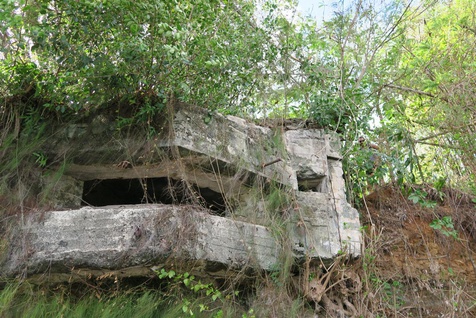
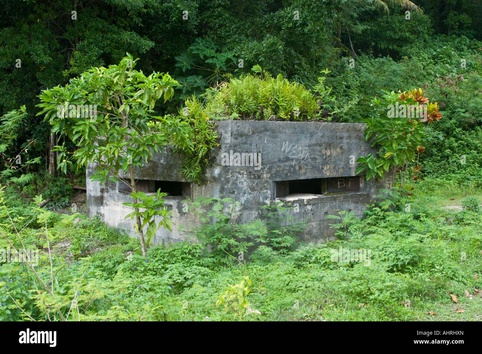
Now this is all well and good but Iâm not seeing a massive interlocking defence network. Iâm not
seeing a reinforced mineshaft complex built into a mountainside with space for 10,000 troops to live
underground full time. That would be quite a thing to see. Iâm also baffled how these pillboxes are
still standing given that (as with Tinian, Saipan, etc.) the Marines had to clear them out one by one
using either tanks, artillery or satchel charges and flamethrowers â therefore leaving the bunker in a
state of significant structural damage unlike in the examples above.
So you google around some more and the internet goes âAh, well, you see Lestrade, the tunnels
were actually in the mountainsâ. Fine, so then you search for any images of these (obviously
enormous and interconnected) tunnel networks. You get stuff like this: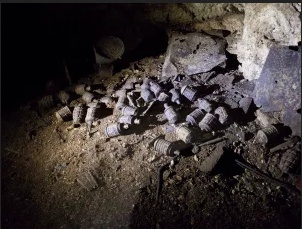
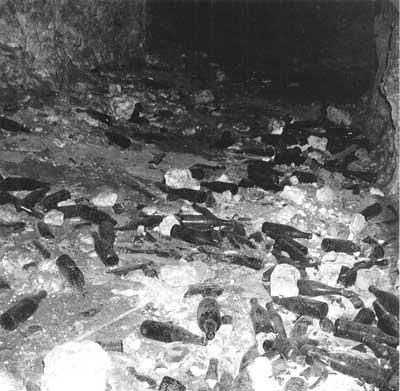
âDiscovered during a trip to Peleliu in 1994 was this 1,000-man cave, littered with empty sake
bottles, deep in the tunnels in the Amiangal Mountain in north Peleliu. Caption and photo by
Phillip D. Orrâ â original here.
A bunch of beer bottles in a cave. OK.
Photo of some Japanese grenades, in a heap, in a random cave â original here.
Seriously where are these tunnels? They had enough underground space to house thousands of men
for weeks (supposedly the Japanese hid their forces completely underground for at least 4 days
straight during the initial bombing of the island, so Iâm serious when I say they need to have
organised space for thousands of men) along with the necessary food, water, ammunition,
dormitories etc. and apparently nobody ever goes into these tunnels or takes pictures. The odd
journalist walks around Peleliu and looks at a single rusted artillery piece or a free-standing
(undamaged) pillbox and goes âyep, that was a big battleâ. Iâm not seeing it lads. Where are the 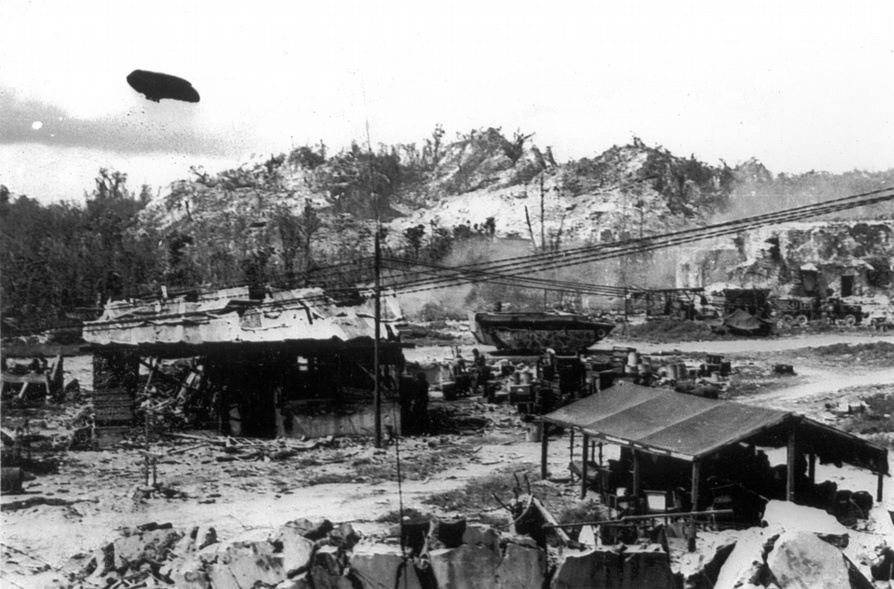
mine shafts? The steel bunker doors? The troop canteens? The underground generators? Radio
rooms? Medical bays? Barracks? Toilets? Armouries? Plumbing? Air ventilation? What, they just
sat in a bare cave and drank 200 bottles of sake stacked like a tin of plastic army men? Come off it.
I wanted to say you might want to take a minute to watch the first ten minutes of this clip from the
video game âCall of Duty World At Warâ. Thereâs a level set entirely around the invasion of
Peleliu, with you playing as a Marine. Now bear with me here: I know this is a video game, but this
is meant to be a âhistorically faithfulâ depiction of the Peleliu invasion that is on message with what
the Pentagon/Marine Corps says happened. At least that is the intention of the game studio. As such
it does try to stick to the official history of events and they take some pride in being faithful to that
narrative. So my point is, what you are seeing here is the âapprovedâ idea of the battle. Compare the
level of resistance / Japanese defences to what you see in any of the actual newsreels / photos. Itâs
completely different. I thought older readers might find this interesting as an example of the
evolving nature of the propaganda, for a younger generation, to be given the same messaging in a
new way.
This website gives us two interesting photos. Firstly, a shot of an American camp looking at
âBloody Nose Ridgeâ (i.e. the âbigâ mountain of Peleliu):
âThe view from the 2nd floor of the Headquarters Building towards the extreme south end of the
Umurbrogal Ridge (Bloody Nose Ridge).â - original here.
The first photo shows a) that Umurbrogal isnât that big and b) that the Americans have (predictably)
firebombed the hell out of the island.
This second photo is all I can find as evidence of a metal door on Peleliu, this being to the entrance
of a Japanese communications centre (so they say). You can see the right hand door hanging up on
the right. Was this⦠destroyed in the attack and the Americans are keeping it around? Or is this
building actually being built by the Americans? Unclear.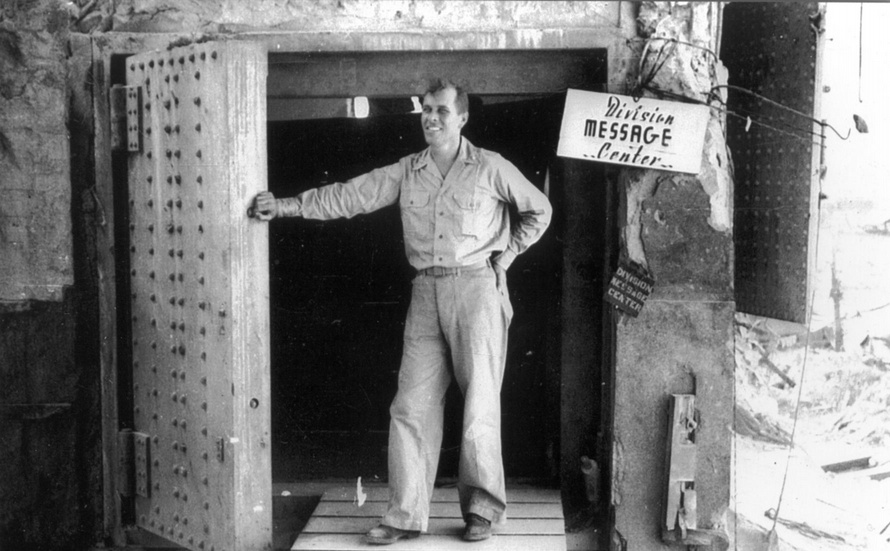
âDay's immediate boss, Lt. Col. Jeff Fields, in front of the iron door that lead to the 2nd floor
Japanese Headquarters Communications Center.â - original here.
Again, we should be seeing photos and records of Marines going into these mineshafts and caverns
and fighting it out with the Japanese. We should have photos of the tunnels with steps down into the
earth and the underground facilities the Japanese built. Instead we get a hand-waving of âthey
entombed the Japaneseâ using bulldozers and they sealed all the entrances. OK. Letâs run with that.
If that happened, youâd still have all the tunnels and underground bases still around, right? After the
war somebody, somewhere, would have uncorked an entrance. Youâd find all sorts of interesting
things down there â plus thousands of skeletons. There would be TV crews and amateur treasure
hunters and tour guides and celebrities and all sorts picking it over, this is just predictable from
human nature.
Further, do you not think the Japanese government post-war would perhaps want to recover these
skeletons? Perhaps the families of the dead would want them properly buried? Do you think that
might have been a logical plot beat where post-war the Japanese had to send ships or planes to the
various island chains weâve visited to dig up their war dead and bring them back to Japan? This
would of course make the news and so on. We donât get anything like that. Just a mountainside with
âsealed entrancesâ and the odd pillbox. You might as well say the Japanese all skipped away into a
fairy mound under a full moon and are off in another realm feasting to this day.
Video footage: well, we can watch this newsreel clip from the time. The coverage of Palau is at
2:22. Before that youâve got some interesting footage of the Americans âtakingâ a town in France
(American soldiers shooting at the sky and trees, no visible German presence or Nazi symbols other
than a sign in a shopfront) and the Allies âtakingâ Athens which is completely untouched by war
(including the Ancient Greek landmarks there). Athens was apparently completely abandoned by
the Axis prior to the Allies arrival as they can literally sail into the harbour, calmly get out and do
some parade marching around the city while the civvies cheer them on. Thereâs no-one to fight so
they immediately win by default. Now, my focus here is on the Pacific Campaign so Iâm not going
to start tugging on that thread but you can see the obvious red flags here from a mile away.
Maybe⦠after this series⦠weâll get to that.
Anyway, 2:22 onwards:
Finally I get confirmation on how to pronounce it. Peh-leh-lee-ooo. Lovely. We see some footage of
Marines using a flamethrower down a dirt slope:
Also at 2:47 we see lovely footage of Marines shooting a man in the back as he runs away:
âHe wonât go far!â. Those jokers.
Around the 3 minute mark we see some âJapaneseâ surrendering. All of this footage is carefully
shot so you canât see their faces or anything to identify them as Japanese infantry (as they are all
stripped to the waist and with backs to the camera). Please note also that weâre not getting any
mention whatsoever of the alleged enormous mining / tunnel complex that traverses the island. You
would think that would come up. The narrator would have some sort of line like âOn Peleliu the
Japanese have dug in like ticks and our boys need to flush âem out, one tunnel at a time!â with
footage of Marines gingerly climbing down access stairwells or blowing open steel blast doors with
TNT so they can shoot at the Japanese within.
Later on the video talks about the Americans bombing Romanian oil fields and the MacArthur
naval invasion of the Philippines. Please observe the footage given at 5:20 onwards which is
seemingly of the Leyte Gulf naval battle, but we can see clearly shows American warships blasting
at⦠nothing⦠no return fire⦠no enemy aircraft observable⦠only this target barge (small black
craft just above the waterline, lower left corner):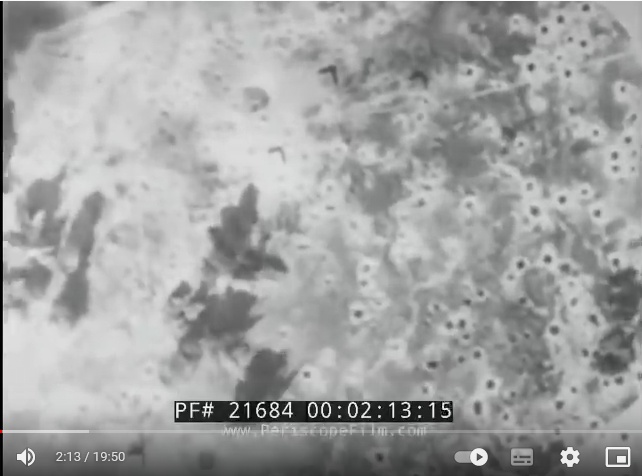
At 5:48 the narrator informs us that the Japanese air force AND navy are conspicuously absent. OK.
So what are we shooting at? Also, what does this mean for the Philippine invasion if thereâs no
resistance? Or the entire Battle of Leyte Gulf? I think we know by now.
For the remainder of the newsreel the hits keep coming as the narrator explains that the future
Philippines President Sergio Osmeña and General MacArthur are able to simply walk ashore, along
with troops being deployed en masse with (from what we see) zero resistance. The Philippines, it
would seem, are empty. The Marines walk ashore and start claiming islands and airfields.
Anyway, I donât want to get distracted by the Philippines â that comes later.
We can also watch âFury in the Pacificâ on YouTube.
The narrator clarifies that âover 2.5 million pounds of bombsâ are dropped on Peleliu. Heavy
bombers then follow up with âanother 2 million poundsâ of bombs for good measure. Again, this is
on Peleliu and Angaur. Seriously, what on earth would be left standing?
Not much by the look of it. At 2:13 you can see Peleliu now resembles the surface of the moon.
4:28 â They then spend â3 days and nightsâ firing â6,000 tons of hot steelâ (naval artillery) on the
islands. You might expect Peleliu was reduced to a churned up mass of sand and coral chunks with
the odd severed limb poking out of the sand but apparently this obliteration would merely âsoften
upâ the Japanese pillboxes. What are they made of? The metal of Wolverineâs claws?
We then have a glorious montage of the Americans absolutely blowing the hell out of an empty
tropical island. No sign of the Japanese. Or fortifications. Or return fire. The Japanese of course are
merely playing dead, those crafty devils.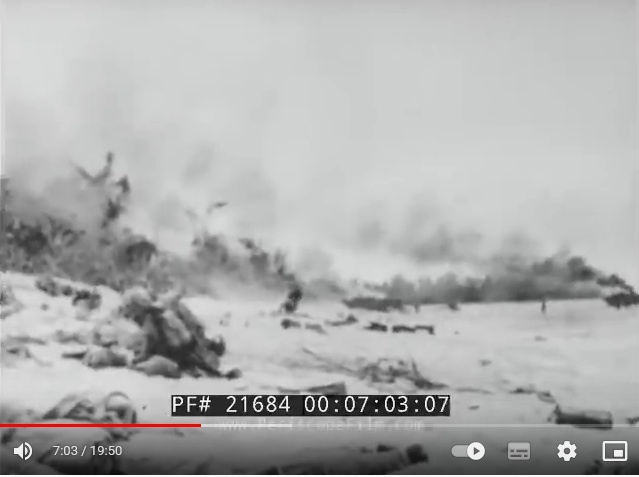
From 6:00 the Marines get in their landing craft and sail in. Amusingly, they then show clear
footage of the landing transports sail all the way in to land with absolutely no retaliatory fire. Bear
this in mind when you read the Wikipedia order of battle about the Japanese shooting at them as
they land or firing artillery to sink LVTâs:
âU.S. Marines landed on Peleliu at 08:32, on September 15, the 1st Marines to the north on White
Beach 1 and 2 and the 5th and 7th Marines to the centre and south on Orange Beach 1, 2, and 3.â
As the other landing craft approached the beaches, the Marines were caught in a crossfire when
the Japanese opened the steel doors guarding their positions and fired artillery. The positions on
the coral promontories guarding each flank fired on the Marines with 47 mm guns and 20 mm
cannons. By 09:30, the Japanese had destroyed 60 LVTs and DUKWs.â
They love those steel doors. Shame that, like vampires, you just canât catch them on camera. So,
bearing that above quote in mind, re-watch from 6:00 onwards and try and spot any of that.
At 6:40 â â20 landing vehicles are knocked outâ. Yep. So not 60. Also we can only see one LVT
with smoke coming off it. There are no disabled troop transports in the background or men
floundering in the ocean or anything like what youâd expect. How strange.
Around 6:55 you can see the beach is clear of obstacles, by the way. Itâs just a normal sandy beach.
Also here:
Thereâs more debris on Bournemouth beach in summertime.
The Marines then have the usual fun running around and shooting at trees.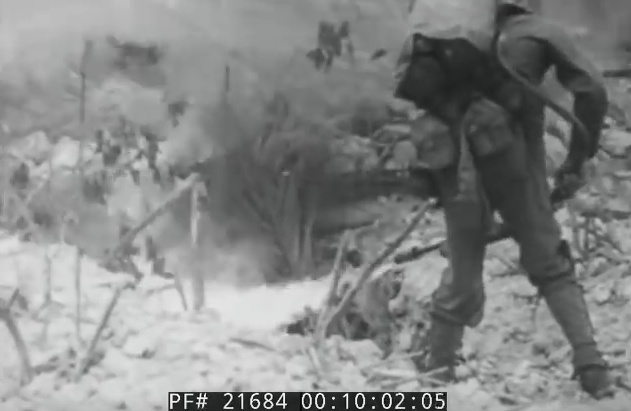
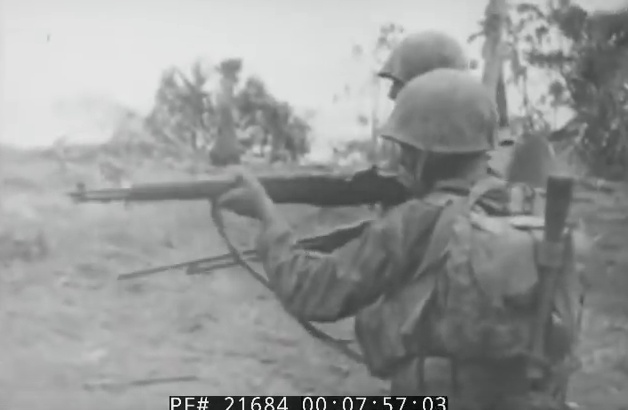
At the ten minute mark we get to see the same footage from the previous clip, now in better
definition. That flamethrower guy is attacking⦠a hole in the ground. Not a pillbox. Not a
reinforced mine shaft blast door. A sand pit.
Yep.
At 10:08 we see that âMarines shoot Japanese soldier in the back as he runs awayâ shot, but realise
itâs just the lads goofing around. This is staged, obviously: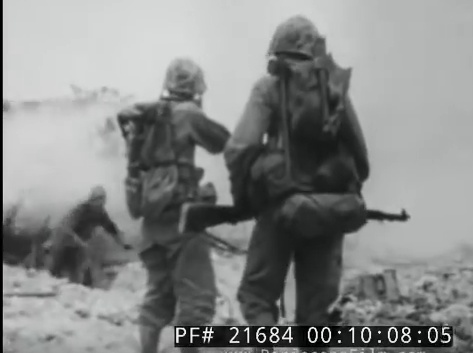
The way this part is filmed is meant to tell a story: first the flamethrower guy shoots into the sand
pit. Then you have a Marine crouched down inspecting the entrance. This third step is of a
âJapanese soldierâ running out of back end of the pit to escape but gets shot. You can actually hear
the (entirely dubbed) rifle shot noise several seconds before the guy turns to ârun awayâ and falls
over. Re-watch it to see what I mean. The shot audio effect is too early: the scene starts at 10:07,
gunshot is 10:09 which would have knocked the guy back into the sand pit, but he then climbs out,
stands, turns and then does his staged dive at 10:10. This is all theatre for the camera..
On reflection, given the amount of foliage visible in this video, it makes me reconsider the bombing
claims. Iâm sceptical of the sheer amount of explosive supposedly dropped on Peleliu â it should be
a cinder but Iâm seeing plenty of normal plant life. I think what theyâre doing is making a big claim
in terms of the amount of explosive - â2 million pounds!â â but itâs actually just enough material to
do a couple of practice runs with the bombers for the news reels. Perhaps the Navy / Air Force gets
to bill the treasury for thousands and thousands of tons more material than they actually use and
keep the profit? See what I mean: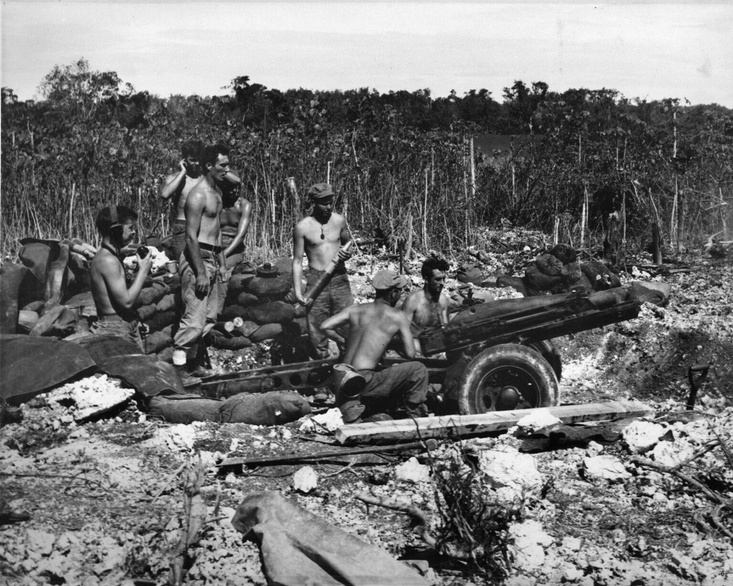
âU.S. Marine artillerymen prepare a 75mm pack howitzer after it has been wrestled into firing
position across the inhospitable terrain of Peleliu. The heavy but versatile pack howitzer brought
successive Japanese positions under heavy fire.â - original here.
The robust foliage of the Pacific, as always.
Around 10:30 we get a montage of âthe sad bit where the Americans mourn their deadâ. Lots of
shots of them walking around in broad daylight, shirtless, with no cover. Apparently at this stage
the Japanese have no snipers or artillery fire whatsoever. I guess they are all back underground.
Speaking of underground it must have been a wee bit hot. As per Wikipedia:
âThis area [Peleliu] was hotly contested by the Japanese, who still occupied numerous pillboxes.
Heat indices were around 115 °F (46 °C), and the Marines soon suffered high casualties from heat
exhaustion.â
Incredible the Japanese had air conditioning working back then, in those conditions. Because of
course if they didnât then they would have been cooked alive in their tunnels. Meanwhile the
Marines (running around doing their training exercise on the beach) are dropping like flies from
heat exhaustion.
âFurther complicating the situation, the Marines' water was distributed in empty oil drums,
contaminating the water with the oil residue.â
OK that would also go some way to giving you casualties. Iâll give you my take: another empty
island, another training exercise blowing up palm trees for the Hollywood film crews recording this.
Then someone screws up the water distribution and a bunch of lads are killed or at least rendered
incapacitated on a hospital ship. Theyâd have been puking up on the sand and blacked out from
dehydration within a day in that climate.
As per Wikipedia: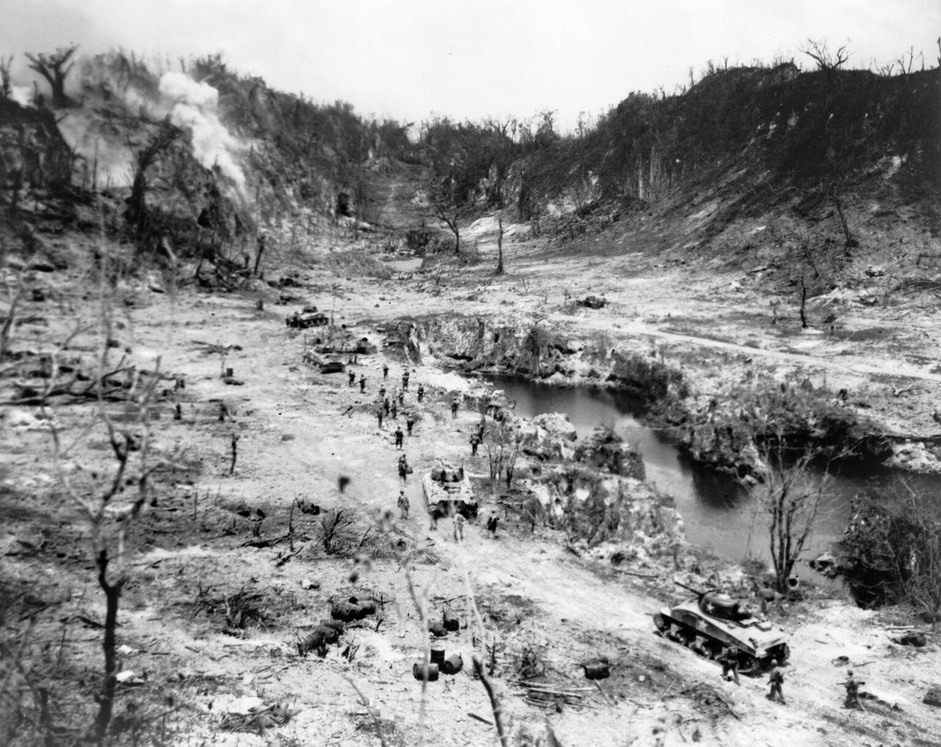
âThe reduction of the Japanese pocket around Umurbrogol mountain has been called the most
difficult fight that the U.S. military encountered in the entire war. The 1st Marine Division was
mauled and remained out of action until the invasion of Okinawa began on April 1, 1945. In total,
the 1st Marine Division suffered over 6,500 casualties during its month on Peleliu, over one third
of the entire division. The 81st Infantry Division also suffered heavy losses with 3,300 casualties
during its tenure on the island.
Postwar statisticians calculated that it took U.S. forces over 1500 rounds of ammunition to kill
each Japanese defender and that, during the course of the battle, the Americans expended 13.32
million rounds of .30-calibre, 1.52 million rounds of .45-calibre, 693,657 rounds of .50-calibre
bullets, 118,262 hand grenades, and approximately 150,000 mortar rounds.â
So many millions of bullets. Funny numbers also.
âMarine artillery saturates the mouths of caves that the Japanese have fortified, while riflemen
attack the positions, often resorting to explosive satchel charges to silence the enemy emplacements
and then calling on bulldozers to seal the entrances, entombing the occupants.â - original here.
Ah there we go. So that whole steampunk rat-men under-city the Japanese constructed was all for
nothing: a couple bulldozers sealed âthe entrancesâ (just imagine how many dozens and dozens of
entrance holes and hidden escape routes you would build if you were the Japanese here) and then
everyone inside just sits there and dies. The End.
Funny how right by the âunderground mineshaft complexâ entrances in the above shot there arenât
any defensive fortifications. You know, like pillboxes. Or tank traps. Machine gun nests. Perhaps
some kind of exotic Japanese shrine shaped door with neon lights flashing? I jest. There arenât even 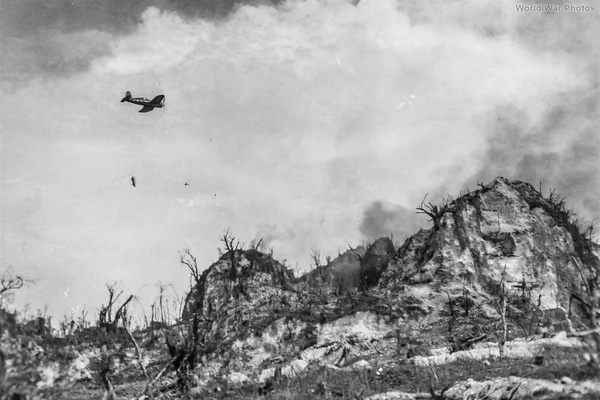
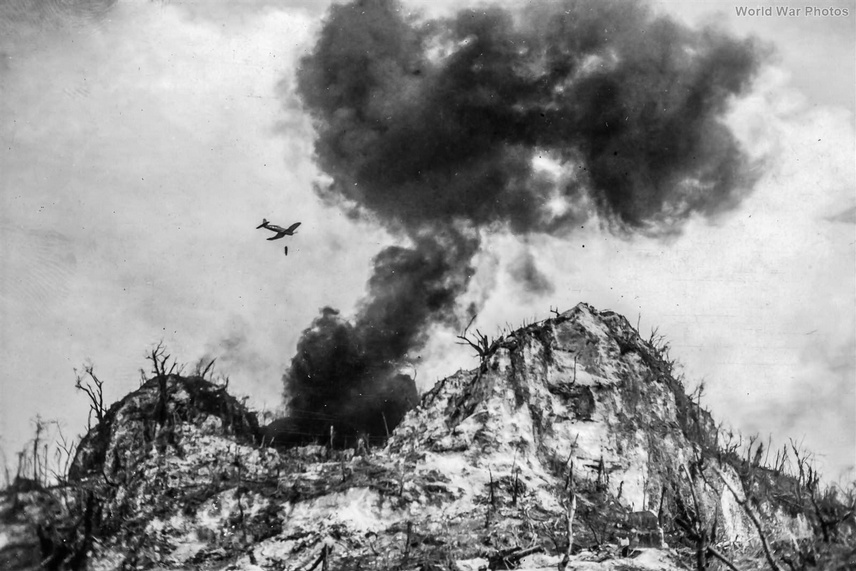
mines on the approach â the Marines can just walk right up to the entrance and thereâs no sign of
life. Weird.
What else, what else? Oh, there was this:
âMarine F4U making a napalm run against Japanese defences 2â â original here.
Click on the link and zoom in on the higher resolution original. Check out that plane. Or the bomb
itâs supposed to be dropping. Drawn in. Heh.
This one is good too:
Click on this link to the original and zoom in â you can see a circular smudge on the photograph
where they insert the plane to the image. Thereâs literally a finger print on the image where they had
to stick in the plane.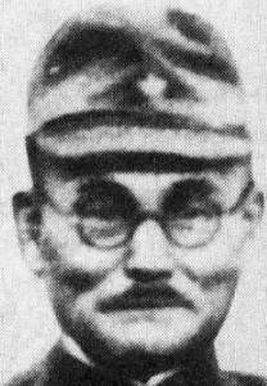
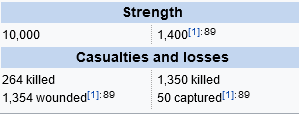
Anyway, Iâm a bit bored with Peleliu. Sorry, I appreciate thereâs supposedly 1,000âs of Marines
who died there but Iâm not seeing it. I see another training exercise, ghost armies of Japanese and a
fairly unpleasant mass poisoning involving contaminated water barrels in 46 degree heat.
Last but not least, we turn our attention to the Battle of Angaur. It ran from 17th September â 22nd
October 1944.
As per Wikipedia:
âAngaur is a tiny limestone island, just 3 mi (4.8 km) long, separated from Peleliu by a 7 mi (11
km) strait, from which phosphate was mined.â In mid-1944, the Japanese had 1,400 troops on the
island, under the overall command of Palau Sector Group commander Lieutenant General Sadae
Inoue and under the direct command of Major Goto who was stationed on the island.â
Gotta get those 1,400 guys. Massive overkill plus Funny Numbers? You got it:
Two 13âs. Nice. Also nice round number of captives.
This is the second time Iâve mentioned Lt. Gen Sadae Inoue so letâs look at this bad boy. Totally
legit photo to start with:
Pencil sketch is not a photo â original here.
The best part of his Wiki bio is this quote:
âAfter the war, Inoue was arrested by the American occupation authorities and deported to Guam,
where he was tried for Class B and Class C war crimes and condemned to death in 1949 for
negligence of command responsibility in permitting subordinates to execute three downed
American airmen captured in Palau. His sentence was commuted to life imprisonment in 1951,
and he was released in 1953. Inoue died in Japan in 1961.â
Amazing. So⦠taken to Guam⦠check. Condemned in a US military court to death, check. But this
judgement takes 4 years after the war ends⦠why would that take so long!? Then his sentence is
commuted to life imprisonment⦠then they release him two years later! So heâs âin prisonâ from
â45 to â53⦠8 years⦠allegedly. Incredible outcomes for the Japanese higher ranks as always.
The Americans are supposed to attack Angaur by bombing it for 6 days starting from September
11th. We then get the usual contradictory gibberish:
âMajor Goto selected the most attractive Beach (code named Green Beach by the Americans) for
an amphibious landing to build his beach defences. His defences consisted of a formidable array
of pillboxes, blockhouses, trenches and antitank ditches. Seeing the build-up around Green
Beach, Maj. Gen. Mueller decided to land his troops at the more constricted but less defended
beaches of Red and Blue Beach. The 322nd RCT received sporadic mortar and machine gun fire
but landed fairly unopposed and with light casualties. The 321st landing at Blue Beach faced
heavier machine gun and mortar fire, but it too was able to get ashore with minimal casualties.
Unbeknownst to the Wildcats, this was all part of the Japanese new "defence in depth strategy"
that they and the 1st Marine Division would also face on nearby Peleliu. The Japanese strategy
was to now allow the Americans to land rather unopposed and move inward, with "in depth"
defensive lines further inland, and initiating nighttime counterattacks en mass while the
Americans were still heavily congregated on the beach heads.â
So you have defences on the beach⦠but the strategy is to let them land unopposed⦠which the
Japanese always do but Iâm supposed to forget this and think itâs innovative⦠then they shoot at
the Americans anyway which spoils the plan⦠but the Americans land on a different beach because
the Japanese only bother to build proper defences at Green Beach. Does that make sense to you?
This is after the Americans have the best part of a week to blow the hell out of this tiny island. Let
me guess, the Japanese are completely unaffected by bombardment because of special underground
bunkers?
âThe Japanese defensive network on Romauldo Hill and the intense fighting that would take
place there was in effect, a microcosm of the brutal fighting taking place in the Umurbrogol
pocket on nearby Peleliu by the Marines, and later the 81st Infantry Division. The entire hill was
honeycombed with interconnecting caves, pillboxes and bunkers built into the coral rock,
forming an almost impregnable position where the hardened defenders were dug in, determined
to fight to the death and take as many American lives with them. Near the top of the hill was a
small bowl-like valley with a lake surrounded by coral ridges almost 100 feet tall, which became
known as "the Bowl". To add to the defenders' advantage there was only one way into and out of
the bowl, through a narrow gorge, later named "Bloody Gulch" by the Wildcats. As the Wildcats
advanced on "the Bowl", near Lake Salome they were met with withering machine gun, mortar and
sniper fire, being stymied in their tracks.â
Coral bunkers this time. Of course. Let me guess, entombed by bulldozers? You bet:
âFrom 20 September, the 322nd RCT repeatedly attacked the Bowl, but the dug in defenders
repulsed them with artillery, mortars, grenades and machine guns, inflicting heavy losses.
Gradually, hunger, thirst and American shellfire and bombing took their toll on the Japanese, and
by 25 September, after 3 costly frontal attacks the Americans had penetrated the Bowl. Rather than
fight for possession of the caves, they used bulldozers to seal the entrances.â
That didnât put a stop to the fighting though:
By 30 September, the island was said to be secure although the Japanese still had about 300 more
soldiers in the Bowl and surrounding areas that held out for almost four more weeks.â Toward the
end of the first week of October, the protracted conflict had degenerated into patrol action with
sniping, ambushing, and extensive booby-trapping employed by both sides. The island's defence
commander, Major Goto was killed on 19 October fighting to keep possession of a cave.â The last
day of fighting was 22 October with a total of 36 days of fighting and blasting the Japanese
resistance from their caves with explosives, tanks, artillery and flamethrowers. The 81st Infantry
Division had finally taken the whole of Angaur although at a high cost.â
How on earth do you have 300 soldiers hanging around the area for 4 weeks? Itâs a tiny limestone
island! Where did they hold out? Underground?
Funnily enough the airstrips on these islands werenât really needed:
âAirfields were being constructed as the battle was still being fought, but the delay in the start of
the Palaus operation meant that the airfields were not ready in time for the start of the
Philippines operations in October 1944. Admiral William F. Halsey, Jr. had argued before the
invasion of the Palaus that the operation was unnecessary, and military historians have agreed
with him, suggesting that the main benefit was the combat experience gained by the 81st Infantry
Division.
During the fighting, Seabees created an airstrip that would house B-24 Liberator bombers of the
494th Bombardment Group, 7th Air Force which engaged in frequent bombings of the Philippines
and other Palau Islands.â
Well the bulk of the Japanese in Palau were ignored and weâve seen from that earlier video clip that
the Philippines were a literal walk up the beach so, yeah, not really worth it. They also completely
ignore the Japanese on Yap which had a good 5,000 men on it and also could have been used as a
jumping off point but whatever, nobody cares about Yap or Babeldaob.
If we return to Fury in the Pacific on YouTube and keep watching past the 11 minute mark we then
turn to Angaur. This shows us:
â The Marines landing without opposition.
â A couple of mannequins bobbing up and down in the surf (Pro-tip: if you get shot by
Japanese gunners then you bleed. Blood goes into water which turns red, you donât just get
bodies floating in crystal clear water).
â The usual âfire your weapons into a treeâ weapon exercises weâve seen dozens of times
before.
So again, nothing going on. Iâm not even going to dignify the âmeanwhile back on Peleliu we shot
at some sunken barges which had (checks notes) Japanese snipers on boardâ at 14:10 with analysis.
You can also watch this short clip for âJapanese facilitiesâ on Angaur, which demonstrates that itâs
mostly forest with some plantation/phosphate manufacture buildings here and there. No visible
military facilities to speak of.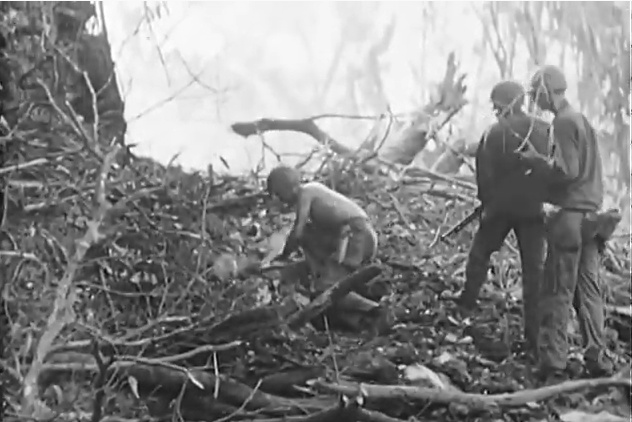
Or you could watch âAction At Angaurâ instead. Itâs the usual smoke and mirrors nonsense. Fighter
planes shooting bullets at trees from high up in the sky. No sign of any Japanese. Marines standing
around using flamethrowers on bushes and demonstrating what happens when you shoot a heavy
machine gun at a hillside. No actual combat. The audio track is entirely dubbed and with cheap,
obvious bullet ricochet sound effects. So youâll have a shot of a bunch of Marines lying down on
sand looking relaxed but theyâll play whizz bang noises to give the impression of combat.
At 13:48 the narrator goofs by claiming the Japanese âhad no regular defence lineâ. What about the
interlocking pillboxes and bunkers? The gun emplacements? They are conspicuously absent.
Instead, the Japanese are all burrowed underground like moles.
At 17:00 the narrator explains that the Japanese are lurking in âcaves 15 feet deep carved out of
solid coral, with entrances blocked by coconut logs with firing slits only a couple of inches wideâ.
The Marines on Angaur, about to blow up a Japanese molehill. This may look like a normal hill to
civilian eyes, but itâs actually a Japanese base.
The Japanese are now digging pits vertically into the ground and fire upwards at the enemy when
they walk overhead. The whole thing is absurd and relies on the audience being a bit ignorant about
other parts of the world or other races not being aliens who donât need to breathe or regulate
temperature.
Anyway, it goes on like this for a half hour with the usual stuff we keep seeing. The Marines build
an airstrip on this island mid-battle, then trudge up to the north-west corner to fight at âbloody
gulchâ. The Marines win here because they use tanks and radio, or something. Iâm unclear how
tanks got at the 15-foot deep coral bunkers. Or how anyone dug them in the first place.
Right, enough, thatâs my take on Operation Forager. Apologies for the delay in getting this out, I
was poorly and there was a lot to read up on. At least now we have the template for these battles.
Now you at home can generate your own Pacific fan fiction just like a real 1940s ONI intern!
Lestradeâs Proper Historian Pacific Battle Templateâ¢
Swap out some names and numbers, create our very own battle! Fun for Ages 5+
â The remote atoll of Wiki-Waki-Woo is a vital location, several million miles from Japan.
â The island is three square miles in size and made out of solid granite. Nothing grows on it
and thereâs no fresh water supply. It is 45 degrees C in the shade even in winter.
â The Japanese placed 50,000 cannibal fanatics on it, armed to the teeth.
â The American fleet turn up and drop 8 million tons of high explosive on the island, night
and day, for six weeks.
â The Japanese are completely unharmed because they are cowards and hide in a five-storey
underground base they carved out with chopsticks beforehand. The island is also untouched,
somehow.
â 250,000 Marines land unopposed, shirtless, firing shotguns into the air wildly while
smoking cigars.
â They set up camp on the beach and have a BBQ. The next day they stroll inland and meet
fierce resistance. The Japanese have fiendishly cunning interlocking pillbox/tunnel/pit trap
networks backed up by robot crows and laser guns.
â The Americans immediately win using flamethrowers and true grit. Final tally: 33 KIA; 880
Marines are sick with heat exhaustion and 1,333 are missing.
â Of the 50,000 Japanese troops: 44,500 Japanese are killed and immediately cremate
themselves. 50 are captured revealing themselves to be Korean labourers temporarily
hypnotised into fighting for Nippon and the remaining 5,000 vanish into mist.
â The underground base / robot crow production facility also vanishes into thin air.
â Coincidentally a full Hollywood film crew was present and able to capture the entire landing
/ invasion process and show the Marines standing around shirtless and not using any cover.
We also have a modern colour photo of a single pillbox on a rock cliff, this is the solid
evidence of the defence system the Japanese used. We also have a book referenced written
by Saul Othschild von der Tyre who lists eyewitness statements of what they done did.
Enough of this. Iâve seen more realistic storylines on Sesame Street. Iâve seen better writing in
Anime. I must drink gallons of quality rum until my consciousness fades into deep blue slurry and I
drift under starlight on cool etheric waters. Until I am given respite from the red haired cosmic
Muses prodding me with a bamboo stick. All these lies must be unravelled and uncorked they say.
Iâll do it in a minute love, put the kettle on, etc.
More to come...
Outro Music