Miles has said before that all canonized saints going back to antiquity are Phoenician
Read this article in:
source url
Carlo Acutis: Fake Saint
By Donny Ahzmond
Miles has said before that all canonized saints going back to antiquity are Phoenician
scions and agents who more or less bought their way into sainthood. As another data
point in support of that claim, I recently tripped across Carlo Acutis. If you, like me, are
late to the game, he made waves in 2025 for being the first millennial to achieve
sainthood. He died in 2006 at age 15 of leukemiaâ¦supposedly. Weâll come back to that.
He has been referred to as the patron saint of the internet, which is a pathetic thing to
patronize and immediately turns this whole charade into aâ¦charade.
As evidence of how far into dishonor the title has fallen, Wikipedia admits Acutis
basically did nothing to deserve sainthood.
Carlo Acutis (3 May 1991 â 12 October 2006) was an English-born Italian Catholic
teenager known for his devotion to the Eucharist and his use of digital media to promote
Catholic devotion. Born in London and raised in Milan, he developed an early interest in
computers and video games, teaching himself programming and web design and
assisting his parish and school with digital projects.
Active in parish life, he served as a catechist and helped inspire several people to
convert to Catholicism. He later created a website documenting Eucharistic miracles
and Marian apparitions.
How many people did he âinspireâ to convert to Catholicism? âSeveral.â Remarkable!
And you say he made a website about Eucharistic miracles? Genius! Make this kid a
saint ASAP! St. Francis of Assissi healed lepers and raised dead animals back to life, but
did he ever make a slick website? No? LAME.
In 2020, he was beatified by the Catholic Church after its recognition of a 2013 miracle
in Campo Grande, capital of a Brazilian state attributed to his intercession, and a
second miracle in Italy was attributed in 2024.
What were the miracles, you ask? Who knows â apparently thatâs not information
Wikipedia thinks its readers would find significant. Just know that he performed two
miracles, okay? Wait, let me rephrase that: a miracle was ârecognizedâ as having
occurred and it was âattributedâ to his âintercession.â But wait, these miracles happened
in 2013 and 2020, and he died in 2006. So, did he perform any miracles while alive?
No? And wait, how were they able to âattributeâ miracles to him postmortem? I get it,
somebody prayed to him for a miracle and then it happened; but donât you already have
to be a saint for Catholics to pray to you? Who was praying to this no-name kid before
his beatification? His beatification, by the way, took place on 10/10/2020. Thereâs a nice
spooky date for you.
A commentator for the Catholic Review has written that skepticism for Acutis's
canonisation cause exists among some of the faithful and the secular world, noting that
his short life offered few extraordinary actions. A report by The Economist interviewed
childhood friends of Acutis, who recalled him as kind but not necessarily pious or
religious.
But, butâ¦he was kind! I mean, itâs so rare these days to meet a kind millennial. Most of
them donât even know how to smile, or operate a gas pump. Acutis could probably do
both of those things. After all, his mother claims he was speaking by 5 months and was
reading âuniversity-level textbooksâ on computing by age 9. Just look at his amazing
website!
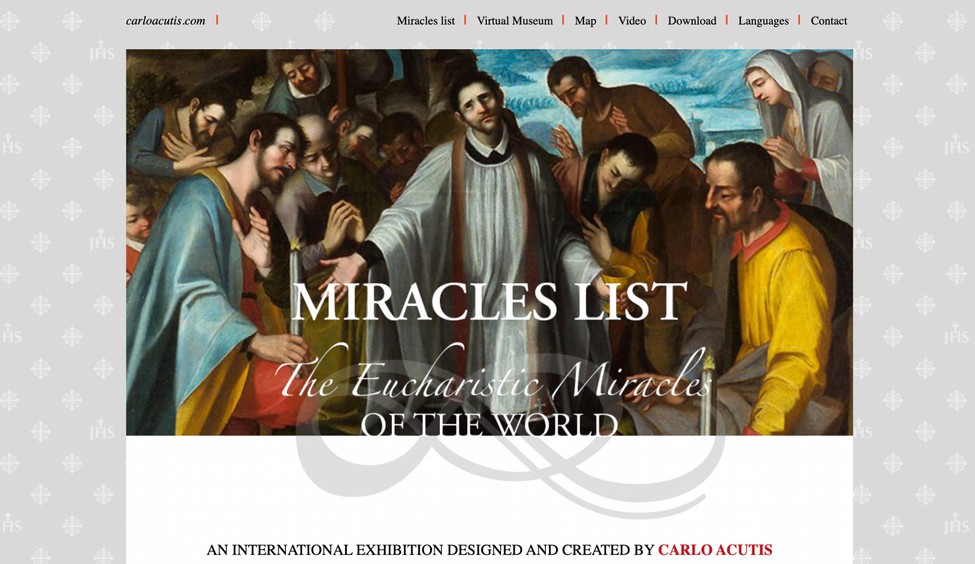
Hey, it was 2006, so, could be worse. Back to Wikipedia:
Questions have also been raised about financial support provided by Acutis's family,
suggesting that it may have accelerated the process.
You donât say. As NPR reports, canonization costs can be in the hundreds of thousands
of dollars. Which raises the question: did Acutis come from money?
Wait, why would sainthood cost anything? Did Joan of Arc pay hundreds of thousands
of dollars to be sainted in 1920? Did Saint Francis pay out the nose back in 1228? All it
requires is a statement by the Pope, which should be free.
Carlo Acutis was born on 3 May 1991 in London as the eldest child of Italian parents
Andrea Acutis and Antonia Salzano, members of wealthy Italian families. His grand-
father was businessman Carlo Giuseppe Maria Acutis.[4][5][6] Acutis's parents worked in
London and Germany before he was born, and moved back to Italy and settled in Milan
shortly after his birth in May 1991.[4][7] His parents were in family businesses: his
father's family worked in the Italian insurance industry, and his mother's ran a publishing
company.[8] Acutis's maternal great-grandmother was born in the United States and
came from a family of landowners in New York.[9] Aside from a few visits to a day care
centre, most of Acutis's early care came from nannies.[8]
Both parents from wealthy families; international milieu; insurance and publishing
industries; âlandownersâ in New York; raised by live-in nannies. Do you get the picture?
These are not the kind of people you or I rub shoulders with. Since his grandfather of
the same name has his own Wikipedia page, letâs go ahead and take the link:
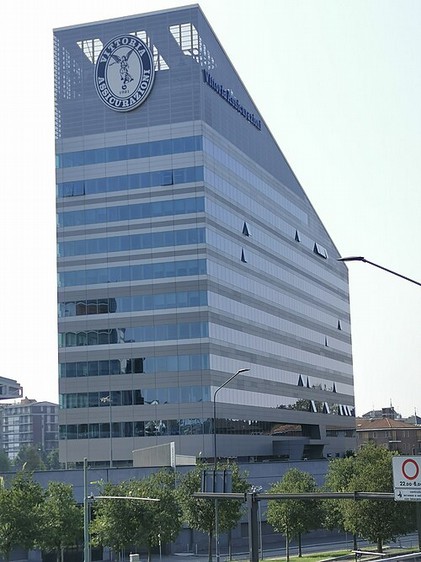
In 1969, he became CEO of Toro Assicurazioniâ¦. In 1986, Vi
ttoria Assicurazioni[1]
separated from the Toro Group and became independent. Carlo Acutis acquired the
insurance company, listing it on the Milan Stock Exchange in 1988 and remaining at its
helm until 2018. He retains the title of honorary chairman of Vittoria Assicurazioni,
having passed the chairmanship to his son, Andrea.
Hereâs the headquarters of the Acutisâs insurance company in Milan:
But how dare you insinuate they bought their sonâs sainthood. Preposterous!
Back to his grandfather:
In addition to his other activities, he is vice-president of the Piedmont Foundation for
Cancer Research and an advisor to the Lingotto Musica association. He is a member of
the Geneva Association, which addresses the role of insurance companies in the face
of risks related to climate change.
Pump the brakes â did you say cancer research? And young Carlo died of â what was it?
Leukemia? Hmmâ¦
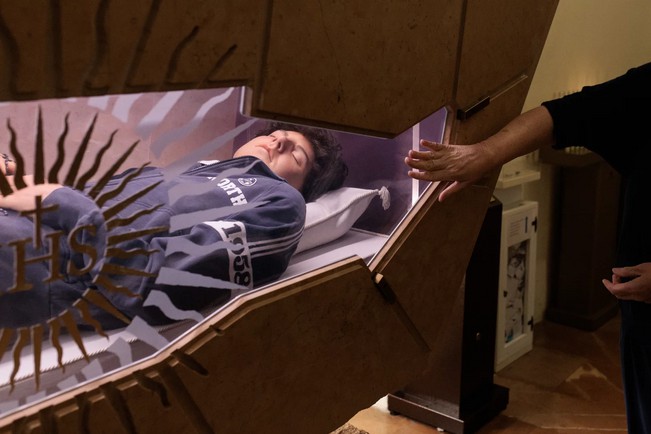
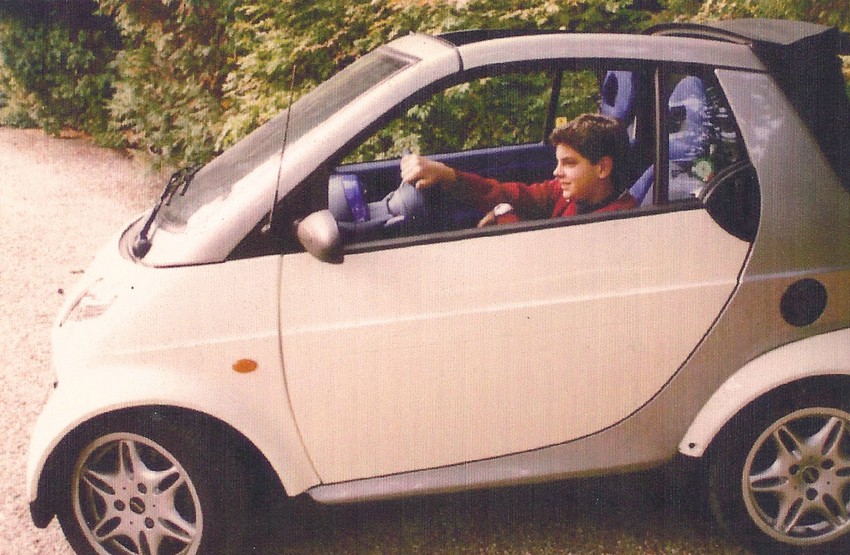
But St. Carlo is really dead, right? I mean, he has to be, because it says that after
interring him in 2006, they unearthed his remains years later and âreconstructed his
face and handsâ with silicone so his body could be displayed in Assisi:
How can you argue with that? Itâs really him! He definitely died, and heâs definitely a
real person who lived, too:
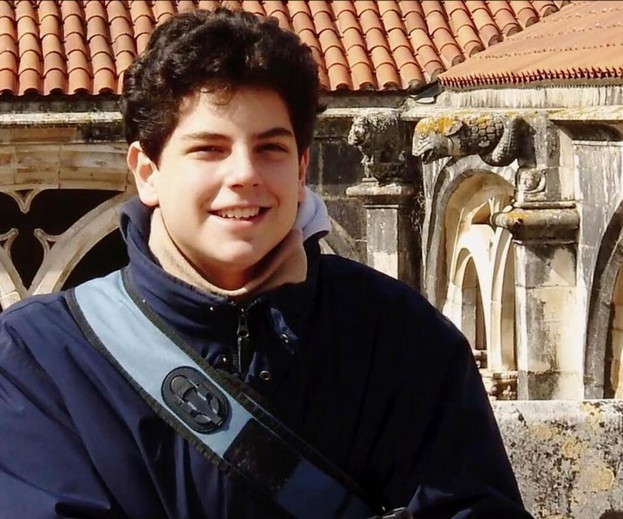
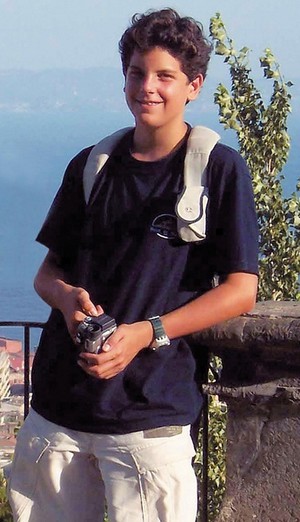
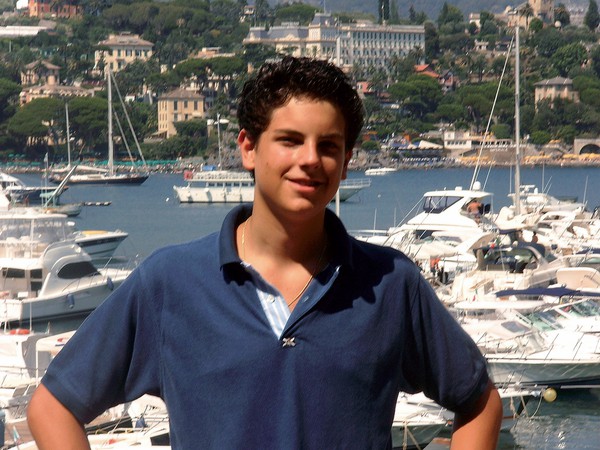
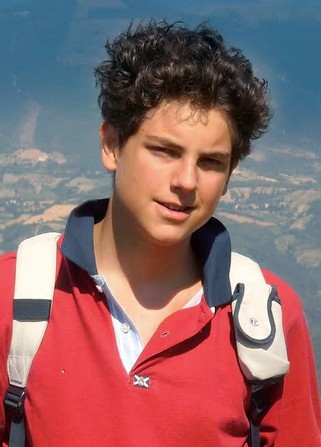
Okay, thatâs obviously a paste-up, but what about all these?
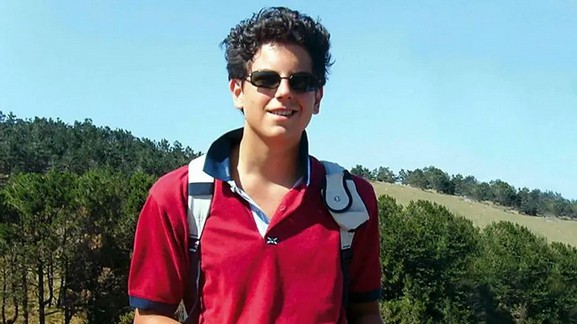
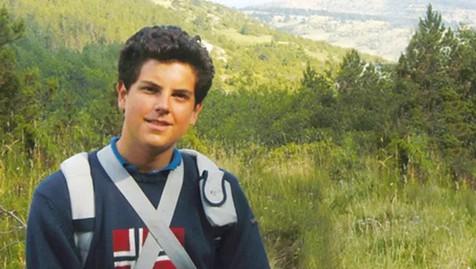
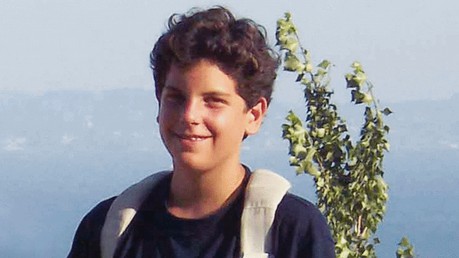
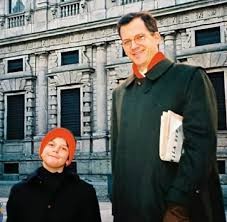
Notice anything odd? Heâs wearing a backpack in almost every single photo that exists of
him. This is true no matter what age. Weird, no? He looks pasted onto the background
in several of those photos, too. And why are there no photos of him with his parents?
Thereâs almost nothing on the internet, and what there is, is unconvincing:
That's horrible!
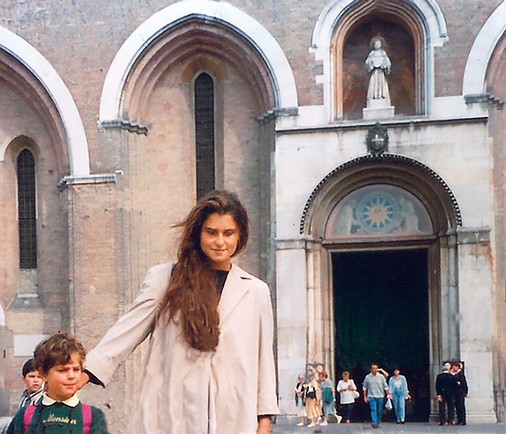
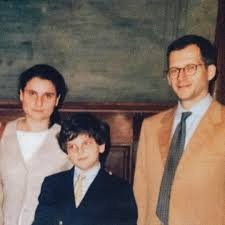
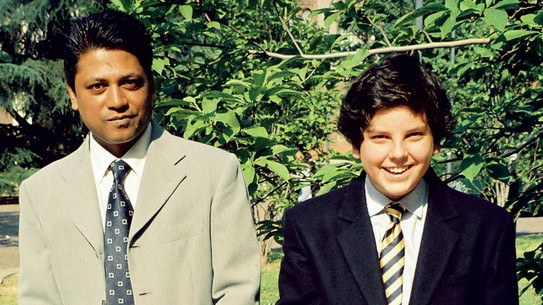
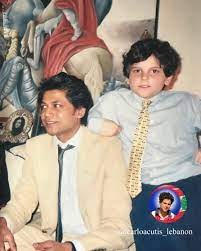
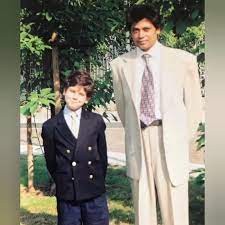
The one with his dad has that same pasted-in look. In the one with his mom, his Peter
Pan collar is sharply in focus for some reason, and again, whatâs with the backpack? In
the one with all three of them, his dad looks unnaturally flat and skewed. Then there are
a bunch of pictures of Carlo with a random Hindu man that he supposedly converted:
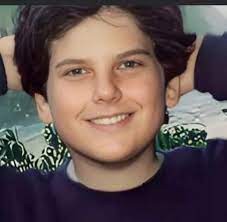
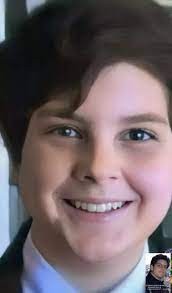
Also unconvincing. We are supposed to believe this Rajesh Mohur was hired to be
Carloâs full-time nanny. A male nanny, really? Unlikely. Even more unlikely, they admit
Rajesh was from a Brahmin family, the highest Hindu caste. Yet weâre told he was
struggling to find employment. So, what qualifications did he have to be a full-time
nanny? None of this makes sense. By the way, Mohur is a type of gold coin that has been
issued in India since the 1500s, and was commonly minted by the British East India
Company. I guess itâs the Indian equivalent of the last name Gold, and you know what
that means.
Here are two more photos of Carlo, both CGI:
In the first, his left shoulder (our right) is obviously spliced. In the second, check out
where the chin and lower cheek meet on his right side. The coloring and shading are all
wonky. Not to mention the hair being a big blurry mass, a typical sign of AI generation.
His grandfather, by the way, was a Knight of the Legion of Honour and a Knight of the
Order of Merit for Labour. The former is the highest and most prestigious French order
of merit that exists, having been established by Napoleon in 1802. If you are wondering
why a British-Italian citizen received the highest French honorâ¦so am I. His wife, young
Carloâs grandmother, was Maria Henrietta Perlowska from Warsaw. If you think that
makes her Polish, think again. From Google AI:
The surname Perlowska (and variations like Perlowicz, Perlowski) is strongly linked to
Eastern European Jewish heritage, deriving from the Yiddish word perel (pearl)...
For instance, see John Perlowski, member of BlackRockâs Global Executive Committee.
That makes our St. Carlo at least one-quarter Jewish. A Jewish saint, who ever heard of
such a thing?
Through their insurance company the Acutises are closely connected with the Agnelli
family, since the Acutises helped the Agnellis take over the company in 1983, and then
took it over themselves three years later. An Agnelli is also currently president of the
Piedmont Foundation for Cancer Research, of which Acutis is vice-president. So these
families are basically attached at the hip. Who are the Agnellis?
The Agnellis are a family of I t alian entrepreneurs who have played a central role in the
country's economic, political, and sporting history. Their name is linked to the
automotive industry through FIAT , founded in 1899, and to the world of sport with their
majority ownership of Juventus since 1949, as well as their management of Sisport .
It gets better. Theyâre closely linked to the Nasi family, owners of Exor, one of Europeâs
largest financial institutions. The Nasis are Jewish, of course; Nasi is Hebrew for
âprinceâ. Think Nazi. The Agnellis are related to the Nasis by marriage, and the
Agnellis themselves got their start in the 1800s with spinning mills and banking. So they
must be Jewish, too. Since we now know the Acutises are Jewish, it also fits together
nicely. Through marital unions, the Agnellis have established ties with the Fürstenbergs
and the Hohenlohes, taking us to the top of the European peerage. This is the sort of
milieu out of which our âsaintâ comes.
Another board member at the Piedmont Foundation for Cancer Research is Michele
Coppola (a relative of Francis Ford?), who happens to work for Intesa Sanpaolo, a major
international banking group and Italyâs largest bank. His title there is Executive
Director of Art, Culture and Historical Heritage. Iâm not joking, that is a real job at a
bank. You should ask yourself why an international banking group would be so
interested in promoting art, culture, and historical heritage. The answer is, itâs not. Itâs
interested in promoting fake art, fake culture, and fake history. One of his other job
titles was Councillor for Culture and Youth Policies for the Piedmont Region. So itâs
beginning to look like St. Carlo is some sort of advertising stunt. Out of curiosity, I
googled âCatholic church popularity among Italian youthâ, and hereâs what Google AI
spat out:
The Catholic Church's popularity with Italian youth is declining in active practice, with
many identifying nominal y as Catholic but rarely attending Mass, showing a shift
towards personalized spirituality, secular values like freedom, and distractions from
modern society, though cultural traditions like sacraments remain significant and figures
like Blessed Carlo Acutis offer inspiration for a revitalized faith.
Telling, isnât it, that Google is pushing Acutis in the context of waning Catholic
allegiance among young people. Itâs almost like Acutis was canonized simply in order to
draw more young people into catholicism. They pretty much admit it, per the NPR
article:
Archbishop Domenico Sorrentino in Assisi, tel s NPR that Acutis' lightning-fast rise is a
confluence between God's wil and the needs of the Catholic Church in this particular
era. Acutis is a saint for young people, just at the time that the church is trying to bring
more of Generation Z to Mass. "Young people nowadays are so difficult," Sorrentino
says. "The model of a young man who found his joy, the sense of his life in Jesus, is so
very important."
That just about explains it, doesnât it? But this isnât merely a case of the Catholic Church
in search of a hip young saint. It seems pretty clear that they created Carlo Acutis
wholecloth. The real Carlo, if there ever was one, may as well be a ghost since his entire
story is a fabrication.
But this project works on many levels. It pushes cancer research, which has always been
a massive conjob. It pushes insurance, another huge conjob. It pushes social media as a
religious outreach tool, which is bogus. Hereâs the mother of one of the children
miraculously healed because of St. Carlo:
âBefore, I didn't even use my cell phone, I was averse to technology. Carlo changed my
way of thinking, he was known for talking about Jesus on the Internet, and I realized
that my testimony would be a way to evangelize and give hope to other families. Today I
understand that everything new can be good, if we use it for good.â
Completely scripted. It positively reeks of it.
And it pushes international travel and tourism, which probably explains the backpack
motif. The NPR article, for example, ends with a photo of Assisi and the caption:
A sunset seen from the city of Assisi, a UNESCO World Heritage Site in Umbria, Italy,
renowned as the birthplace of St. Francis and famous for its medieval architecture,
basilicas and breathtaking views over the valley.
So apparently the Assisi board of tourism is in on this, too, even helping to write copy
for the NPR article. Not that Iâm against visiting old European towns. On the contrary.
But I am against going there on pilgrimage to fawn over a fake wax figure in a glass case.
Funny, though, how after years of blackwashing the Catholic Church, theyâre suddenly
pushing it again. My assumption is that the Catholic Church itself was sick of being the
punchline and is spending lots of marketing dollars to improve its tarnished image. For
the record, I have no problem with young people converting to Catholicism; itâs better
than most alternatives. But if you do, be wary of praying to fake saints like Acutis. Jesus
only taught his disciples to pray to God the Father, after all. You donât need any fake
intermediaries, especially rich Jewish kids who never did anything but be rich and
Jewish.