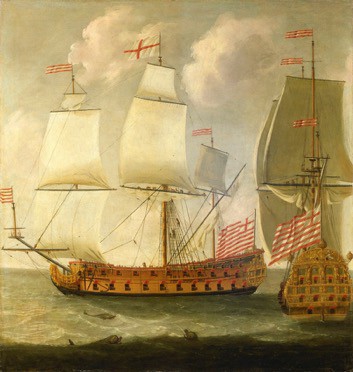
The British East India Company,
American Revolution,
and a Whole Lot More
First published March 1, 2022
Miles has stated the British East India Company supported the colonists during the
American Revolution. This point made my head spin initial y, as I was taught the
colonists rebelled against everything British, especial y the EIC and its despised tea.
While researching the basis for Milesâ claim, I not only realized h e was correct, but
discovered a new way of understanding the Revolution, which I share in this paper.
First, hereâs the relevant section from Milesâ paper on Thomas Jefferson:
[The revolution] succeeded because the East India Company and other powerful entities
supported it .. Not because of any solidarity or fel ow feeling, but because the EIC felt it would be
easier to negotiate with and dominate a fledgling country like the US than an old powerhouse like
England. In fact, the EIC had already infiltrated the colonies thoroughly, and mostly owned them,
so the American Revolution was more a war over ownership between England and the EIC, or
two arms of the aristocracy, than between England and the colonies.1
1htp://mileswmathis.com/jefers.pdf (p. 17)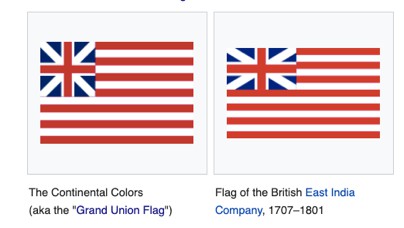
In this paper, we wil meet the EIC agents who infiltrated the colonies, and learn how
they came to control early America.
British high society was divided in the mid-18th century, as Miles mentions. Some
aristocrats had made incredible fortunes by investing in the EICâs overseas adventures,
which created a rift with other aristocrats whose wealth was more tied to Englandâs land
and institutions. The EICâs extensive private army and navy was also starting to rival the
mother countryâs defense apparatus, and had a wel earned reputation for corruption
and excess that further ruffled feathers in London.
The 1769 âBengal Bubbleâ was the beginning of the end for the EIC. The stock declined
by 55% over the ensuing decade and a half, while the British government passed âa
series of bailout measuresâ that led to âincreasing control [of the company] by the
crown.â2 This slow moving takeover put pressure on EIC movers and shakers â many of
whom were immensely wealthy - to find new territories where they could launch new
operations unmolested by the crown. Enter America.
Below is Wikiâs comparison of the first American flag (flown from 1775-76) with the EIC
flag.3
Despite England and America being sworn enemies at the time, youâll note the flags are
virtually identical. Wiki even says Ben Franklin âgave a speech endorsing the adoption
of the [EIC] flag by the United States as [its] national flag.â4 So, weâve already found big
clues that the EIC had infiltrated the early American government at the highest levels.
Miles has previously outed Franklin as a British spy, which explains his quote above.
The EIC flag was flown on the colonial navyâs first flagship, USS Alfred. This was open
recognition of the relationship between the colonies and the EIC, but if you think this is
all a coincidence, keep reading. Alfred was named for Alfred the Great, a 9th century
English monarch who (according to legend) founded the English navy.5 Why would the
colonists name their flagship after a famous ruler from the enemy side? That makes no
2htps://en.wikipedia.org/wiki/Bengal_Bubble_of_1769
3htps://en.wikipedia.org/wiki/Flag_of_the_United_States#First_fag
4htps://en.wikipedia.org/wiki/Flag_of_the_United_States#First_fag
5htps://en.wikipedia.org/wiki/USS_Alfred 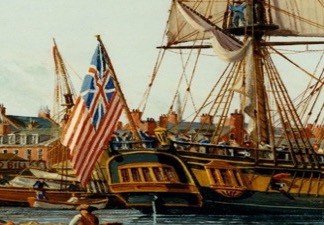
sense, until you realize the colonists were only rebelling against a faction of English
rulers, while cooperating with another faction.
USS Alfred, flagship of the colonial navy
Before going into naval service, the Alfred was a merchant ship in the fleet of
Philadelphia merchant house Willing, Morris & Co. The firmâs namesakes, both of whom
held the title of âwealthiest man in Americaâ at different points, had ties to the English
mainland. Thomas Willing was born in Philadelphia (his father was the mayor), but
âcompleted preparatory studies in Bath, England [and] studied law in London at the
Inner Temple.â6 Wil ing would go on to become the first president of the Bank of the
United States.
Robert Morris was born in Liverpool, and later immigrated to Maryland with his father,
who was on assignment with an English merchant house. Robert settled in Philadelphia,
where he apprenticed with Thomas Willingâs father before going into business with his
son. Morrisâ fleet of merchant ships âaggressively expanded trade with Indiaâ7
throughout the 1760âs, meaning Morris was an EIC agent as the company was in full
control of India during this time. Morrisâ fleet further traded with âthe Levant, the West
Indies, Spanish Cuba, Spain, and Italy.â8 These trading missions brought Morris
immense wealth and âby 1775 he was the richest man in America.â9 Despite this
success, Morrisâ loyalty to his new country was tepid. He abstained during the vote to
secede from England and âwas the lone anti-independence delegate from Pennsylvania
to retain his positionâ as the war kicked off.10
Morris was al owed to remain apathetic about colonial politics because Congress badly
needed his money. Indeed, the U.S. Army Center of Military History writes, âRobert
Morris was the master financier of the Revolution and the early republic.â11
6htps://en.wikipedia.org/wiki/Thomas_Willing
7htps://en.wikipedia.org/wiki/Robert_Morris_(fnancier)
8htps://en.wikipedia.org/wiki/Robert_Morris_(fnancier)
9htps://en.wikipedia.org/wiki/Robert_Morris_(fnancier)
10htps://en.wikipedia.org/wiki/Robert_Morris_(fnancier)
11htps://history.army.mil/books/revwar/ss/morris.htm 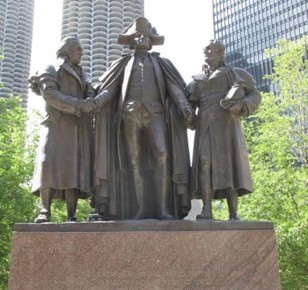
Heald Square Monument in Chicago, depicting
George Washington flanked by Robert Morris
and Haym Salomon, two principle financiers
of the Revolution.
Morris funded the war because it was good for business. He made huge amounts of
money sel ing the government arms and supplies. He also funded privateers that raided
British shipping and then resold the goods for personal profit. These shenanigans led to
Morris being accused of financial malpractice by other congressmen, and he eventually
was forced to step down from Congress, though his business empire only grew in the
ensuing years.
Another sketchy financier of the Revolution is the little known Haym Salomon. Salomon
spent his youth traveling around Europe, learning languages, and studying finance. He
immigrated to New York City in 1775, right as the Revolution was starting, and
immediately established himself as a wealthy merchant. As one does. The British
arrested Salomon for spying in 1776 but supposedly spared him execution because he
spoke German and could work as an interpreter with Britainâs hired Hessian troops.
Solomon escaped, though the story is suspicious. He got caught a second time in 1778,
and this time was sentenced to death, but again managed to escape. Do you really
think the British would let a known spy and enemy financier slip through their hands
twice?
Salomonâs biographer notes he had âsuch a good reputation throughout Europe that he
was offered a job back in Warsaw by the Rothschilds.â This is interesting, as the
Rothschilds also sold the services of the Hessian troops to Englandâs King George. This
all begs the question of whether Haym was a Rothschild agent. If true, it would explain
how he rose to prominence in the colonies so quickly, why he worked with the Hessian
troops they provided, and how he was able to âescapeâ from British custody multiple
times. 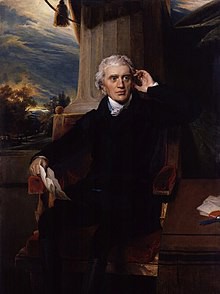
Of course, the Hessians were on the British side, while Haym is famous for financing
the Patriots, as depicted in the statue above. But the Rothschilds are famous for funding
both sides of conflicts. Even mainstream outlets admit the Rothschildâs funded both sides
of the Napoleonic Wars. I suspect Haym migrated over to the Patriot side and started
working with the BEIC network. Indeed, Wiki mentions Solomon was âworking
extensively with Robert Morrisâ by 1781.
Morris and Wil ing had a long working relationship with top English banker Francis
Baring, which began before the revolution, in 1774. Baring was head of Baring Brothers
Bank and served on the board of the EIC from 1779â1810, including multiple one-year
stints as Chairman. Baring was deeply intertwined with colonial finance. Baringâs Wiki
page reads, âClose connections with American merchants inevitably resulted in links
with the United States government. Since the close of the American War of
Independence, Baring had kept watch over the American government's finances in
Europe.â12
Francis Baring (1740â1810)
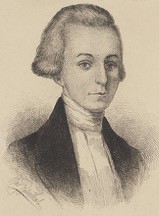
Another member of the EIC network in the colonies was Thomas Law. Law was born in
Cambridge, England, and worked as col ector of revenue for the EIC in India. Law
immigrated to the US in 1794 and married Elizabeth Parke Custis, George
Washingtonâs step-granddaughter. Wow. Law was one of Washington, D.C.âs wealthiest
citizens. He spent his money developing real estate and entertaining presidents and top
officials.
12htps://en.wikipedia.org/wiki/Sir_Francis_Baring,_1st_Baronet#The_East_India_Company 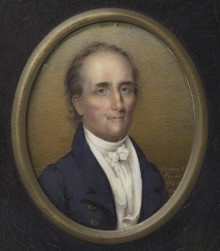
Thomas Law (1756â1834)
We find more BEIC influence through William Duer. Duer was born in Devon, England
and studied at the famed English prep school Eton before shipping off to India to serve
on the staff of the EICâs top man, Lord Clive. Duer was back in England by 1773, where
he ran a company that supplied the British navy. Right before the Revolution kicked off,
Duer moved to New York. Wiki says Duer was âsomewhat reluctant to become involved
in active resistance to the British government.â And yet, like Robert Morris, he was
appointed to the highest levels of government, serving on the finance committee and
Board of War, and afterwards becoming Assistant Secretary of the Treasury. In case
you havenât noticed, thereâs a trend here of the colonial government being stacked with
EIC guys who came over from England right before the war started.
Alexander Hamilton is another American leader with EIC written all over him. Hamilton
was born on the Caribbean island of Nevis (then part of England). Hamiltonâs early bio
is extremely murky. Weâre told he purposeful y obscured his background because he
was embarrassed about his âhumbleâ origins. Actually, Hamilton obscured his
background because he wanted to hide that his fatherâs family were related to the
Dukes of Hamilton, who are at the top of the Scottish aristocracy and major players in
the East India Company.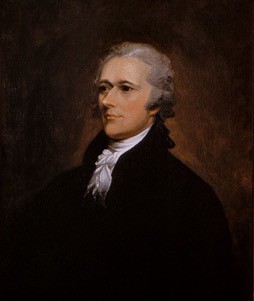
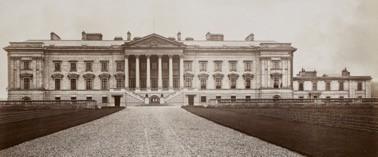
Alexanderâs father James grew up in a castle in Scotland, only 40 miles from the The
Duke of Hamilton, who is considered âThe Premier Peer of Scotland.â The Dukeâs
residence, Hamilton Palace, was the largest private residence in the Western
hemisphere at one point.
Hamilton Palace, home of Sec. Hamiltonâs cousins
Alexander Hamilton had four first cousins in the EIC. The oldest cousin, also named
Alexander Hamilton, was a Lieutenant in the EIC Navy from 1783â1797 (see his Geni
here). The next oldest, Robert Hamilton, captained a vessel in the EIC and later got a
job aboard the USS Constitution after his uncle (then US Treasury Secretary) wrote a
letter on his behalf. The other cousins, Walter and William, were stationed with the EIC
in India. Going back further, I came across a book cal ed A New Account of the East
Indies, published in 1727 by who else but Capt. Alexander Hamilton, Scottish Sea
Captain. The book details Capt. Hamiltonâs adventures as a merchant in the East Indies
from 1688â1723. Wiki mentions Capt. Hamilton was âappointed commander of the
Bombay Marine,â which is the EIC Navy. A search through Geni turns up only one
match whose dates fit: Lord Alexander Hamilton, of Grange, born ca. 1650â1730. The
Grange was Alexander Hamiltonâs familyâs historic estate. Circumstantial evidence, but
it seems very unlikely that a Scottish sea Captain named Alexander Hamilton wouldnât
be related to Sec. Hamiltonâs family given the ties weâve uncovered so far.
Moving on, Hamilton was a disciple of Robert Morris, who you will recall was one of the
wealthiest men in the colonies and a major financier of the Revolution. Hamilton
advanced Morrisâ plan for a central bank to help the colonies sort out their war debts
and establish a common currency. The British had prevented the colonies from forming
independent banks, so in theory this was a step towards self-sufficiency for the young
nation.
In 1791 Congress approved Hamiltonâs proposal and created the First Bank of the
United States, which functioned until its charter expired in 1811. The Bank was
capitalized with $10 million, most of which came from foreign investors. Researchers at
the Wharton School of Business admit, âthe English held $6 million of the First Bank
Stock and the Dutch Held $2 mil ion.â13 So, this âAmericanâ bank was in fact 80% owned
by European bankers.
I tried to dig up who these foreign shareholders were specifically, but all record of them
was lost in a mysterious fire. A professor at Penn State writes, âAt the Treasury
Department itself, no reports [on the First Bank] apparently survive. They were probably
destroyed in the great Treasury fire of March, 1833.â14 The exact date of this fire was
3/30/1833, note the numerology. This was the third Treasury fire, as the building had
suffered another arson attack in 1801 and was burned to the ground by the British
during the War of 1812. Not suspicious at al .
There is scant information available on Wiki or elsewhere about the fire of 1833,
besides the fact that the arsonists name was Richard H. White. The only description I
found on the fire came from a blog about Washington DC, where the author writes the
fol owing
The fire of 1833 was set by Richard H. White, a former clerk, in an attempt to destroy
fraudulent pension papers . . . the fire completely destroyed the building. The fire might
have been contained if it had been discovered earlier. But at that time, the building had
only one night watchman, who was allowed to sleep after making a round of the building
at ten oâclock. After four separate trials, however, White was not convicted because the
statute of limitations had expired.15
Yeah, not buying it. Do you really think someone burned the Treasury Department to
the ground and then walked away free? That is absurd. The whole story reeks of a
cover up. In all likelihood, the bankâs true shareholders â i.e., British bankers and
merchants â were covering their tracks from the prying eyes of future historians, and in
13Link
14htps://journals.psu.edu/pmhb/artcle/download/29407/29162
15htps://dcbikeblogger.wordpress.com/tag/richard-h-white/
this endeavor were completely successful. The First Bank remains shrouded in mystery.
The few independent researchers who look into it are left scratching their heads about
why a newly independent America so readily turned itself over to a private bank largely
owned by England, when it had just finished fighting that country on the battlefield. It
makes no sense until you comprehend the thesis I advanced throughout the paper, that
the English bankers and BEIC were on the American side (and in al likelihood formed
the majority of the First Bankâs shareholders).
This al sets the stage for the War of 1812 and the subsequent founding of the Second
Bank of the United States, which I will cover in Part 2 of this series.
Miles here: Also remember that I have explained some things as squabbling between
the British EIC and the Dutch EIC. My guest writer doesn't get into the Dutch here.