Part 4b
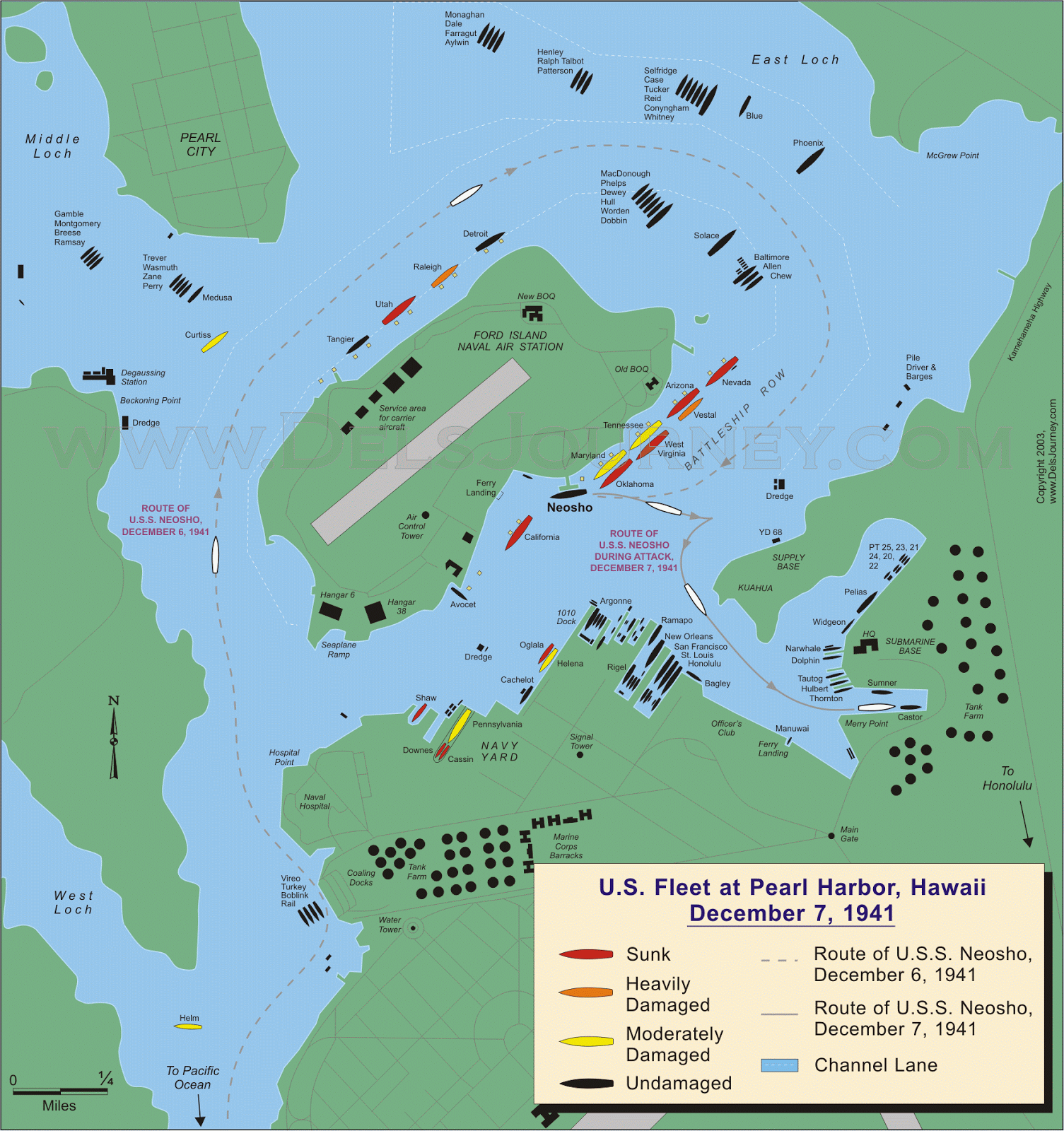
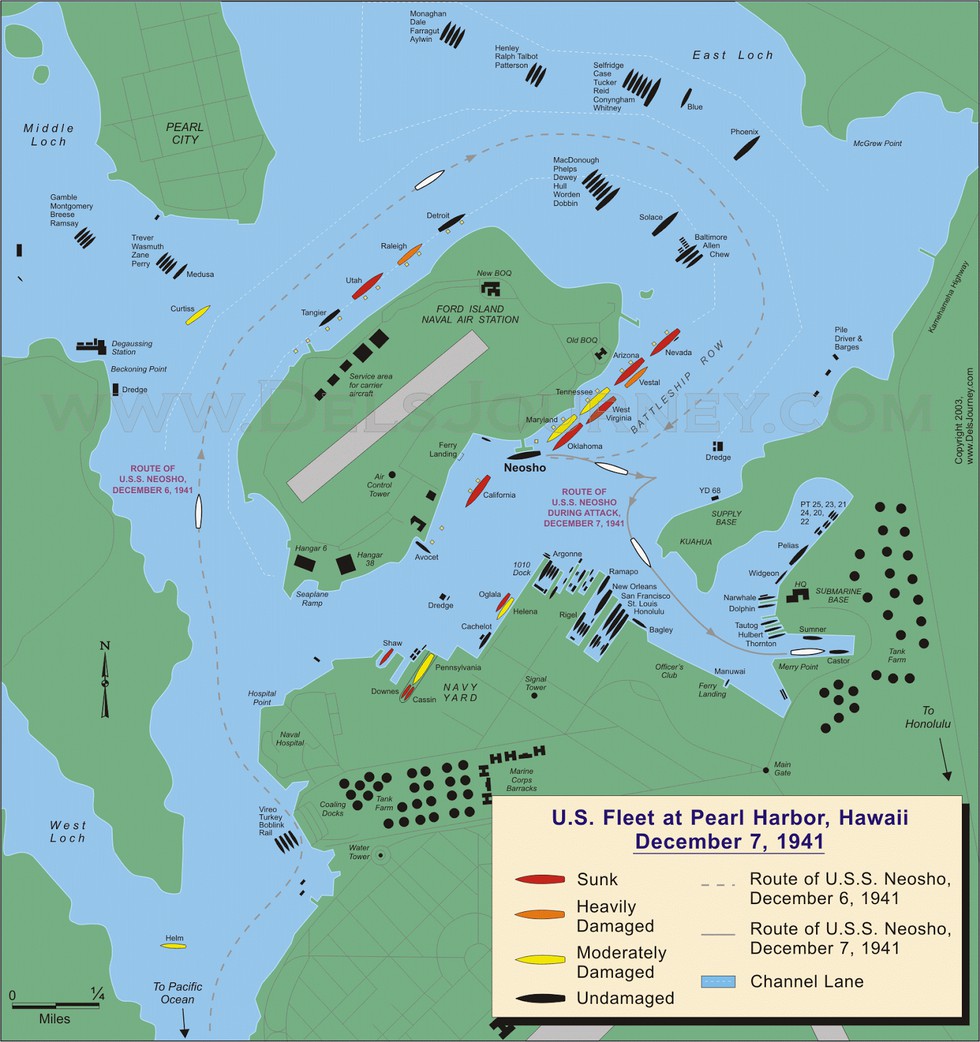
Hereâs a decent map of things. A larger (and thus more useful) version of this image can be viewed
here.
Please note that on the day of the attack the carrier fleet were absent from Pearl Harbour and that
the shallow depth of the water would make it much easier to recover ships than say, an ambush out
at sea.
From Wikipedia:
âStriking the Pacific Fleet at anchor in Pearl Harbour carried two distinct disadvantages: the
targeted ships would be in very shallow water, so it would be relatively easy to salvage and 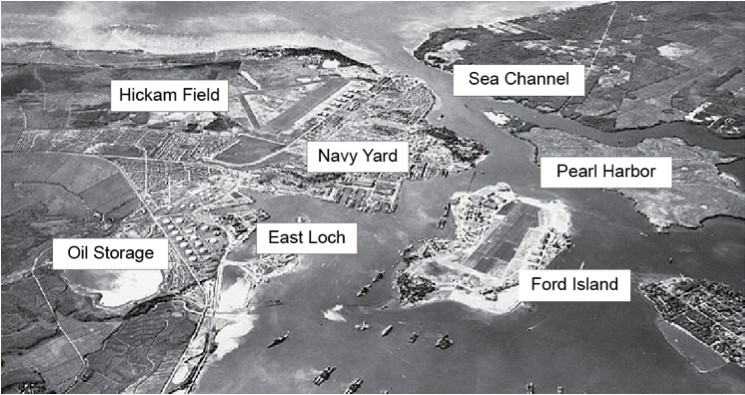
possibly repair them, and most of the crews would survive the attack since many would be on
shore leave or would be rescued from the harbour. A further important disadvantage was the
absence from Pearl Harbour of all three of the U.S. Pacific Fleet's aircraft carriers (Enterprise,
Lexington, and Saratoga).â
If I wanted to commit a killing blow to the American fleet I would scout the place prior to the attack
to make sure the carriers were present, or track the carriers and attack them separately with
submarines or whatever is most effective against carrier type ships. The historians give us a load of
waffle that the Japanese were obsessed with battleships and didnât care about carriers. Sure. They
have their own aircraft carriers and donât understand the cost/power/utility of them. So all three of
the US carriers come through this unscathed.
I think itâs weird how the Japanese commit their forces in the attack. From Wikipedia:
âA total of 353 Japanese planes reached Oahu in two waves. Slow, vulnerable torpedo bombers led
the first wave, exploiting the first moments of surprise to attack the most important ships present
(the battleships), while dive bombers attacked U.S. air bases across Oahu, starting with Hickam
Field, the largest, and Wheeler Field, the main U.S. Army Air Forces fighter base. The 171
planes in the second wave attacked the Army Air Forces' Bellows Field near Kaneohe on the
windward side of the island and Ford Island. The only aerial opposition came from a handful of
P-36 Hawks, P-40 Warhawks, and some SBD Dauntless dive bombers from the carrier Enterprise.â
Given that the whole point of the operation is to take out the fleet, why not⦠yâknow⦠attack the
fleet? Why are they wasting essentially the entire second wave strafing the air bases? They should
have launched everything they had at the ships and harbour facilities.
Youâll note on the big colour map youâve got the area next to the Marine Corps Barracks you have
the Tank Farm and the Coaling Docks. In the photo below you can see Oil Storage. This is the fuel
storage for the fleet. Can you imagine attacking a site like this and NOT hitting the fuel depots?
Imagine the carnage if you dropped a couple dozen high explosives among them.
Do the Japanese do this? Nah.
Also note on the first colour map the submarine base to the east side is completely ignored/
undamaged. Who cares about submarines eh? No use whatsoever. Itâs not like they are expensive,
difficult to counter at sea and require specialist crew. Or the massive cluster of vessels in the top
right corner (e.g. the clusters headlined by the Monaghan, the Henley, the Selfridge or the
MacDonough) which are ignored and undamaged. Nicely bunched up, youâd think someone would
try to hit them. Not battleships though, so nah, leave them be.
By the time the second wave was wrapping up we check Wikipedia to learn about Japanese losses:
âOf Japan's 414 available planes, 350 took part in the raid in which 29 were lost; nine in the first
wave (three fighters, one dive bomber, and five torpedo bombers) and 20 in the second wave (six
fighters and 14 dive bombers) with another 74 damaged by anti-aircraft fire from the ground.â
So you have 350 planes to throw at the base (youâre holding back 64 to protect your ships), youâve
got 103 damaged or destroyed leaving you with a robust 247 still in the game. The Japanese carriers
havenât been located (let alone being attacked) and the Americans have barely any planes to put in
the air, so why not keep going? Wikipedia tells us that the Japanese admirals were pushing for a
third wave but they were denied! We read:
âAccording to some accounts, several Japanese junior officers including Fuchida and Genda
urged Nagumo to carry out a third strike in order to sink more of the Pearl Harbour's remaining
warships, and damage the base's maintenance shops, dry-dock facilities, and oil tank yards. Most
notably, Fuchida gave a first-hand account of this meeting several times after the war. However,
some historians have cast doubt on this and many other of Fuchida's later claims, which sometimes
conflict with documented historic records. Genda, who opined during the planning for the attack
that without an invasion three strikes were necessary to fully disable the Pacific Fleet, denied
requesting an additional attack. Regardless, it is undisputed that the captains of the other five
carriers in the task force reported they were willing and ready to carry out a third strike soon
after the second returned, but Nagumo decided to withdraw.â
Not ordering a third wave strike was stupid and even Wikipedia has to admit this:
âAlthough a hypothetical third strike would have likely focused on the base's remaining warships,
military historians have suggested any potential damage to the shore facilities would have
hampered the U.S. Pacific Fleet far more seriously. If they had been wiped out, "serious
[American] operations in the Pacific would have been postponed for more than a year";
according to Admiral Chester W. Nimitz, later Commander in Chief of the Pacific Fleet, "it would
have prolonged the war another two years".â At a conference aboard his flagship the following
morning, Yamamoto supported Nagumo's withdrawal without launching a third wave. In
retrospect, sparing the vital dockyards, maintenance shops, and the oil tank farm meant the U.S.
could respond relatively quickly to Japanese activities in the Pacific. Yamamoto later regretted
Nagumo's decision to withdraw and categorically stated it had been a great mistake not to order a
third strike.â
They are pulling their punches you see. A serious enemy would have gone for the kill but this is
pre-scripted. So who is Nagumo then? This is Admiral Chūichi Nagumo: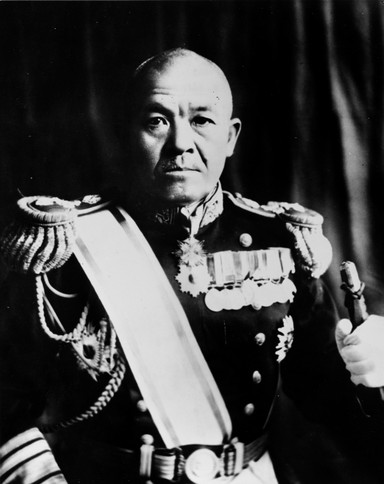
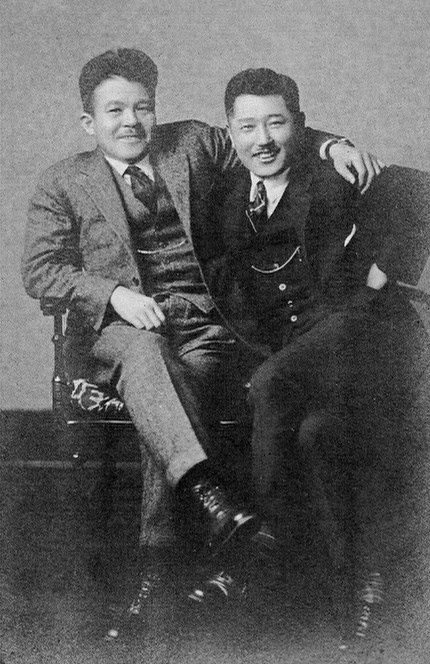
If we read his Wikipedia bio we learn:
âFrom 1925 to 1926, Nagumo accompanied a Japanese mission to study naval warfare strategy,
tactics, and equipment in Europe and the United States.â So he came out of our schools.
Hereâs an interesting photo:
Caption: âNagumo (left) with his middle school friend Ichiro Saeki in Seattle, Washington in
1925.â
Definitely not gay or an asset for the West then. He is of course involved in Midway, Guadalcanal
and Saipan but Iâll get to that properly when the Muses permit. You may have already spotted his
end: on Saipan, along with his buddy General Saito, Nagumo is shot through the head âby an
adjutantâ and his body is ârecovered by Marinesâ later. Interesting that Nagumo and Saito both kill
themselves / ask to be shot before defeat and while their troops are still in the field. The normal
etiquette from other battles is that the Japanese officers/generals lead their men to the bitter end in a
fight to the death (e.g. at the Battle of Attu).
Moving on, if we read the Wikipedia article on the Attack on Pearl Harbour at this section we learn:
âNinety minutes after it began, the attack was over 2,008 sailors were killed and 710 others
wounded; 218 soldiers and airmen (who were part of the Army prior to the independent United
States Air Force in 1947) were killed and 364 wounded; 109 Marines were killed and 69 wounded;
and 68 civilians were killed and 35 wounded. In total, 2,403 Americans were killed, and 1,143
were wounded. Eighteen ships were sunk or run aground, including five battleships. All of the
Americans killed or wounded during the attack were legally non-combatants, given that there was
no state of war when the attack occurred.â
What are the odds it would be 18 ships sunk/run aground? We read on:
âOf the American fatalities, nearly half were due to the explosion of Arizona's forward magazine
after it was hit by a modified 16-inch (410 mm) shell. Author Craig Nelson wrote that the vast
majority of the U.S. sailors killed at Pearl Harbour were junior enlisted personnel. "The officers
of the Navy all lived in houses and the junior people were the ones on the boats, so pretty much all
of the people who died in the direct line of the attack were very junior people", Nelson said. "So
everyone is about 17 or 18 whose story is told there."
Interesting how the majority of the dead are extremely young and in junior roles. You know, easily
replaceable. Also new and not likely to be missed if you were⦠oh I donât know⦠over egging the
number of casualties.
I would like to float the suggestion that not as many people died at Pearl Harbour as they claim. The
whole point of the exercise is to give a cause for war but done in a careful way, where your pet
Japanese attacker doesnât damage anything TOO serious, e.g. the fuel depots or the carriers. You
need some people to die of course but maybe you can fudge the numbers a bit and give it a boost.
What if only a couple hundred died at Pearl Harbour? Mad idea, surely?
Weâve got 2,403 dead (including the civilians killed, not inclusive of the Japanese dead) at Pearl
Harbour. Of that, 1,177 are killed on the Arizona. If we watch this video, âWhat Happened to Pearl
Harborâs Deadâ by Ask a Mortician on YouTube we learn that due to the fire/ship damage only 107
people were positively identified, leaving 1,070 people to fall into 3 categories: bodies never found,
bodies or dismembered body parts removed from the ship during the salvage process and remains
that could not be recovered as they were in the rear section of the Arizona.
As the lady in the YouTube video explains, the Navy claimed it would be âtoo difficult to remove
the dead in a respectful mannerâ and left 1,102 bodies in the ship to this day.
Reminds us of the Titanic fake, where they told us most of the dead were left in the ocean floating
in their life jackets or buried in mass graves in Canada. Because their families wouldn't be
interested in them. 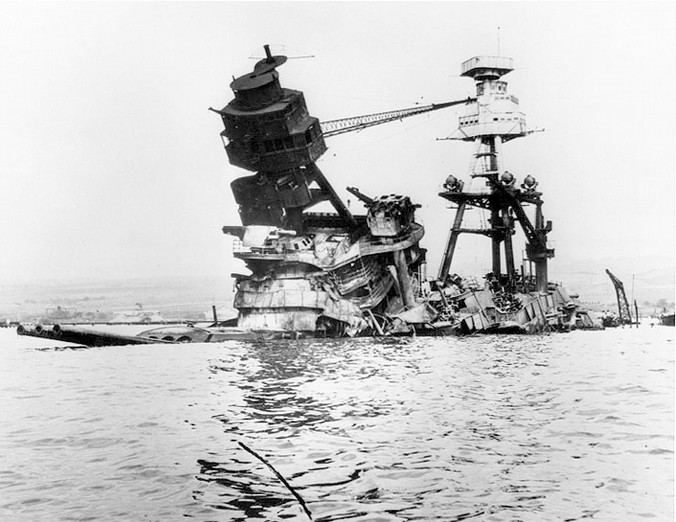
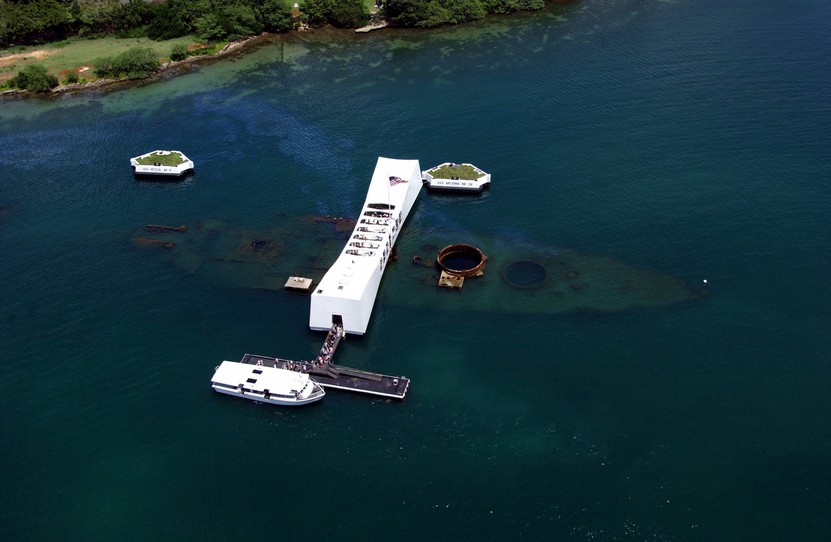
The USS Arizona, shortly after the attack, still highly accessible and above the waterline. The
caption on Wikipedia reads: âThe visible superstructure of Arizona after her sinkingâ.
Caption: âAerial view of the USS Arizona Memorial, showing the wreck and oil seepage from the
ship's bunkersâ
Really? This was an impossible recovery job for the US Navy? Itâs right there! In the earlier photo
you can walk around on the deck! To recap, 1,070 of the 2,403 dead are unknown and inside this
sunken ship. Why not float the ship (in the shallow water of the harbour) and cut it open and get the
men out? Wouldnât that be a priority? How many times do you find a ship essentially abandoned
when it sinks smack in the middle of an active naval base? 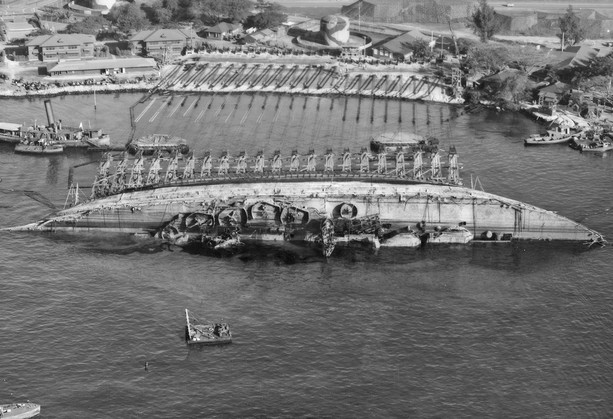
I posit that there are no additional corpses in the Arizona. They leave the ship as a symbol / mass
grave to motivate the American people. I donât trust the military when they say âOh thereâs over a
thousand bodies in there, if only we could get them out, by the way we donât even know who they
areâ.
The claim is 2,403 dead. Minus the 1,070 of the Arizona mystery box, that leaves us 1,333 dead at
Pearl Harbour. Brace yourselves, weâre just starting.
You then look at the Oklahoma. There weâve got 429 dead inside the ship.
The ship isnât flipped upright until 1943 so by the time they can get inside youâve got nothing but
unidentifiable chunks of skeleton. Again, why not float it and crack it open sooner? Why not
recover the dead? As the Ask a Mortician video explains theyâve tried identifying what they can but
mostly the remains were interred in mass graves with multiple bits of body in a single casket. 388
bodies are still unidentified (with it being speculative about the other 41) so, essentially, the full 429
dead is an unknown set (and I would argue an unknown total because of how theyâre trying to
assemble chunks of skeleton decades later â so we donât really know it was 429 corpses right?).
As we read about here, the military tried to say they had some people identified but when this was
later checked (as in this example) it was a jumble of a hundred unknown bodies:
âIn 2003, a Pearl Harbour survivor named Ray Emory approached the U.S. Army Central
Identification Laboratory with records that suggested one of the 61 caskets that held the remains of
unknown Oklahoma sailors contained the remains of a particular service member killed in Pearl
Harbour. The Lab agreed to investigate, and the casket was exhumed. Forensic analysis of the
remains discovered something surprising: the traces of about 100 people in the single casket.â
I like how itâs supposed to be 429 dead but only 61 caskets, so theyâre not even trying to make it
work there. Why 61 caskets if you are only going to jumble them up anyway? Why not just tip them
into a big heap or make a chair out of them or something? That now takes us down to 904 dead.
By the way, at 4:27 in that YouTube video notice how she recounts that the historical canon is that
when the Oklahoma is attacked the entire 1,300 man crew is on deck for the morning colours
ceremony. They are only alerted to the hundreds of inbound Japanese fighter planes by âhearing
explosionsâ and the PA system announcing âAir Raid!â. I think itâs interesting to imagine you
could have the Japanese air force fly in bombing and shooting and the crew donât notice this. They 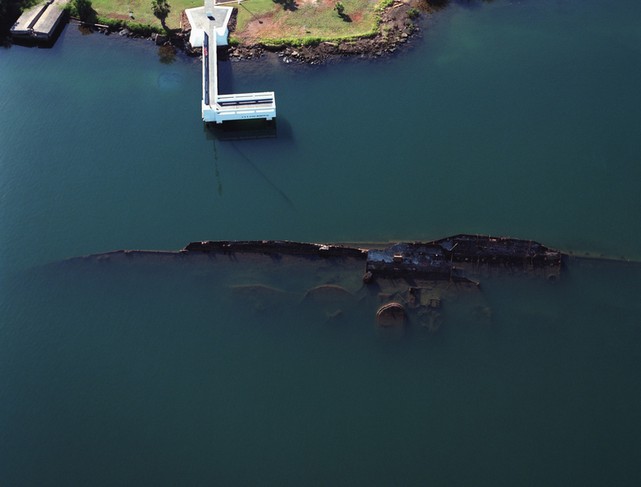
have to wait for explosions to go off or the torpedoes to actually hit their ship. Seriously, nobody
spotted the planes? Theyâre supposed to be flying low enough for witnesses to see the pilots in the
cockpits!
At 8:06 she mentions the USS Utah (which was at the time a 33 year old target ship), which you can
see in the video still is capsized just below the waterline, containing 54 unidentified people. Why
not raise the ship? Why not recover the dead?
Hereâs the wreck of the Utah, present day. No way to get in there and reach the bodies apparently. I
call shenanigans. 54 unidentified alleged corpses is hearsay, so weâre now down to 850 dead.
This article gives us the friendly update that 35 âunknown remainsâ were on the USS West Virginia,
of which (they claim) eight have been identified. Letâs give them the benefit of the doubt for the
eight, weâre now down to 823 dead.
We also read here that 25 remains on the USS California were unknown, out of the 98 dead. 798.
The USS Pennsylvania had 15 men killed and 14 men âmissingâ. Missing? 784
We then have this interesting article by Simon Webb, who writes:
âBy a stroke of misfortune for the United States, a large-scale military exercise to test the air
defences of the naval base had ended a day earlier. The crews of the anti-aircraft batteries that
surrounded the harbour had been given leave, which many of them spent in Honolulu, and the
ammunition for their guns had been locked away. It was therefore left to the ships under assault
to defend themselves as best they could. This would prove disastrous for the inhabitants of nearby
Honolulu.â
A coincidental military training exercise that denied the entire harbour itâs anti-air the day before
the attack? The crews sent on R&R? The ammo locked away? I canât even, itâs too perfect.
âThe defence of the American ships during the attack on Pearl Harbour was for the most part
undertaken with five-inch naval guns. Much of the artillery was only intended to engage surface
targets, others were dual purpose; meaning that they could also be used for anti-aircraft fire. In
the heat of battle, both types of ordnance were fired against the Japanese dive bombers. Although
the shells for use against aerial targets had time-fuses, which could be set to explode in mid-air, the
others detonated only when they struck a target.
Not surprisingly, many of the shells fired missed the enemy aircraft and landed in the streets of
Honolulu. The shells, weighing around 55 pounds, exploded on impact, killing dozens of
civilians, the youngest of whom was a three-month old infant. Entire families were killed during
the bombardment. Jitsuo Hirasaki was a 48-year-old Japanese-American who ran a restaurant in
the city. On the morning of the attack, he was in his diner with his family when a five-inch shell flew
through the window and exploded. Harasaki was killed instantly, as were his three children, their
14-year-old cousin and seven young men who just happened to be eating breakfast. In all, 32
people died in the shelling of Honolulu. Another 36 civilians were killed elsewhere. The earliest
reports of the Japanese attack on Hawaii described not only the destruction of vessels at Pearl
Harbour, but also ferocious bombing raids on Honolulu.â
And:
âDuring the defence against the bombers, the guns of the United States Navy killed 55 Japanese
airmen, compared with the 68 civilians who died. All but a few of these non-combatants were
victims of shellfire. Itâs therefore a melancholy but indisputable fact that on that day, the
American armed forces in Hawaii succeeded in killing more civilians than they did members of
the Japanese air force; something which is not generally known. Eighty years later, it is perhaps
time to be open and honest about what happened on that dreadful day.â
So⦠the civilian deaths were largely, if not entirely, friendly fire victims. Whoops. Weâre now at
716 dead, identified, killed by the Japanese.
This is more speculative but it strikes me that if you have (as in the case of the Pruitt, the Sicard, the
T
racy, the Chew, the
Maryland, the
Vestal and the Dobbin for instance) one or two people from an
entire ships crew who are marked as dead that this is also an easy way to launder the numbers. Are
you going to personally know every single person on a ship? No, of course not, only the crewmanâs
immediate colleagues could honestly know them, so you can tell the crewmen of these various ships
âOh we lost crewman Xâ and theyâll nod along but itâs not necessarily a âknownâ person. So you
could argue having very few casualties is a way to scrape a couple extra deaths to add to the total.
22 in this case. 694.
I think itâs weird how the various army Forts/Camps had such low numbers as well. See here.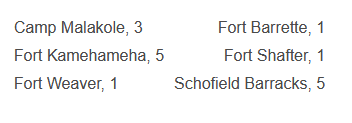
These places are being strafed and bombed by dozens of aircraft and you get one casualty at 3 of the
Forts? Only 3 at Malakole? 5 at both Kamehameha and Schofield? Maybe Iâm overthinking that but
it just strikes me as weird. Thatâs 16 dead I find suspect.
In fact reading the small print on that NPS page (scroll down) it IS being fudged:
âPaul J. Fadon, Sgt: Killed in a truck accident 10 miles north of Schofield Barrackâ
âConrad Kujawa, PFC: Killed in an accidental electrocutionâ
âTorao Migita, Pvt: Killed in down-town Honolulu by "friendly fire"
Why are they looping in a truck accident and an electrical accident? Itâs not really the same thing, is
it? This is like âDied with COVIDâ. Yeah, nah, the whole 16 I doubt. Also Ford Island Naval Air
Station (1 casualty), and Kaneohe Bay Naval Air Station (18), so 35. Down to 659.
You have very little on the net about how many people died and were actually identified on the bulk
of the other ships. For example the USS Dobbin supposedly has 4 casualties but they donât even get
a mention on the Wiki page. Maybe the Wiki writers were just lazy that day? Why would it not be
included though? Inconclusive but Iâm just flagging that up.
I canât prove it as categorically false but I note that the national parks entry on the airfields
casualties has 182 dead at Hickam Field and 33 dead at Wheeler Field, so weâve got spook numbers
again, which is a red flag and could indicate more fakery. If so, that would be an extra 215 fudged
so that would drop the body count to 444. I wonder how much lower this could go?
Miles may see more to this / differently on this and Iâm happy to acknowledge this is speculative.
Iâve reduced the Pearl Harbour death toll from over 2,400 to less than 450. Someone smarter than
me could figure out a lower number, Iâm sure Iâve missed stuff, I donât know. The point is, I stand
by the main thrust of the argument that fewer people died than the narrative says. You would have
had injuries and casualties on that day, but I donât think it played out like they say it did.
Spoiler alert: Lestrade will change his mind again before the end of part 3, 4c.
It occurs to me that Mr. Webb is perhaps being overly generous with âthe shells just happened to hit
Honolulu and the military done did a cover upâ. Like OK, maybe, or maybe they shot at Honolulu
deliberately to inflict civilian damage and amp up public support. I guess thatâs too spicy a
possibility for him to consider.
I also want to quote this bit from Webbâs article as it would seem to link up nicely with what Miles
previously wrote about regarding the Blitz (i.e. the RAF / British military being largely responsible
for the bombings/fatalities):
âDuring the London Blitz, for example, as many as half those killed were victims not of German
bombs, but rather of British artillery firing at enemy planes flying overhead. Hurling thousands
of artillery shells weighing between 28 and 80 pounds into the sky above the capital was a tactic
fraught with risk. The chances of any individual shell bringing down a bomber were slim; many did
not explode until they landed in the streets below.â
So thatâs a whole thing that needs to be looked into more. I couldnât find a free pdf/epub version of
Webbâs book but if anyone finds a copy let me know so we can get more meat on this.
Part 4c coming on May 24. It is the bombshell.