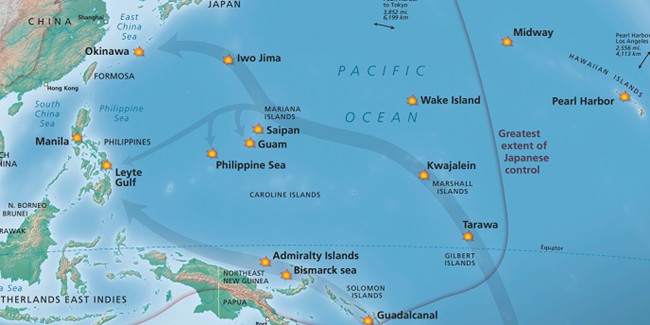
Pacific Theatre
Part 5
âIn which we visit Where Americaâs Day Really Beginsâ
By Lestrade aka Unpopular Opinion
First published: March 30, 2022
Thereâs no freedom of speech in the UK but Iâll say my opinion anyway
While Pearl Harbour was kicking off, the Saturday morning cartoon villains of Imperial Japan were
up to dastardly tricks across the Pacific. The stage is set for the heroic US military to wipe them out,
one tropical island base at a time. You will be shocked to learn the Americans might have been
telling pork pies* about this as well.
What was initially a âlol watâ moment on Wikipedia about the Battle of Attu has now snowballed
into a full-on unravelling of this entire theatre of war. Youâll laugh but Iâm still trying to process the
idea that Pearl Harbour was made up. Maybe Iâve got a weakness for old war vet guys teary-eyed
telling me anecdotes. Just feels like kicking a dog in the face to disbelieve them, but as Miles points
out, it is pretty easy for the military to order their men to say X Y or Z and them to stick to it, even
after retirement.
Iâve subsequently looked at stuff like this and this and this as a follow-up to try and see if one of the
veterans is going to drop some deep insight that will sway me back but⦠yeah, the testimony
screams as useless/false.
In light of this Iâm calling it now that the whole bloody campaign is going to be faked. Completely
outrageous a claim (to non-regular-readers of this site) on the face of it, given the graveyards and
veterans and casualty figures but whatever, Iâm riding this tiger now. Iâm going to do the job that
historians should have done 70 years ago and demonstrate that, one step at a time. Join me, reader,
on a liberated Phoenician yacht as we set sail from Hawaii on a voyage across the Pacific. First
port: Wake Island.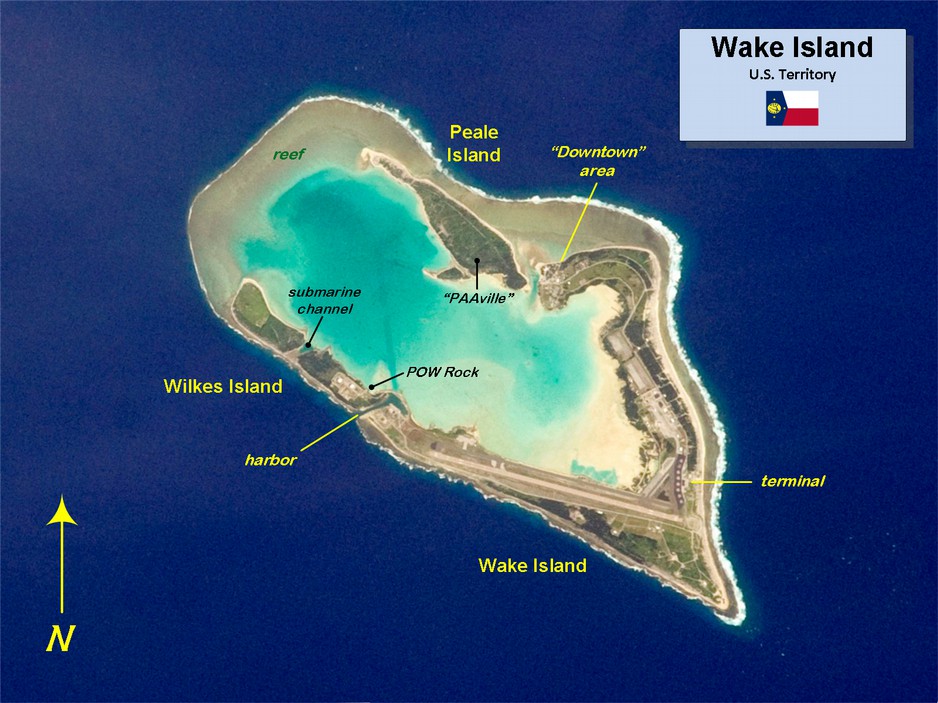
Wake
is a small coral atoll in the middle of the Pacific, just over 5 square miles in size. Itâs significant
because it has a â9,800-foot (3,000m) runway... the longest strategic runway in the Pacific
islandsâ.
From Wikipedia:
âThe Battle of Wake Island was a battle of the Pacific campaign of World War II, fought on Wake
Island. The assault began simultaneously with the attack on Pearl Harbor naval and air bases in
Hawaii on the morning of 8 December 1941 (7 December in Hawaii), and ended on 23 December,
with the surrender of American forces to the Empire of Japan.â
And:
âThe island was held by the Japanese for the duration of the Pacific War theatre of World War
II; the remaining Japanese garrison on the island surrendered to a detachment of United States
Marines on 4 September 1945, after the earlier surrender on 2 September 1945 on the battleship
USS Missouri in Tokyo Bay to General Douglas MacArthur.â
A very simple initial observation: weâre supposed to believe the US military allowed the Japanese
to hold this place for the rest of the war. They literally leave embedded Japanese troops (with
American hostages but weâll get to that) behind them, as they advance west. Theyâre fighting on
Iwo Jima years later and they still have Japanese back on Wake. What!? Hostages combined with
the biggest airstrip in the region is an obvious first strike location and itâs ridiculous on the face of it
that it wasnât retaken before February of â42.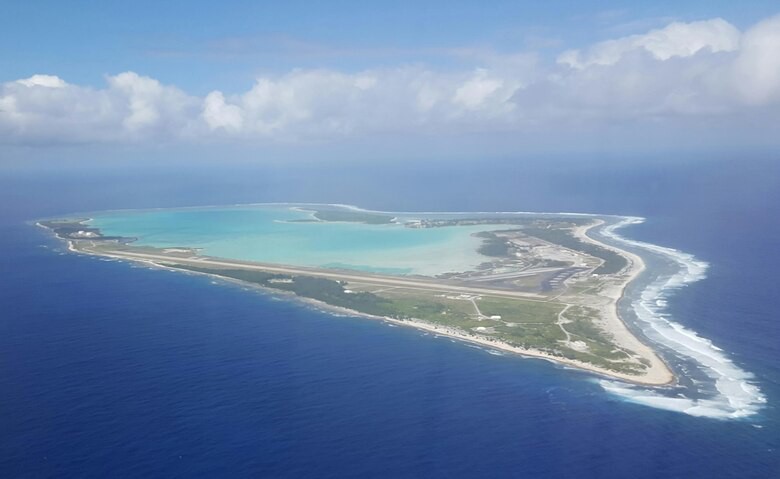
We read on:
âIn January 1941, the United States Navy constructed a military base on the atoll. On 19 August,
the first permanent military garrison, elements of the 1st Marine Defence Battalion deployed to
Wake Island under the command of Major P.S. Devereux, USMC with a force of 450 officers and
men. Despite the relatively small size of the atoll, the Marines could not man all their defensive
positions nor did they arrive with all their equipment, notably their air search radar units. The
Marine Detachment was supplemented by Marine Corps Fighter Squadron VMF-211, consisting of
12 F4F-3 Wildcat fighters, commanded by Marine aviator Major Paul A. Putnam, USMC. Also,
present on the island were 68 U.S. Navy personnel and about 1,221 civilian workers for the
Morrison-Knudsen Civil Engineering Company. The workers were to carry out the company's
construction plans for the island.â
Note: the base is only built that year, only staffed in late August that year. They have nearly 2,000
people on this island but not enough men to man all the defensive positions⦠also they didnât
bother to equip an air base with radar. Do you really need over 1200 men to build the facilities? I
mean, itâs literally an island in the middle of the ocean with an air strip. You want radar for a place
like that. Check out how flat it is:
You can see the big air strip in the foreground. They can just about fit it in. The rest is flat dirt,
shrubs, some sandy beach and the nice blue lagoon in the middle. Not a lot of space, not a lot of
cover. We read on:
âThe Marines were armed with six 5-inch (127 mm)/51 cal pieces, originating from the old
battleship USS Texas; twelve 3 in (76 mm)/50 cal anti-aircraft guns (with only a single working
anti-aircraft director among them); eighteen .50 in (12.7 mm) Browning heavy machine guns;
and thirty .30 in (7.62 mm) heavy, medium and light water- and air-cooled machine guns.â
Even better: they only have one device for calculating anti air fire. Why even bother stationing
troops to defend this place if youâre not going to equip them properly? Anyone attacking is going to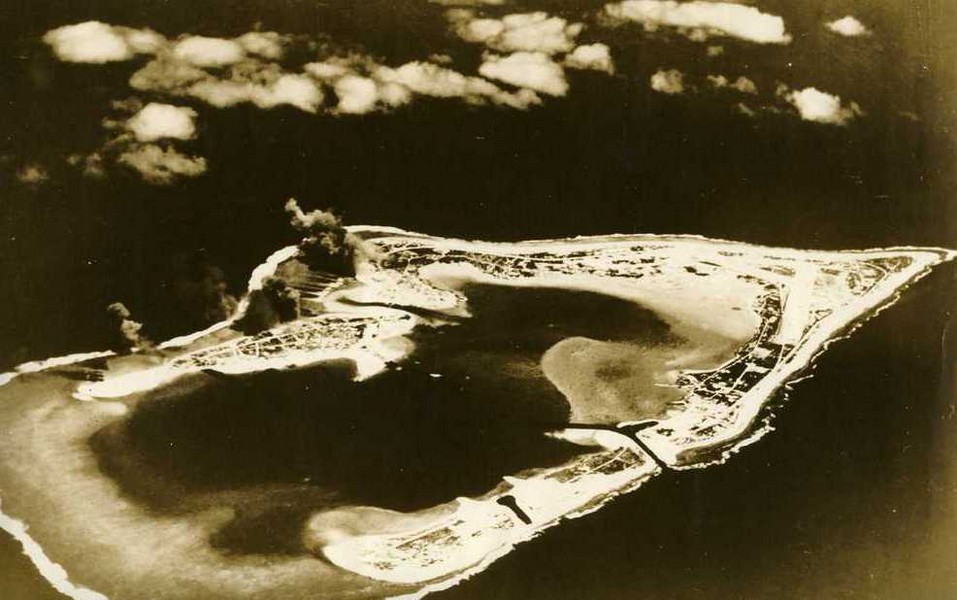
either A) shell you from a battleship, B) bomb you from aircraft and C) send in amphibious troops
to mop up. You want strong anti-naval defences, anti-air â with the ability to track and shoot
properly obviously â and radar to spot the enemy when they approach. Having a bunch of Marines
sat around on the atoll seems kind of pointless. Is there a big harbour with a Naval presence? Nah.
Anti air? Nah. Congratulations, youâve built a sitting duck.
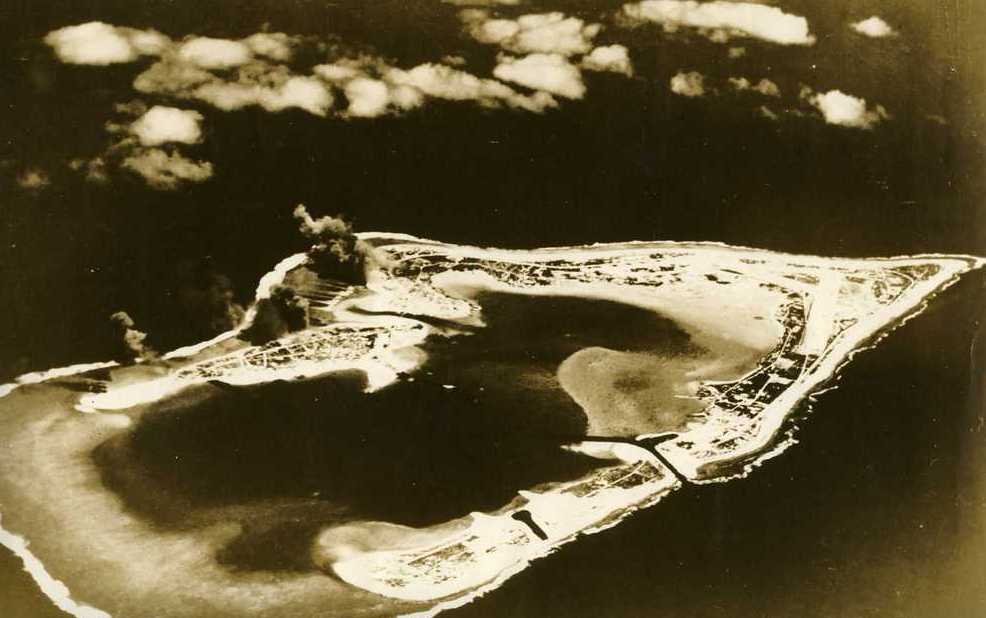
Photo of Wake mid-bombardment. Again you can see how barren it is. No real cover. I like how
there was a plane supposed to be taking a snapshot at this point. Presumably from a Japanese
fighter? What, is this tied to the underside of the plane with a rope? Or is the pilot clicking away to
show the wife and kids back home as a souvenir? Regardless: the smoke clouds are cropped and
inserted, this is a paste-up. It might be easier to see what I mean if you look at the bigger resolution
image here.
Anyway, Iâm getting ahead of myself. From Wikipedia:
âOn 8 December, just hours after receiving word of the attack on Pearl Harbor (Wake being on the
opposite side of the International Date Line), 36 Japanese Mitsubishi G3M3 medium bombers
flown from bases on the Marshall Islands attacked Wake Island, destroying eight of the 12 F4F-
3 Wildcats on the ground and sinking the Nisqually, a former Design 1023 cargo ship converted
into a scow. The remaining four Wildcats were in the air patrolling, but because of poor visibility,
failed to see the attacking Japanese bombers. These Wildcats shot down two bombers on the
following day. All of the Marine garrison's defensive emplacements were left intact by the raid,
which primarily targeted the aircraft. Of the 55 Marine aviation personnel, 23 were killed and 11
were wounded.â
So 36 planes drop bombs/shoot at the island and hit (of course eight) parked up planes, but all the
defensive emplacements are left alone. Thatâs nice of them. I like how there are 4 US planes in the
air but they donât see the Japanese and the Japanese donât see them (because then the Japanese
planes would presumably have blown them out of the sky immediately).
âTwo more air raids followed. The main camp was targeted on 9 December, destroying the
civilian hospital and the Pan Am air facility. The next day, enemy bombers focused on outlying
Wilkes Island. Following the raid on 9 December, the four anti-aircraft guns had been relocated
in case the Japanese had photographed the positions. Wooden replicas were erected in their
place, and the Japanese bombers attacked the decoy positions. A lucky strike on a civilian
dynamite supply set off a chain reaction and destroyed the munitions for the guns on Wilkes.â
You need a lot of dynamite on a sandy tropical atoll. I love how the Japanese donât just immediately
take this island within a couple of hours of December 8th. They have superior numbers, itâs a
surprise attack, the Marines are unable to shoot back effectively (bombers vs. squaddies with rifles
and only 4 ant-air) and the Japanese have cut them off from outside support. They should have been
bombed into oblivion on day one. As if 36 bombers (with more to come with reinforcements) canât
target and annihilate 4 anti air placements, let alone over multiple days.
Instead, as per Encyclopedia Britannica:
âWake was bombed on an almost daily basis for the next two weeks.â
What!? What are they even bombing by day 5? Starfish and clams at low tide?
âOn December 11 a Japanese naval task force â including three light cruisers, six destroyers, and
two transports â attempted to land 450 Special Naval Landing Force (SNLF) troops on Wake
Islandâs south shore. The Japanese suffered a rude repulse from the marinesâ light coastal-
defence guns and the four remaining fighters. Two Japanese destroyers were sunk, several other
ships sustained damage, and the transports were withdrawn. That small engagement, the first
tactical defeat experienced by the Japanese navy in World War II, electrified the American
people, dispelling much of the gloom caused by Pearl Harbor.â
Ah, thank you Wikipedia, that clears it up then. This whole thing is a propaganda piece. Isolated
location, check. Heavy military involvement, check. All witnesses are controlled, check. Faked
photos (already), check. Fits a useful narrative, check.
How are they still using the remaining four planes after several days of aerial/naval bombardment?
The runway would be cratered. The hangers and buildings would be rubble. The ammunition
storage would be destroyed, the food stocks destroyed, water supply destroyed, etc. After a couple
of days the Americans would be out of water, dehydrated and unable to resist much of anything.
The 450 troops they send in (which seems like a low number, given the Japanese tend to throw
large numbers around the rest of the time) should have been able to easily take the place. But no,
the Americans win, somehow. I guess Marines are just immune to explosives.
âHumiliated by that setback, the Japanese navy continued to bomb Wake Island and eventually
sent a much larger task force of approximately 2,000 SNLF troops to take the atoll. Nine hundred
Japanese stormed ashore before dawn on December 23. After hours of desperate, close infantry
combat, the Japanese finally forced Wakeâs defenders to surrender. Although the fight for Wake
ended in a U.S. defeat, the American people continued to view the atoll as a rallying point. The
garrisonâs stand inspired Hollywoodâs first combat film of the war, Wake Island, which was
released in the late summer of 1942.â
Yeah. It got made into a movie as well. Check out the awesome trailer here. I love how it takes the
Japanese 15 days of bombing and over 2,000 troops to fight a couple hundred Marines. USA! USA!
I wonder why if they had 2,000 men they only send in 900? Anyway, if we return to Wikipedia we
read about the initial landing attempt by the Japanese back on the 11th:
âEarly on the morning of 11 December, the garrison, with the support of the four remaining
Wildcats, repelled the first Japanese landing attempt by the South Seas Force, which included the
light cruisers Yubari, Tenryū, and Tatsuta; the relatively old Mutsuki and Kamikaze-class
destroyers Yayoi, Mutsuki, Kisaragi, Hayate, Mochizuki and Oite, submarine tender Jingei, two
armed merchantmen (Kinryu Maru and KongÅ Maru), and two Momi-class destroyers converted
to patrol boats that were reconfigured in 1941 to launch a landing craft over a stern ramp (Patrol
Boat No. 32 and Patrol Boat No. 33) containing 450 Special Naval Landing Force troops.
Submarines Ro-65, Ro-66, and Ro-67 patrolled nearby to secure the perimeter.â
Seems legit, so youâd expect a force like that would have absolutely no trouble in obliterating every
man, artillery piece and building on the atoll in the space of five hours. Weird that they waited three
days to attack. What were they doing before then? Fishing? Karaoke? I know theyâre bombing them
from the air but clearly this has done nothing. How on earth did the Marines pull off the defence?
We learn that their genius tactic was to wait to open fire only when the Japanese âgot real closeâ
and then âfired all the gunsâ and that made the Japanese so scared they ran away. No, really:
âThe US Marines fired at the invasion fleet with their six 5-inch (127 mm) coast-defence guns.
Major Devereux, the Marine commander under Cunningham, ordered the gunners to hold their
fire until the enemy moved within range of the coastal defences. "Battery L", on Peale islet, sank
Hayate at a distance of 4,000 yd (3,700 m) with at least two direct hits to her magazines, causing
her to explode and sink within two minutes, in full view of the defenders on shore. Battery A
claimed to have hit Yubari several times, but her action report makes no mention of any damage.
The four Wildcats also succeeded in sinking the destroyer Kisaragi by dropping a bomb on her
stern where the depth charges were stored, although some also suggest the bomb hitting elsewhere
and an explosion amidships. Two destroyers were thus lost with nearly all hands (there was only
one survivor, from Hayate), with Hayate becoming the first Japanese surface warship to be sunk
in the war. The Japanese recorded 407 casualties during the first attempt. The Japanese force
withdrew without landing, suffering their first setback of the war against the Americans.
So the Japanese are sending in 450 of their equivalent Marines in landing craft but just⦠stopâ¦
and leave⦠because two ships of their fleet get sunk? What? So they turn around and paddle away
leaving the Marines unharmed? I can see how if youâre a red-blooded American waving the flag in 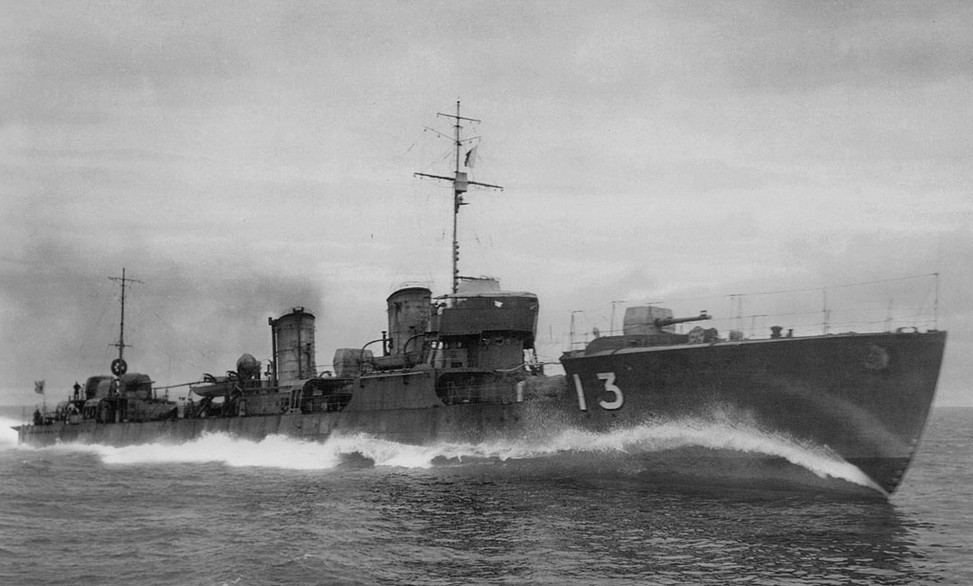
1941 you might fall for this, but in hindsight we can look back and agree itâs all very silly. Red flag
about the âfirst Japanese warship to be sunkâ â so letâs just check on that next shall we.
Hereâs a photo of the Hayate:
It would have to be number 13, wouldnât it? Either that or 18 or 33. Why does a Japanese ship have
13 in English numbers, not in kanji? Why does it not have the name of the ship on the side of the
prow? Or a Japanese flag â is that one right at the back? Why so small? What Iâm saying is, is there
anything to identify it as a Japanese ship? If I showed you that photo and said âAmerican destroyer
on patrolâ youâd have nodded along, right? If you look at the higher resolution image, why are the
numbers painted in a shadowed font like on a movie poster or billboard? Is that normal for 1940s
warships? Or am I looking at an artefact from someone doctoring the image?
Being a historically significant site, youâd assume people would have dived down and photographed
the wreck of the Hayate, right? I mean they know pretty much exactly where it went down, they
have co-ordinates, confirmed by both the Marines and the Japanese battle reports, itâs only about 2
miles south-west of Wake. Probably a History channel documentary on it, right? No? No. But
photographed at least? Or divers have mapped it? No? No. If we read this article we find that,
interestingly, despite underwater sonar mapping they only located the one wreck and when
investigating it with divers found it wasnât the Hayate, it was the Amakasu Maru No. 1, a Japanese
water tanker sunk by the USS Triton on December 24th 1942.
So nobody can find the Hayate, in over 70 years. Theyâve searched its location but thereâs no
wreck. You can also read about it in this article as well, which confirms:
âThe location of Hayate remains a mystery. The team imaged two other possible targets that
turned out to be huge rocks.â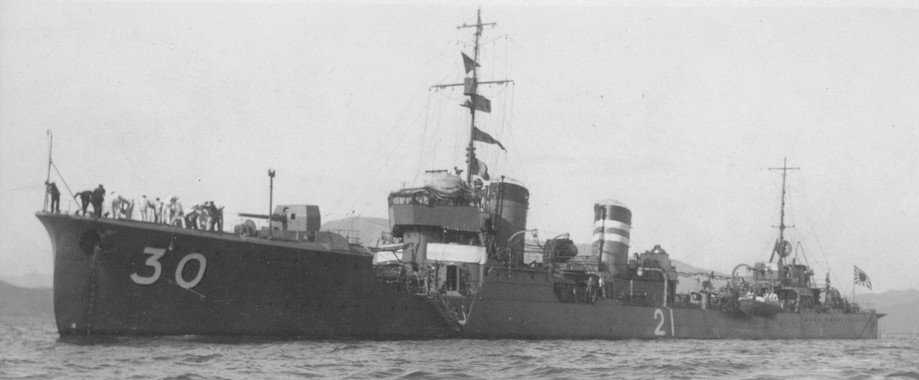
Thereâs supposed to be one survivor of the Hayate, who âlived to tell the taleâ and, presumably, is
the narrative justification for how we know it was the magazine detonation that sank the ship - but I
canât find who this is and they donât bother to write about this, get his statement, any of the stuff
youâd normally expect. Now I think on it âsunk in 2 minutes after 2 hitsâ is a bit too neat. All very
weird. What about the second Japanese ship to be sunk, the Kisaragi?
Again with the numbers in English. Teeny tiny Japanese flag right at the back. I would have thought
theyâd have been it more central/larger as a national pride thing but whatever, Iâm not from the
Navy in the 1940s. Anyone ever found the wreck? Nope. Any photos of the wreck? Nope. If you
want a chuckle have a read of this article on Henry Elrod which is a lovely piece of US propaganda,
one man single-handedly flying at the enemy, totally outgunned, taking out planes and warships
solo, returning to base unscathed to a round of applause like heâs Lord Flashheart in Blackadder.
Back to Wikipedia:
âAfter the initial raid was fought off, American news media reported that, when queried about
reinforcement and resupply, Commander Cunningham was reported to have quipped, "Send us
more Japs!" In fact, Cunningham sent a long list of critical equipmentâincluding gunsights, spare
parts, and fire-control radarâto his immediate superior: Commandant, 14th Naval District. But
the siege and frequent Japanese air attacks on the Wake garrison continued, without resupply
for the Americans.â
So the idea is that the Pearl Harbour attack is finished, the Americans are in a state of war, they
have the main fleet at Oahu, but for two weeks the Japanese are able to bomb Wake without any US
Navy ships getting involved? Itâs not like the Americans arenât aware this is going on, they are
literally radioing the commander on Wake who is making quips to the press. According to this
section the Navy sailed around the area to try and create âdiversionsâ (I have no idea what this
means, you either attack the Japanese ships at Wake to relieve the siege or you donât) and then
eventually just go back to Pearl Harbour under direct orders from the Commander in Chief of the
Pacific fleet William Pye. So another stand down order then like in Uvalde, Texas, yesterday.
Anyway, by late December the Japanese drum up some more troops and this time actually land and
take the island. We read:
âThe initial resistance offered by the garrison prompted the Japanese Navy to detach the Second
Carrier Division (SÅryÅ« and HiryÅ«) along with its escorts 8th Crusier Division (Chikuma and
Tone), and the 17th Destroyer Division (Tanikaze and Urakaze), all fresh from the assault on
Pearl Harbor; as well as 6th Crusier Division (Kinugasa, Aoba, Kako, and Furutaka), destroyer 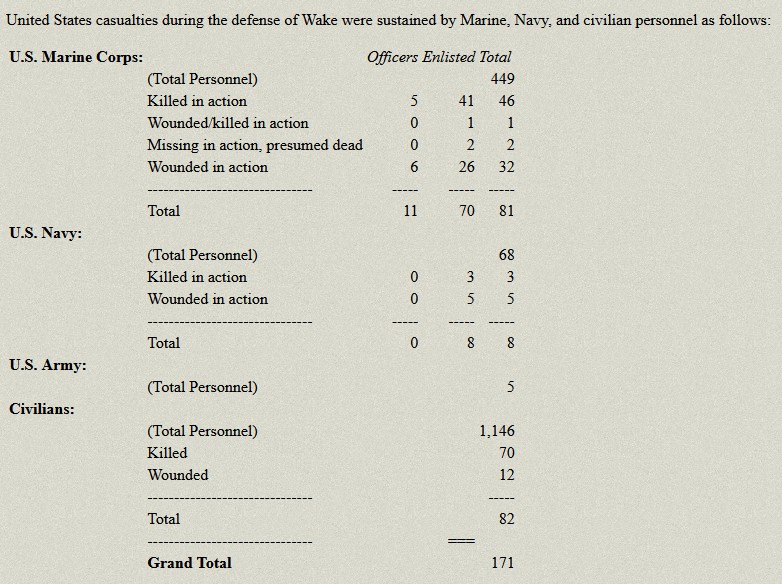
Oboro, seaplane tender Kiyokawa Maru, and transport/minelayer Tenyo Maru from the invasion
of Guam; and 29th Destroyer Division (Asanagi and YÅ«nagi) from the invasion of the Gilbert
Islands, to support the assault. The second Japanese invasion force came on 23 December,
composed mostly of the ships from the first attempt plus 1,500 Japanese marines. The landings
began at 02:35; after a preliminary bombardment, the ex-destroyers Patrol Boat No. 32 and
Patrol Boat No. 33 were beached and burned in their attempts to land the invasion force. After a
full night and morning of fighting, the Wake garrison surrendered to the Japanese by mid-
afternoon.â
Wow, so a) this is insane overkill to take a couple hundred Marines on an atoll and b) they fight the
Marines from half 2 in the morning all the way until mid-afternoon, so like twelve hours of assault.
This must have been absolute slaughter, I assume weâre looking at over 1,000 Americans dead.
They must have had to press-gang the civilian construction workers into picking up pistols and
spare rifles to give them the manpower to hold out that long. The bodies must have been stacked in
heaps by the end of it.
âThe US Marines lost 49 killed, two missing, and 49 wounded during the 15-day siege, while three
US Navy personnel and at least 70 US civilians were killed, including 10 Chamorros, and 12
civilians wounded. 433 US personnel were captured. The Japanese captured all men remaining on
the island, the majority of whom were civilian contractors employed by the Morrison-Knudsen
Company.â
Same number wounded as killed, somehow two people are missing (what?), 433 captured. How did
they fight for so long and so few lost? Thereâs not a lot of room on that atoll by the morning of the
23rd! Check out this page to see an estimated breakdown of the casualty numbers:
They managed to fit in a lot of eights, right? 81, 8, 82. 171 total, which is super low given how this
is like a 12 hour battle involving thousands of troops out for blood. The canon narrative is of course 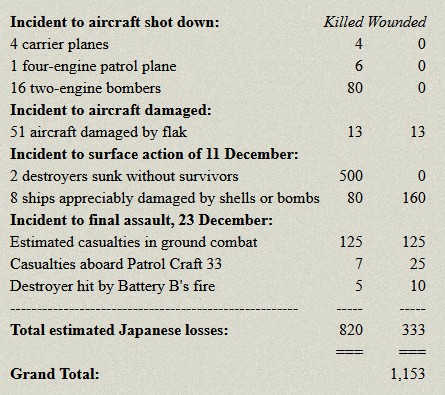
that the Japanese are absolutely relentless, vicious fanatics who will machine gun 14,000 Chinese
captives by a river over three days for a laugh. The Americans should have all been killed, to a man.
Now check out the Japanese âestimatedâ losses:
13 and 333. Beautiful. Again with the same numerology markers. Also the idea that 400-odd
Marines and a bunch of construction workers killed over 1,000 Japanese troops through 12 hours of
fighting and lost less than 200 guys in the process. Itâs silly.
H
ere is a link to an oral history statement from USMC Private Jack Skaggs, who was stationed on
Wake. He tries to remember his old Naval Intelligence briefing genuine memories and cheerfully
contradicts the narrative (without meaning to, bless him) by stating the Marines spotted the
Japanese fleet the night before the attack, then relayed that to Commander Devereux. That would of
course make it not an ambush and give the Navy time to respond prior to any aerial bombardment.
Whoops. He also talks about the initial assault on Wake as being purely involving battleships,
attacking âback and forthâ (against what? The US are not fielding any ships, this isnât a naval battle
with the Marines watching) rather than mentioning either the multiple days of aerial bombardment
prior to naval assault or the Japanese marines trying to land on the shoreline. Later on he talks about
the Marines counting â43 battleshipsâ on the horizon ready to assault Wake, which we know didnât
happen, it was about 13. They then land at â12 or 1 o clockâ, rather than 2:30am. Once again I have
the unpleasant duty to accuse a veteran of being a liar. Although I suppose if heâs lying then heâs
not really a vet, so thereâs that.
Now, you might be asking how we know what happened during the fifteen day siege? Well:
âThe only Marine to escape capture or death on Wake Island was Lieut. Col. Walter Bayler who
departed on a United States Navy PBY Catalina on 20 December. He was therefore able to provide
an accurate recounting of the actual happenings on Wake Island to the press and people of
America, while also providing photos and maps of the island. He was also published in a
nationwide magazine about the attack. The only reason Bayler was able to leave Wake Island was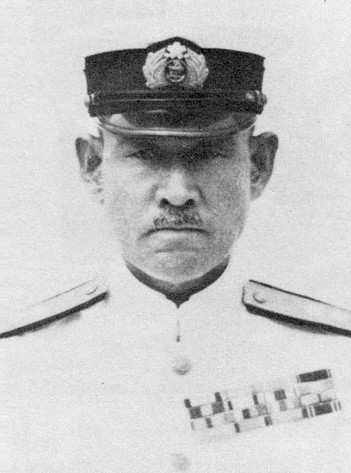
because he was a radio technician, and thus his services and abilities were greatly needed
elsewhere. Therefore, he left in the only plane that was available.â
Bayler being a Peerage name. Possibly a fudge/variant of Baylor/Taylor â a bit like the involvement
of Lieutenant Kermit Tyler during Pearl Harbour in the previous paper (which is also Peerage now I
think to check). It's a Presidential name: Tippecanoe and Tyler too, you know. I love how the
Americans still have functioning planes and an intact runway on Wake as late as the 20th December
and the Japanese fleet watches this one guy slowly fly away and donât bother to shoot him down.
As per his Wiki page: born 8/04/05, died 8/12/84. He then goes on a PR campaign to drum up more
support for the war effort, appears in magazines, etc. As you do. I remember during Iraq War 2 and
Afghanistan you were always having US troops flying home and immediately going on a press tour.
This thing is so fake it stinks already and Iâm not even done.
Who was in charge of the Japanese side? That would be Admiral Shigeyoshi Inoue.
In the Wikipedia bio section for Overseas Experience we learn:
âShortly after his promotion to ensign on December 15, 1910, he was reassigned to the cruiser
Kurama and attended the coronation ceremonies for King George V in London in 1911. In 1912,
he returned to school to study latest naval artillery and submarine warfare techniques and was
promoted to sub-lieutenant at the end of that year. In 1913, he served on the cruiser Takachiho,
followed by the battleship Hiei. He was promoted to lieutenant at the end of 1915, and transferred
to the battleship FusÅ. Although FusÅ participated in operations in World War I against the
Imperial German Navy, Inoue was not in any combat situations. At the end of 1918, Inoue was
appointed military attaché to Switzerland, and ordered by the Navy to learn German. In 1919, he
was part of the Japanese diplomatic delegation to the Paris Peace Conference, where this
knowledge proved to be useful. In 1920, he was appointed military attaché to France, and was
then ordered to learn French. In December 1921, he received a promotion to lieutenant
commander, and was permitted to return to Japan.â
So heâs promoted rapidly, doesnât see much in the way of combat and is constantly moving around
Europe learning different languages. Spook? Spook. Youâd think heâd get some comeuppance from
the Americans when they win in â45, right? Nah. He retires and becomes a music teacher.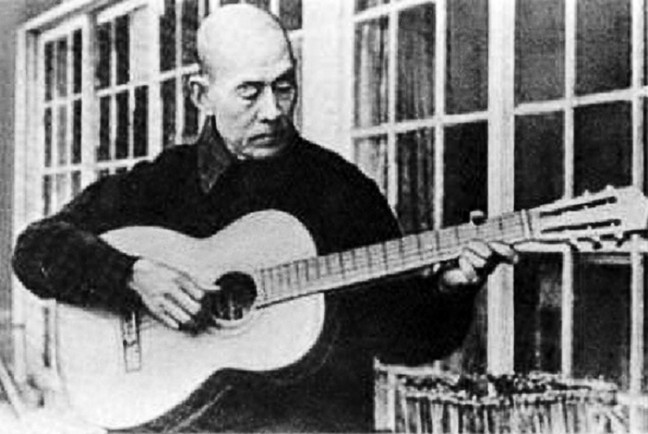
âAfter the war, Inoue became an English and music teacher to children at his house in Yokosuka.
The site of his home is now a public park.â
You can see the higher resolution photo of him playing guitar here. Iâm not sure if that guitar is
flat/drawn in or not but I note his head has a nice thick black line around it so I can only assume his
head is cropped in.
Why wasnât an Admiral who attacked Wake pursued by the Americans for a hanging or similar? No
idea. Nobody seems to care, itâs just treated as âOh yeah so the war finished so he quit the Navy and
took up guitar teachingâ. Totally standard stuff.
So then you have the whole saga of the Wake Island hostages. The scriptwriters have gotten
themselves in a bit of a pickle now because they want an âAlamo of the Pacificâ with macho
Marines quipping and firing shotguns wildly at the sky in the face of outrageous odds. However,
they didnât want a complete massacre and the Japanese grinning, taking selfies with stacks of
severed heads on the beach as that would be a bit of a downer for the public back in Ohio. That
leaves them with the Japanese somehow disarming them and taking hundreds of them alive.
The Japanese allegedly ship a bunch of them off to âthe minesâ in Japan (itâs not very clear and in
an article weâll look at later this shipping process apparently takes batches of men periodically until
late â43, which is strange as the Americans have by this point pushed west and should control the
seas around Wake). Weâre told they behead some of the prisoners en-route because theyâre mean. I
donât know how that works in practice when if you have quotas of slaves to bring in for work and
your bosses are expecting X number of slaves to arrive on a specific date and then you turn up with
fewer men than requested and you shrug and go âOh we beheaded themâ so now the mine is under-
staffed but thatâs somehow not a problem. But whatever, I donât think people are meant to think it
through like that.
Anyway, the Japanese take the island and then decide to fortify it for their own malicious ends.
They use the captured Americans as slave labour, these guys are then stuck on Wake until the war
ends in 1945. Hereâs a photo of the Japanese going through a surrender ceremony: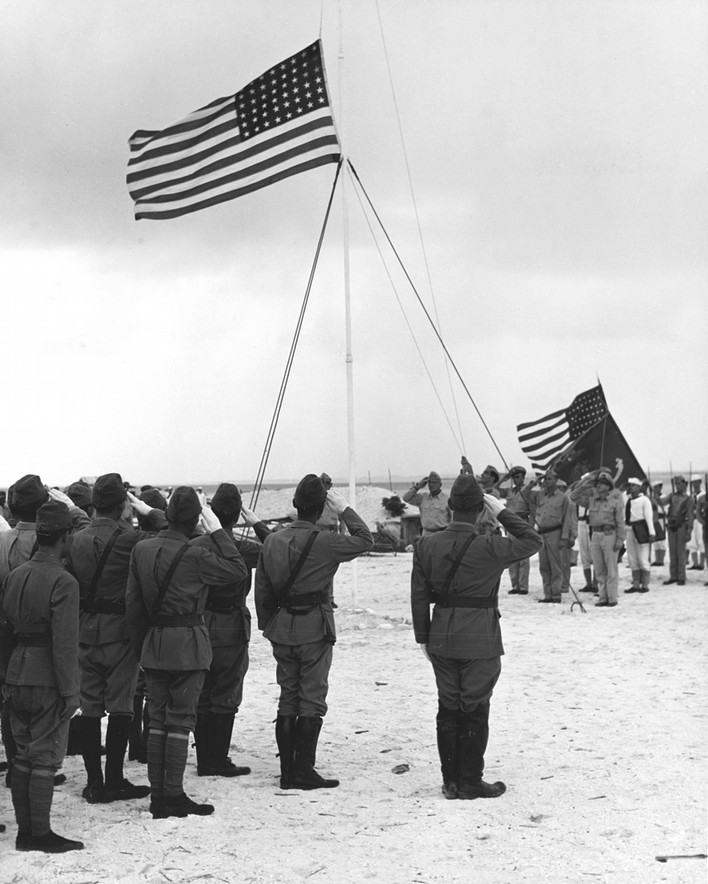
Very civilised. Are the Japanese in the foreground cropped in? Is this actually just a picture of some
Americans raising a flag on a sandy beach? Is the flag cropped in as well and this is a collage of
three groups (2 troop clusters, flag) on a sand backdrop? My eyes are going funny maybe. The
Japanese with their backs to the camera means we canât even tell they are Japanese troops, Iâm just
going off of the uniforms. Yeah, the perspective is wrong, it is pasted together.
Which villain was running the show on Wake in the intervening four years? That would be
Shigematsu Sakaibara. 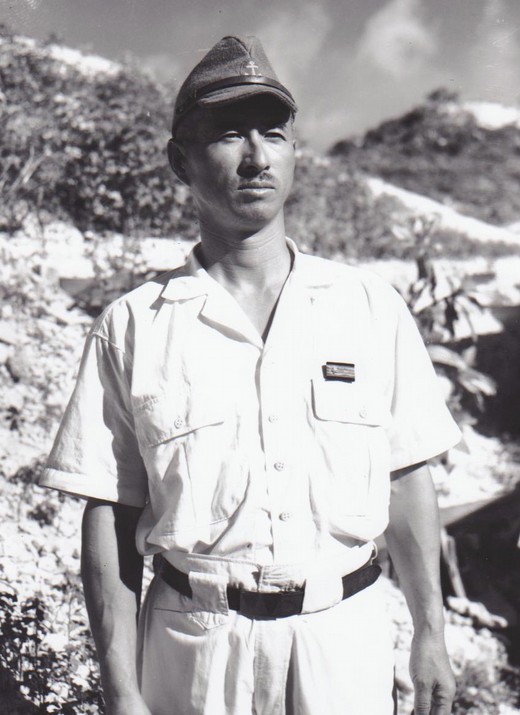
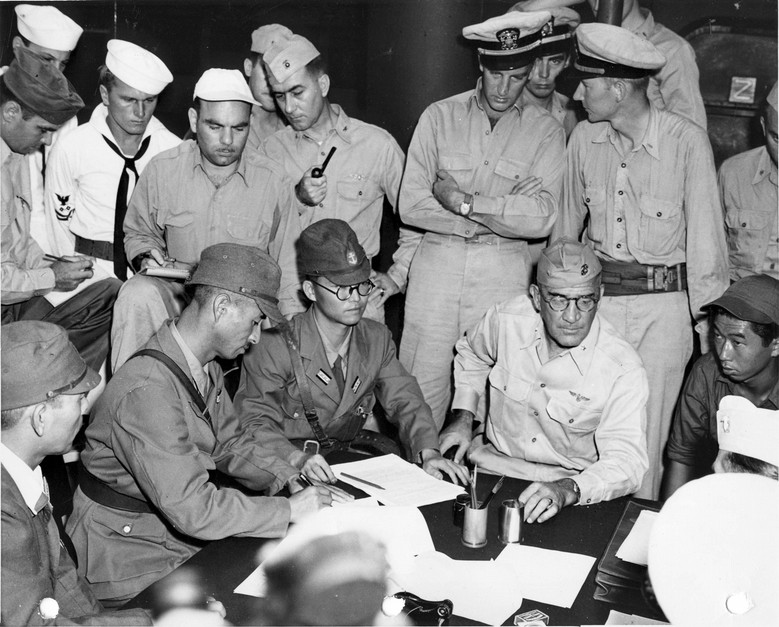
Here he is (second from the left) signing an agreement to surrender:
The one in glasses is a female. You see, back in the 1940s it was normal for everyone nearby to
crowd around when a military/diplomatic meeting was taking place. Just like today: when military
commanders are in important meetings or signing treaties you get random Navy crewmen of
different ranks hanging around leaning over their shoulder smoking pipes and chatting, just to make
sure things are getting done properly. Higher resolution version here. Yes, it is pasted.
Unlike the music teacher Admiral Inoue, Sakaibara doesnât get away with the great injustice of
Wake. We read:
âAfter the war, Sakaibara was taken into custody by the American occupation authorities,
extradited to Guam, and sentenced to death by a military tribunal for war crimes in connection
with his actions on Wake Island. He was hanged on June 19, 1947. Until the end, he maintained, "I
think my trial was entirely unfair and the proceeding unfair, and the sentence too harsh, but I
obey with pleasure."
Ridiculous last words are ridiculous. So they hang him two years later, not in the US, not in Japan,
but on Guam. Why? If we follow the reference on Wikipedia to this link, an article written about
Wake by retired US Major Mark E Hubbs, we learn:
âSoon after the Japanese surrendered Wake Island on 4 September 1945, Admiral Sakaibara
and 15 of his officers and men were arrested and sent to Kwajalein to stand trial for the murder
of the 98 POWs. Two men committed suicide en route and left statements that implicated the
admiral and others. While being held during the trial, which was conducted by a special military
commission for war crimes, Lieutenant Ito also killed himself and left behind a signed statement.
After being confronted with this statement, Sakaibara finally confessed that he had ordered the
murder of the 98 Americans and stated that all responsibility should rest on his shoulders. The
trial concluded with a sentence of death for Admiral Sakaibara and Lieutenant Commander
Tachibana.
Eventually, a reprieve was granted for Tachibana, whose sentence was commuted to life in
prison. Sakaibara, however, was transported to Guam to await his fate. There, on 19 June 1947,
he was executed by hanging along with five other Japanese war criminals. Sakaibara's last
statement was filled with Japanese stoicism: "I think my trial was entirely unfair and the
proceeding unfair, and the sentence too harsh, but I obey with pleasure."
Definitely a thing people would say upon being sentenced to death. I assume they were all cremated
and their ashes scattered at sea like with the others weâve seen, as a cover for not doing that and
letting him retire to a nice seaside resort in Okinawa. I mean this is speculation of course, I canât
prove he wasnât killed, I just think itâs interesting he is tried in a remote mid-Pacific location unlike
Japan, in the war crimes tribunal like everyone else.
What happened to the bodies of the Wake Island men? From Hubbâs article:
âSection G of the Punchbowl National Cemetery in Honolulu has a large, flat, marble
gravestone, at 5 by 10 feet the largest in the cemetery. On it are listed the names of 178 men. This
common grave holds the remains of all the unidentified military and civilian burials repatriated
from Wake Island in 1946.â
For the record, thatâs the same cemetery used for the mass graves of Pearl Harbour bodies. So
Punchbowl is a good place to bury random skeleton bits when doing ops I take it. Wake is a US
territory, or owned by the US or something, so why not bury them there? Or return them to their kin
back on the mainland?
âMany of these men were killed during the siege, and circumstances did not allow proper burial
and identification. Of these names, 98 represent the men who were murdered by the Japanese in
October 1943. After several years of unsuccessful attempts to separate the remains and identify
them, they were interred together during a ceremony at the Punchbowl in 1953.
Most of the families of the 98 were not notified of the fate their loved ones until January 1946.
Letters from the American Prisoner of War Information Bureau stated only the location and date of
death but did not explain the circumstances. Other families who may have changed address during
the course of the war were more difficult to reach. The family of Archie Pratt did not learn of his
fate until 1953. Some families already had suspected the fate of the 98, as Admiral Sakaibara's trial
and sentencing had made the state-side newspapers. The war was over, the murders had occurred
more than three years previously, and the public already had been outraged with the news of
similar massacres in the Philippines and in the European Theater. No national acknowledgement
of the Wake Island massacre ever materialized.â
You can see where this is going. Mass graves, no identification, families not notified until years
later. We read on:
âIn the dawning hours of 23 December 1941, the Japanese captured 1,603 men with the fall of
the island garrison. Among those were 1,150 civilian contractors employed by the Morrison-
Knudsen Company, part of a cooperative of eight construction companies called the Contractors
Pacific Naval Air Bases.â
Thatâs a much higher number of men captured than the Wiki entry. Maybe Major Hubbs is wrong?
Who can say? His number does make sense as we now there were so many construction workers on
the atoll and this is supposed to be a surprise attack. Wikipedia mumbles about them âevacuatingâ
but I donât understand how thatâs possible given they are under aerial bombardment for days.
We then have some anecdotes from diaries, one written by a Russell, one written by a Wilcox,
because of course more Peerage names. You have these diaries hidden and later found by the
Americans used as a historical record of what happened, as recall that it took multiple âsuicidesâ
while in military custody for the Japanese to eventually be badgered into agreeing with the narrative
of what happened. The magical diaries are what gives us the story â how nice of the Japanese to let
their captives have writing supplies and time to keep a journal.
Itâs a dumb narrative and worth reading in full, but the gist is that very slowly over a period of years
the Japanese ship out the Americans to Yokohama until eventually by â43 only 98 men are left on
the island. We read:
âThe day-to-day record of POW life at Wake ended when Russell and Wilcox clambered aboard the
Tachibana Maru. The routine of the remaining 98 did not change, however. The monotony was
interrupted only by increasing U.S. bombing raids and the loss of one of the 98. An American was
caught stealing food in July 1943. After a brief investigation, a Japanese lieutenant wielded the
sword that removed the head of the unknown American. Rear Admiral Shigimatsu Sakaibara, the
new island commander who had been whisked ashore by an Imperial Navy bomber from
Kwajalein in December 1942, presided over the murder.â
They bomb American POWs, by their own narrative. Not much in the way of outraged news articles
or retrospectives on this â itâs like nobody cares the military abandoned all these men, for years,
then bombed them. Or any veterans being interviewed about internment, come to think of it. You
would think thereâd be a beat where theyâd be like âTo be honest it was pretty annoying the air
force kept bombing us, what the hell manâ. But no, nothing crops up via DuckDuckGo. I guess âNo
man left behindâ is just a catchphrase. No explanation either for how the Japanese and their captives
survive on the island with no resupply but whatever, youâre not meant to think about logistics. How
do we know this if the diary-writers have left? No idea.
âThe U.S. Navy also was tightening a noose around the atoll. Extensive submarine patrols
harassed all shipping coming in and out of Wake. This increased attention aggravated the island
commander. Sakaibara and his subordinates were certain that an invasion was imminent. In
reality, the United States had no intention of forcing a landing on Wake. As with most Japanese-
held islands that did not have a tactical or strategic role for further campaigns, they were merely
isolated from their source of supplies and left to wither on the vine. Bombings were designed only
to deprive the enemy of the use of their airfield, seaplane base, and port facilities.
A U.S. carrier task force, which included the USS Yorktown (CV-10), arrived offshore on 5 October
1943. During the following two days the task force dropped 340 tons of bombs on the atoll, and the
accompanying cruisers and destroyers hurled 3,198 eight-inch and five-inch projectiles. The raid
did extensive damage to the infrastructure on the atoll, and 31 Japanese planes were destroyed on
the ground. This was the largest U.S. raid on the atoll up to that time. Sakaibara was certain that
the armada assembled offshore included a landing force. So he decided that the troublesome
prisoners must be murdered to eliminate the threat they might pose during the coming invasion.â
Longest air strip in the Pacific⦠no strategic value. OK. So⦠the Americans allowed over 1,600
men to be enslaved, for years, with no rescue effort, despite it being adjacent to their main Fleet
HQ? But they did bomb the hell out of it. Are 340 tons of explosive insufficient to level an atoll this
size? Really? Sakaibara has human shield hostages but he decides to murder them BEFORE the
Americans arrive? What!?
âThe Headquarters Company commander, Lieutenant Commander Tachibana, was ordered by
Admiral Sakaibara to move the prisoners from their compound to an antitank ditch on the
northern tip of Wake Island. There, in the waning afternoon light of 7 October 1943, Lieutenant
Torashi Ito of Headquarters Company, had the Americans lined up and seated along the ditch
facing the sea. They were blindfolded with their hands and feet bound. Three platoons of
Tachibana's company mowed them down with machine gun and rifle fire. The Americans then
were dumped unceremoniously into the ditch and covered with coral sand. The indignity suffered
by the prisoners was not complete, however. The following day, a report from an enlisted man that
he saw one of the prisoners escape during the confusion of the massacre prompted the
disinterment of the bodies. The corpses were dug up and counted, then hastily reburied. The
sailor had been correct; one American was missing. That man, whose identity has not been
discovered, was re-captured and was beheaded personally by Admiral Sakaibara three weeks
later.â
Just ridiculous. How the hell do you âescapeâ from being sat in front of a ditch tied up and about to
be shot by three platoons of Japanese, in broad daylight? What, he untied himself and ran away?
Nobody saw this? How do you then hide from the Japanese on a flat atoll? How we know any of
this even happened?
Because⦠(dramatic pause)
...of a rock.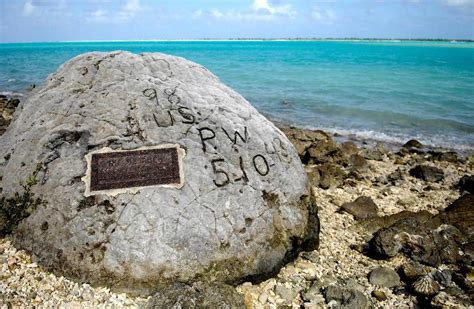
Yep. Thatâs some raw history there, soak it up.
The idea is that the mysterious ninja who escape being machine gunned and ran away and hid,
sneaked BACK to the massacre site after the Japanese had left. He didnât want these men to be
forgotten, so he carved the message â98 US POW 5-10-43â in big letters. This is still here, to this
day, as a monument to the evil deeds of Wake Island.
Obviously this contradicts the Russell/Wilcox diaries as this talks about 98 men as of July, then one
man is beheaded for stealing food, so thatâs 97, then you have the guy carving the rock still alive to
do so, so thatâs 96 men shot. Not 98. I hate it when they canât get the little details right.
From Wikipedia:
âOn 4 September 1945, the remaining Japanese garrison surrendered to a detachment of United
States Marines under the command of Brigadier General Lawson H. M. Sanderson, with the
handover being officially conducted in a brief ceremony aboard the destroyer escort Levy**.
Earlier the garrison received news that Imperial Japan's defeat was imminent, so the mass grave
was quickly exhumed and the bones were moved to the U.S. cemetery that had been established
on Peacock Point after the invasion, with wooden crosses erected in preparation for the expected
arrival of U.S. forces. During the initial interrogations, the Japanese claimed that the remaining
98 Americans on the island were mostly killed by an American bombing raid, though some
escaped and fought to the death after being cornered on the beach at the north end of Wake
Island. Several Japanese officers in American custody committed suicide over the incident, leaving
written statements that incriminated Sakaibara.â
Or you know, they just had a normal graveyard on the island and the Americans tortured and killed
the Japanese and made them sign false confessions. Or nothing happened and the whole thing is just
fiction. After Pearl Harbour, Iâm going with the latter.
This radio broadcast mentioning the fall of Wake treats all the Marines/construction workers as
dead already, they donât even get a mention!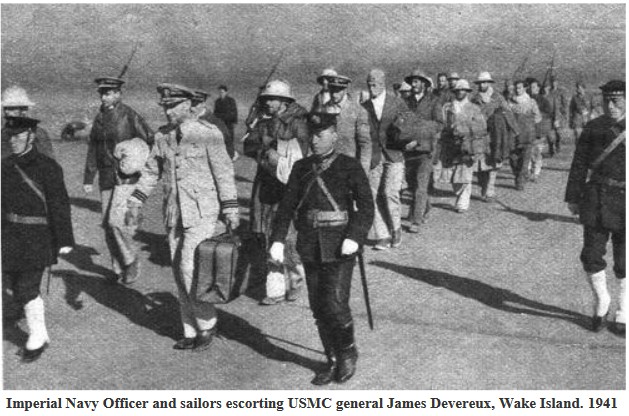
This Newsreel copy via YouTube shows the Americans attacking Wake in â43. Looking at it now I
think weâre looking at a) an empty atoll, b) a dummy ship used for target practice and c) a dummy
plane, possibly remotely controlled. Like with Iwo Jima the Navy get to fire cannon at an empty
atoll. You can watch my lame Bitchute piece on that, which at least has footage of Rocket Trucks
(the best thing Iâve seen in all of World War 2).
Other than the 98(?) that got killed, what about the rest of the 1600-odd men captured on Wake?
You can follow this link to read an article on the POWâs of Wake Island. As with everything I read
on this event, the little details shift. Youâre not supposed to really care (or be autistic about it). In
this version the commander Devereux walks along the atoll waving a white flag to surrender, the
Marines then have time to destroy their equipment before the Japanese arrive (?)
From page 3:
âEighty-one Marines, eight sailors and 82 civilian construction workers had been killed or
woundedâ
Aces and eights, all the livelong day. The article is worth a read as it then goes on to explain how
the Japanese ship the Nitta Maru transported the POWs from Wake to Yokohama, then on to
Shanghai.
This is supposed to be the Japanese walking the captured men to the transport ship. Devereux is up
front in his nice white suit. Is he smiling? It looks like heâs smiling. Again itâs late but now Iâve got
my brain itching that this is another paste-up. It is, a really bad one. Is Devereux floating? Or that
guard in the foreground centre? Whatâs going on with his feet? Also whatâs going on with the sky
and the horizon? Aw man, another fake! Dammit I hate it when it takes me like three days of seeing
a photo before I spot this stuff. See the third man behind the general. He has no mouth. His face
has dissolved. And Devereux is a big peerage name. 
Caption reads: âMaj Devereux, as POW in Shanghai, c. 1942.â
Nice of them to let him wear a full uniform and have collared shirts and a tie, while in a brutal
prison camp. And shave, with a highly groomed mustache.
Continuing with the article, as always the numbers are different:
âThousands of miles from home, crammed into Nitta Maruâs dimly lit hold, with several buckets
for toilets, no heat or ventilation and confronted by brutal guards, the prisonersâ future was bleak.
Even so, they were luckier than the 380 prisoners the Japanese kept on Wake to rebuild the
islandâs defences. Those unfortunates would slave away until October 1943, when, in retaliation
for the strikes on the island by a U.S. Navy task force and fearful of an Allied invasion, the
Japanese garrison murdered them all.â
Yeah, so it wasnât 380, it was 98 killed by the Japanese. Or rather, 96.
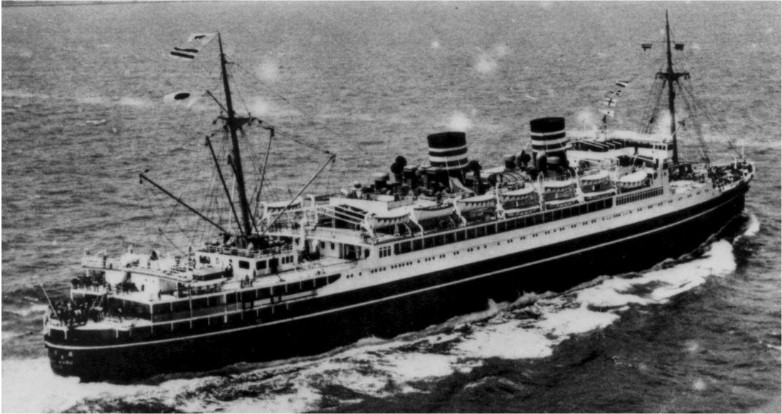
This is the prison ship that took the men to Japan. Does this look like a military vessel? Or a regular
passenger/cruise ship? Who took the photo? Why does it not have an escort? Why couldnât the men
be rescued from a regular cruise liner? Did the US Navy really let them just sail all the way to Japan
without any effort to stop them?
What happened to the POWs next? On page 6 we read:
âOnce they had reached Yokohama, eight American officers and 12 enlisted men were sent to a
prison camp in Japan while the remainder of the men continued on to Shanghai, China.
On the voyage to China, Lieutenant Toshio Sato, commander of the Japanese guard detachment,
selected five Americans, three seamen and two Marines, at random, blindfolded and bound them,
and took them on deck. There, surrounded by 150 Japanese sailors, the Americans were made to
kneel. Sato then read to the Americans in Japanese: âYou have killed many Japanese soldiers in
battle. For what you have done you are now going to be killed...as representatives of American
soldiers.â The bewildered, frightened Americans understood none of his speech. Perhaps it was
just as well, for when Sato finished speaking the five unfortunates were beheaded. Their bodies
were then used for bayonet practice before being thrown overboard.â
Again with the random executions and burial at sea. So no trace of the bodies then â also how do
we know this? Did the Japanese note this in a diary or something? Or the other POWs mentioned it
afterwards? No idea. Nobody cares to explain either.
âAfter landing at Woosung the prisoners were forced to march five miles to what the Japanese
called the Shanghai War Prisoners Camp â seven grey, ramshackle single-story buildings with
no fresh water or plumbing and limited electricity. To deter escape, the camp was surrounded by
barbed wire, electric fences and four constantly manned guard towers.â
OK so the Japanese capture approximately 1,500 men (based on the casualty figures in the chart
previously shown), they leave 380 on the island (allegedly) and drop off 20 guys in Yokohama.
They kill 5 men randomly on the boat to China and the rest arrive in the Shanghai camp. So thatâs
1,095 Americans (roughly) to put in⦠what⦠seven buildings? Really?
I donât think the writers thought this one through.
âAt Woosung the Japanese commissary routinely issued food for only 300 prisoners. Rations
provided only about 500-600 calories per man per day. Each of the Wake prisoners would lose at
least 60 pounds during his captivity at the prison.â
Iâll bet. The fact they only lost 60 pounds (27kg) in about four years of captivity is crazy. 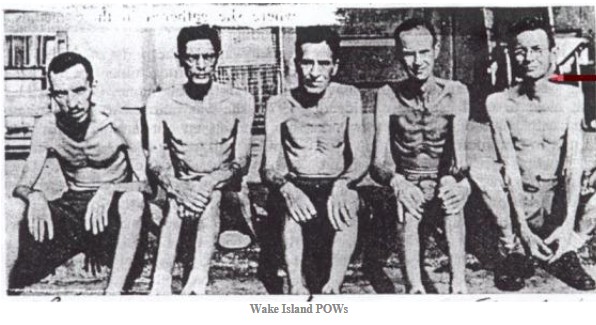
This is supposed to be a photo of Wake Island POWs, but of course we have absolutely no way of
confirming this or where it was taken, or who these men are. You could photograph prisoners in an
American prison at the time, or take a photograph from a European prison camp and we wouldnât
be able to tell. Or take five photos of the thin man at the circus and paste five heads on him. The
photo quality is ridiculously bad.
They get moved from Woosung to another camp, Kiang Wang, then get ordered to build a 45ft hill.
Later they go from there to various camps â Fentai, transported to Busan in Korea, then taken to
work in mines in Hakodate in Japan.
âAfter they had been at Hakodate for several weeks, however, the Americans noticed that the
attitudes of their guards and civilian supervisors changed. The brutal interrogations and beatings
ended, prisoners were fed a bit better, and their captors even began to smile cordially at them. One
day a Japanese guard explained to one of the prisoners, âVery soon we will all be friends
again.â
In late July 1945, Japanese officers treated American officers to a formal dinner at which they
offered many toasts to their guests, bowed often and professed friendship with the Americans.
Finally, a senior Japanese officer stood and proposed a toast to âeverlasting friendship between
America and Japan.â The other Japanese smiled, nodded and waited for an appropriate response
from the Marines.â
Aw, those cuddly Japanese! Maybe the real military objective was the friendship we made along the
way? At the end of the war the Japanese suddenly abandon the camp, leaving all the Americans
inside to their own ends. They donât kill them to try and cover it up, the Chinese army doesnât
arrive to liberate them, they literally wake up and all the guards are gone. You can read about this
and many other bizarre things regarding the fate of the POWs in the article but I wonât bother
repeating it all here, itâs just quite silly. If Miles sees any particular gems from the article heâs
welcome to add them in here.
I think Iâll leave this one alone now, itâs obviously just an invented story which doesnât even hold
together at face value, let alone with critique/analysis or context that Pearl Harbour is fake. It was a
made-for-movie-theatres Alamo adventure story to whip up American audiences. I hope you at least
had a chuckle as I tried to recount this, like a shaggy dog story told down the pub, good over a few
pints but a bit weird to pretend itâs real in the cold light of morning.
Back on the yacht. Weâve got a couple more stops before we get to Okinawa.
Outro music.
* Lies
** Unfortunately the USS Vasa, the USS Rothschild and the USS Jagiellon were busy that day.
#/media/File%253AJapanese_destroyer_Hayate_Taisho_14.jpg)

