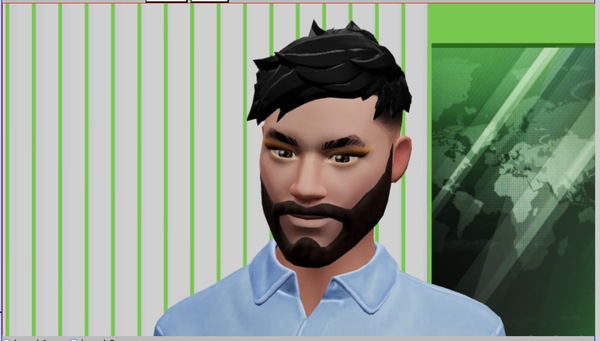
Preface: I just spent 3 days, literally, I think more than 3 days, looking for a good *male* avatar, for my online 3d news production studio. There are a few good avatars, but they are all female. I had a variety of females to chose from, and not a single male one. It took a lot of searching, but fortunately I have found some good ones, and I also make them all available on my github, see ishlib3js library assets.
But why was it so difficult? And why do I need 3d avatars? And what about ready player me, specifically, that sets them apart from quite a number of competitors and options? Let’s address these talking points in turn.
RPM (Ready Player Me) used to be a character creation, or avatar creation, studio. You'd select properties (boy or girl, hair style, clothes, etc) of your character, click a button and download a reusable 3d asset.
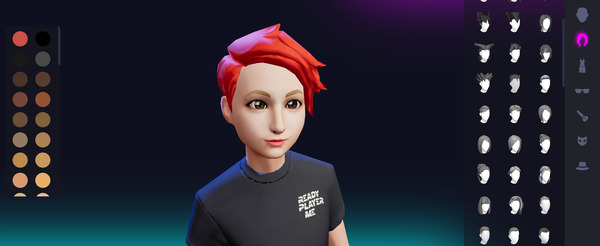
What RPM got exactly right is the interface. You see, I can drop in an RPM avatar into my threejs scene, and it will just work. It speaks, it moves, it dances, everything. I don’t have to do anything to make it work, which is so, so great.
RPM also published a library of 200 animations, which also Just Work (TM). Compare that to Real Illusion or Mixamo. Neither one of those two would work, I have to go and re-target animations, which requires skills that I don’t have, and time that I won’t spend. Why can’t it Just Work? It can, and RPM demonstrated that well.
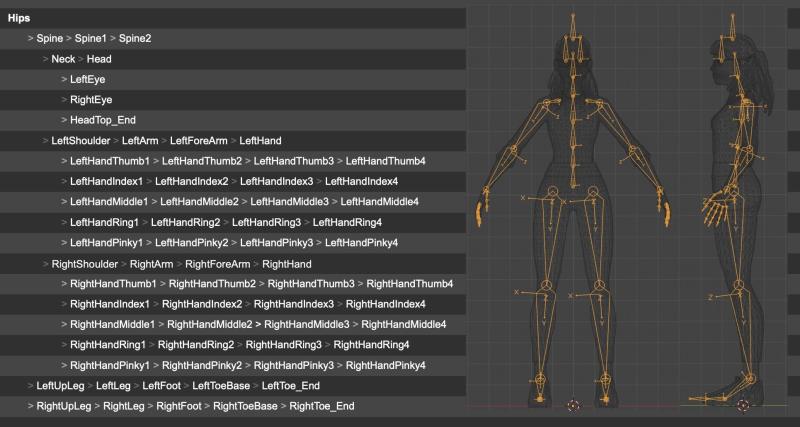
The skeleton structure is well-defined, allowing animations to be plug-and-play, no changes needed. How is this not standard across the industry?
The blend shapes are also well-defined. I think this was done by Apple some time ago as part of their ARKit[1]. RPM agreed with that structure, and adopted that interface.
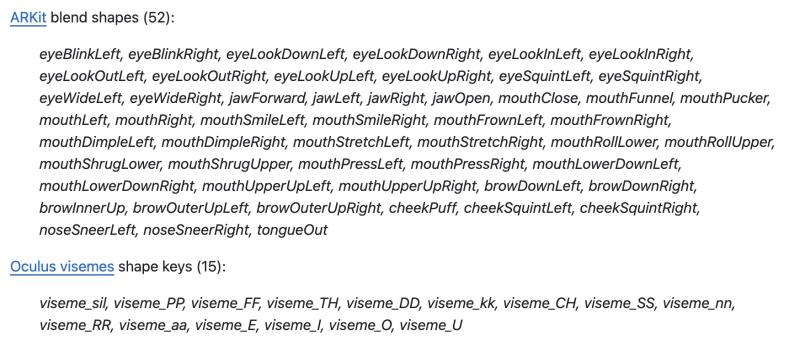
Viseme shapes are well-defined. This was adopted by Meta[2], but originally developed as part of the mpeg4[3] standard.
The scale is also consistent. We all agree that the threejs[4] unit is meter, so 1 unit equals 1 meter.
With that, you have a tremendously inter-operable ecosystem. And it had to be done for bipedal characters with a face. You can have interchangeable low-poly scenes with a simple scaling function, but it is only when human-like characters can jesture and speak, does it become very interesting. And RPM was very well-positioned exactly at the center of such an emergent ecosystem. Free, low-power (runs in browser!), high quality. Both the marketing effort and their technology were, as far as I can tell, excellent. So what happened to RPM, and why is it now that when you search for it, you discover only empty pages and distant echos of third-party commentary? (And what, search engines don’t know how to update search results? Years later RPM’s legacy lives on, but only as a shallow foot print in dried-out, parched dirt!)
The game market is allegedly huge, bigger than movies, bigger than music. Interactive avatars sound like game assets. Only because I avoid games due to how addictive they are, doesn’t mean that the interactive/gaming market is not absolutely massive. It’s definitely worth a consideration.
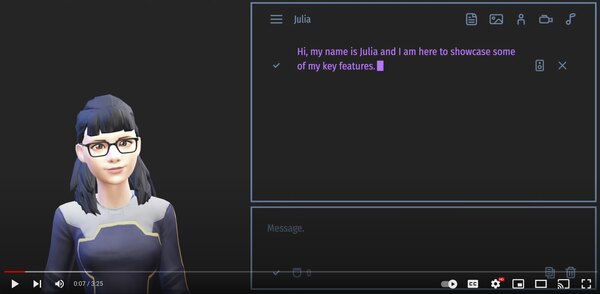
Talking Head and HeadTTS
This is how I got into this in the first place. Multiple cool projects reference RPM avatars, and this is one of them. You see, TalkingHead works, it Just Works (TM). Download the repo, press a few buttons, and voila! You have an interactive chat in your browser, it talks, it blinks, it’s free, it works.
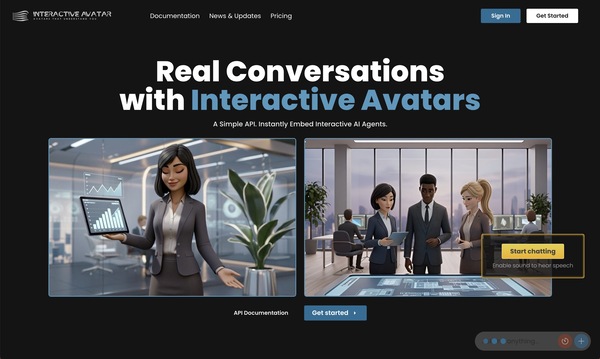
Although it is free, at least one company, it seems, has packaged this exact technology as a proprietary commercial product.
Talking Head does not create an avatar, it uses an RPM avatar. I think this is important, to not get distracted.
~ * ~ * ~ * ~
Allegedly, Netflix bought RPM in December 2025. Allegedly, RPM’s last funding round was $72 million. It is not disclosed hot much Neflix paid.
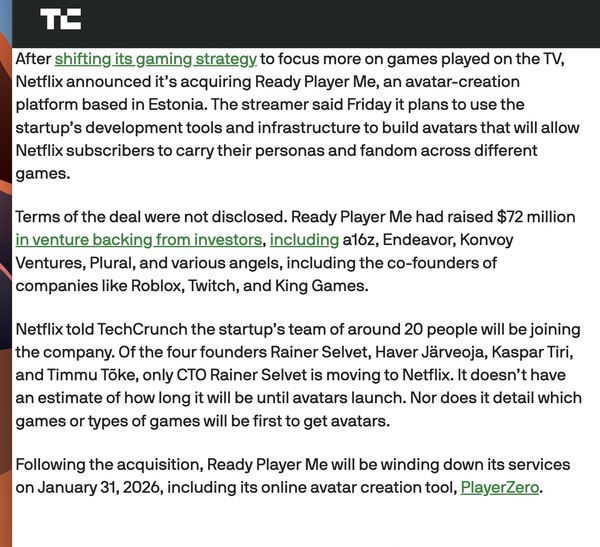
What is curious is that Netflix shut it down. What is Netflix’s best most popular game, sudoku? Board game puzzles? When you’re watching Netflix you don’ have a joystick, so I’m not sure how they’re going to compete with Steam or Play Station. And why not keep RPM, why not continue its offering? If RPM has a real use case and market share, as it did, as is evident from a number of companies and products that used those avatars — a rapidly growing number, everyone was disappointed when RPM shut down — so if the product made sense, why shut it down?
I believe Netflix shut it down to prevent the emergence of a distributed (free and open) 3d ecosystem. World, if you will. Modern phones are fast enough to run stylized threejs in browser. (Thank God netflix didn’t buy and close threejs! That’s one of the strengths of open-source software.) Assets don’t have to be very large, a scene can be just a few vertices and an image. You download a 2mb image, well you can download a 2mb 3d model, listing vertices in space doens’t take that much memory.
Meta ventured into this space, with their metaverse. They didn’t do it very well, as far as I can tell, I don’t use Facebook but I don’t hear of any amazing metaverse projects being released by Meta, in fact, I hear the opposite. The Facebook Metaverse didn’t take off. But that’s not a bad thing to say about current technology. I still think we’re on the verge of web4, where there will be significant 3d piece to it.
A successful 3d ecosystem has to be free and open. And it has to be simple. So that a great many people try and use it, not just one company Meta! And so that they can all agree on things, agree on an interface between them. Plug-and-play avatars, animations, and scenes. But if that happens, it will jeopardise Meta’s grand standing in the internet world. It would jeopardise all the big tech position on the web. If there is something more fun than Facebook – wouldn’t Facebook be worried? And if they can’t have it, if they could not create a successful Metaverse at Facebook, then noone can. They’d rather destroy it before it is born, than not be able to control it. That Netflix rather than Meta did the purchase and the destruction is inconsequential. They all prefer that you stare at the screen rather than do something useful. But even as RPM has wound down, I believe web4 is still coming. It’s not that difficult.
A successful ecosystem has to be free and open, and it has to be simple. Take javascript as an example. Is it a great language? Hell no. It is poorly designed, it was written in two weeks, and in the beginning it was complete hell. I’m talking about DHTML, a million Microsoft Explorer bugs, and the time before jquery. But it was free, it worked, and it was the only option. So people agreed on it, and used it. Now, the node ecosystem is very robust and enterprise-grade, and javascript has only grown, and still underpins the overwhelming percentage of web interaction, pretty close to 100%. That Microsoft tried to subvert it with TypeScript is inconsequential. The politics and poor choices of Babel and ES6 development are inconsequential. JavaScript still underpins the web. It is Atlas, it is the titan on whose shoulders the modern internet stands. Therefore, I believe that threejs and a nice structure like that of Ready Player Me can underpin a future web4 internet, the one that will be completely different from what’s there now, unlike Facebook, something new and interesting.
Recreating the core RPM product wouldn’t be that difficult. We just have to agree on things, establish an intereface. It’s really all the same. How hard is it to create a dozen 3d assets of jackets? How hard is it to have a slider for nose size, and a slider for lips size? A selection of hair? How hard is it to create a web UI with all the sliders and toggles on the left, and a scene showing the avatar on the right, and a button to export? Actually, I bet you a single person can do it in a week, with AI.
For reference on complexity of such a task, see how quickly I created this 3d clock with threejs and ai. I took inspiration from Tabiverse, and created my own rough copy, that you can install as a browser extension. It took me 1 day.
Recreating the core RPM product should be pretty easy, and useful and valuable. The only thing this idea needs is an investor. I am reluctant to just do it on my own. You would say – but Victor, why wouldn’t you do it on your own? You said it yourself, it’s pretty easy, and you’ve done similar things in the past. The reason is — the actual effort to actually reach profitability with something like that, would be substantial, a lot more than a one-man effort. Even if I create it, it would have to be marketed. There is a lot of work to be done. And I don’t want to be a one-man team, it does not go far enough. For web4 to succeed it must be a team effort. So executive directors, funding, is required. (Marketing and sales is also required.) If you are interested in acting in such capacity, please drop me a note, hopefully we can work something out.
And if you were here just for the read — thank you for your time, I <3 my audience! I hope you enjoyed this quick write up and found it inspiring, or at least insightful. And remember: doing something useful is better than staring at the screen. I hope you have a useful and productive day.